
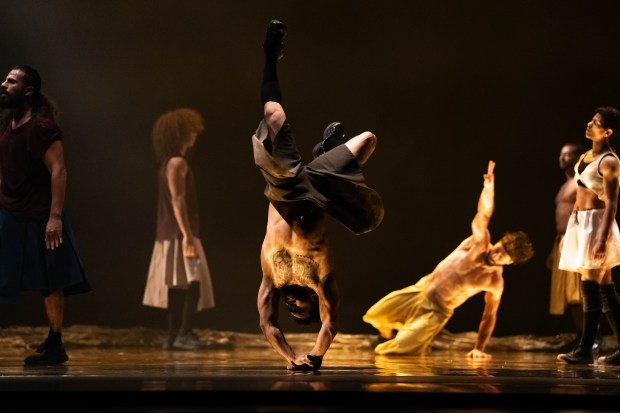
Choreographer Hervé Koubi aimed to create a ‘manifesto for life’ in his work ‘Sol Invictus.’ At the Harris Theater, Koubi introduced the Chicago premiere of this performance by highlighting its universal and generous nature. The French company showcases street dance forms that Koubi adopted after visiting Algeria to explore his cultural roots.
American audiences might recognize familiar B-boy moves, noticing how Algeria has embraced breakdancing and developed its unique style. This aspect contributes to the ‘universal’ quality Koubi mentioned. The dancers, among the finest B-boys and artist-acrobats, reflect this diversity. Koubi intentionally included performers whose backgrounds may traditionally conflict, enhancing the show’s impact.
Providing context about the dancers’ varied origins adds depth to the 90-minute performance. The evening feels both transgressive and joyful, as individuals from historically adversarial regions unite in dance. The choreography includes elements of child-like play, such as skips and somersaults, intertwined with techniques from Afro-Brazilian capoeira, and movements reminiscent of global folk dances.
The eclectic sound score features compositions by Mikael Karlsson, Maxime Bodson, Steve Reich, and Beethoven. The funeral march from Beethoven’s Symphony No. 7 introduces the darkest segment of ‘Sol Invictus,’ though the movement vocabulary remains consistent throughout. However, the piece tends to stretch, spending substantial time on a limited set of ideas, leading to some repetitive moments.
Despite its length, ‘Sol Invictus’ delivers on its promise of brightness. The performance benefits from Lionel Buzonie’s saturated dusty gold lighting and an extensive piece of billowy gold lame. This fabric transforms the stage atmosphere, serving as a crown, a toga, or a parachute, transporting the audience to a realm where cultural and historical differences dissolve, and unity through dance prevails.
Lauren Warnecke contributes her perspective as a freelance critic on this compelling performance by Company Hervé Koubi in Chicago.