
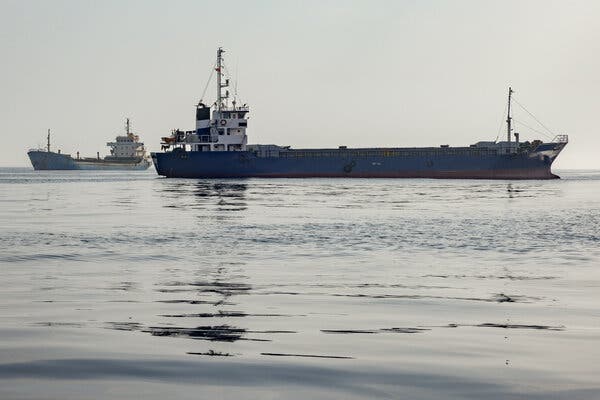
The United States military announced on Saturday that 55 ships had successfully navigated the Strait of Hormuz, marking the highest single-day count since the strait’s closure earlier in the conflict. This number is significantly lower than the prewar average of 130 ships per day.
After a preliminary agreement was reached this week between the United States and Iran aimed at ending the conflict and reopening the vital channel, shipping activity began to increase. However, Iran’s military has threatened to shut the strait yet again. The situation remains unclear.
The Islamic Revolutionary Guards Corps of Iran declared that approaching the strait would compromise the security of passing vessels. In contrast, Captain Tim Hawkins of U.S. Central Command refuted these claims, asserting that the waterway remains open and the U.S. blockade of Iran has ended. He emphasized that maritime traffic continues to flow and that U.S. forces are closely monitoring developments.
Throughout the conflict, Iran has leveraged the strait as a strategic point to exert pressure, affecting global oil and gas supplies. The mere possibility of renewed hostilities in the region has caused shipping volatility, leading to inconsistent traffic levels well below those seen prior to the conflict.
Despite provisions in the U.S.-Iran deal to reopen the strait, shipping companies are exercising caution in navigating these waters. Vessels, having been idle in the Persian Gulf for extended periods, face logistical challenges.