
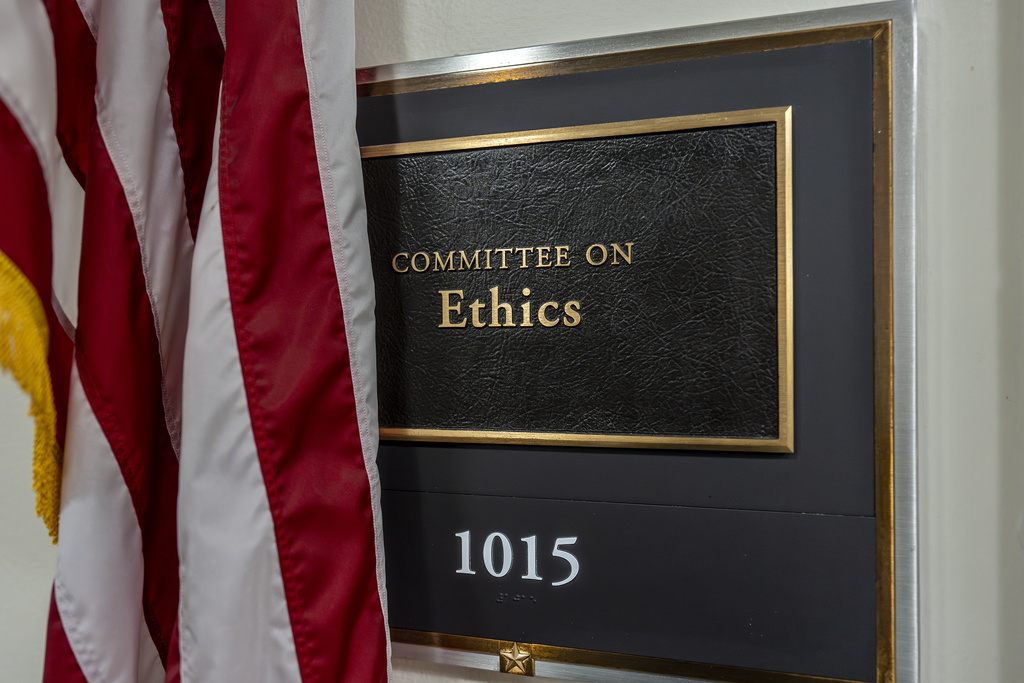
The House Ethics Committee is once more in the spotlight regarding sexual misconduct in Congress. Nearly ten years after the #MeToo movement saw eight lawmakers resign in 2017, recent scandals are reminiscent of that period. The 119th Congress is witnessing significant attention on office scandals.
Earlier this year, Reps. Eric Swalwell (D-Calif.) and Tony Gonzalez (R-Texas) resigned amid scandals. Additionally, Reps. Cory Mills (R-Fla.) and Chuck Edwards (R-N.C.) are under investigation for sexual misconduct by the House Ethics Committee. Since 2017, 20 investigations have taken place, although only 15 cases have been publicly disclosed.
While sexual misconduct may involve a small portion of the workforce, it draws immense attention when public figures are involved. Members of Congress, entrusted with upholding the nation’s best interests, should be held to high standards. Unfortunately, scandals continue to stain their reputations.
Historical cycles of scandal within Congress often arise due to member indiscretions, weak ethical controls, or media scrutiny. Recent coverage spans from Jeffrey Epstein’s revelations to Graham Platner’s Senate candidacy downfall. Such cases keep Congress under public scrutiny, especially with the midterm elections imminent and potential shifts in party control in sight.
The call for reform is never distant during scandal surges. Past misconduct led to the Republican rise in 1995, spearheaded by Speaker Newt Gingrich. The notable “Congressional Accountability Act” mandated that Congress abide by the same laws as the public, including those against workplace discrimination and harassment.
Recently, Rep. Thomas Massie (R-Ky.) proposed a resolution demanding transparency from the Ethics Committee. The resolution called for the disclosure of members involved in sexual misconduct, its settlements, and taxpayer-funded expenses. This was supported by a 420-0 vote, aiming at greater accountability.
Despite ending the practice of using government funds for misconduct settlements in 2018, over $300,000 was spent on settling previous claims. Efforts led by the Congressional Progressive Staff Association and a group of Republican women call for continued transparency and stronger enforcement of rules against misconduct.
Even though these issues span across both political parties, such scandals might not heavily influence midterm election outcomes. Regardless, Congress faces the ongoing task of improving ethical structures in both its chambers to restore public trust.
Don Wolfensberger, a congressional staff veteran, has authored books on Congress and its evolving culture.