
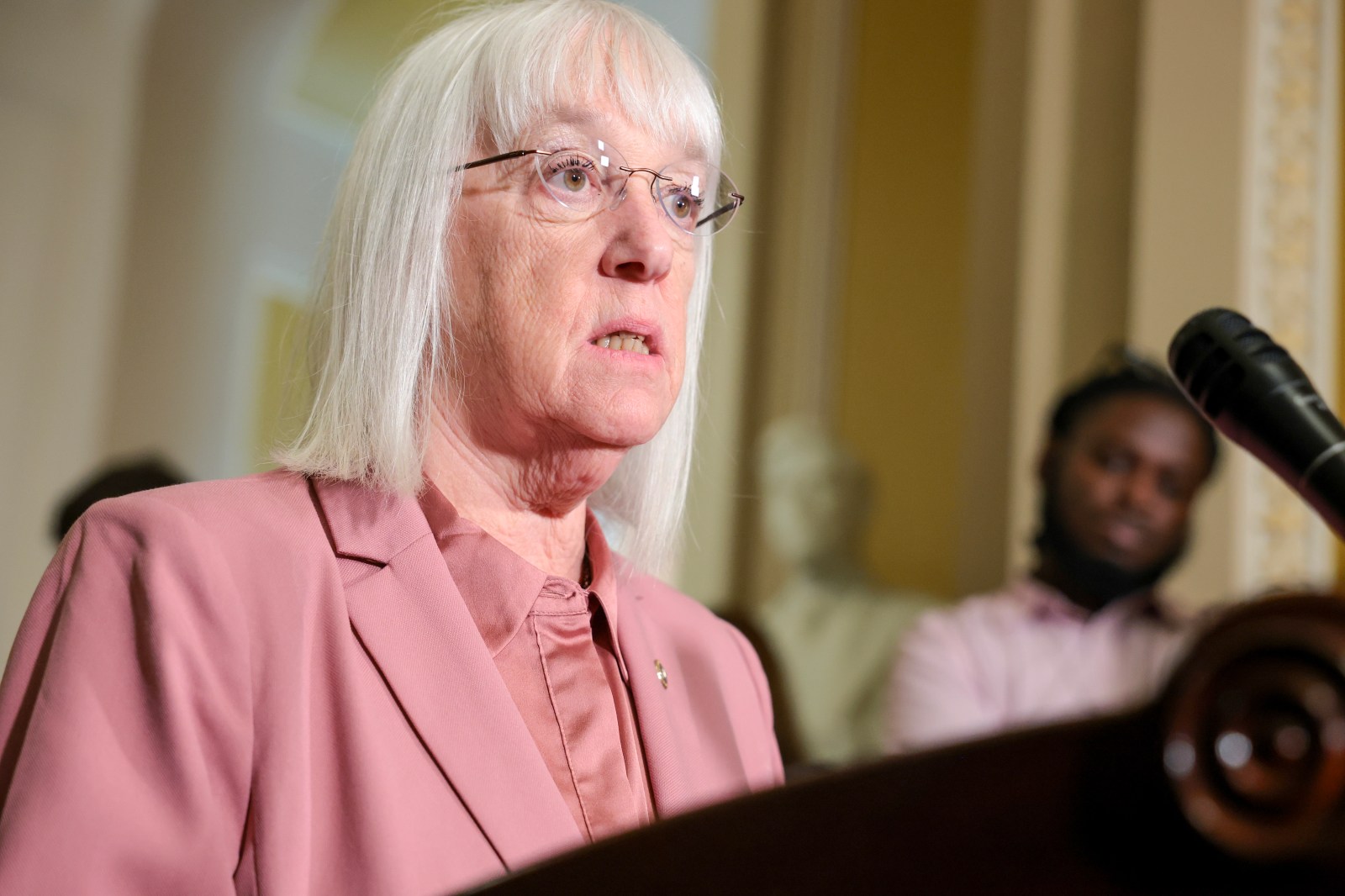
Senator Patty Murray has alerted voters to the significance of Social Security in the upcoming midterm elections. The Washington Democrat emphasized that the outcome could determine the program’s future, warning that it might be severely affected if Congress does not act to safeguard benefits.
Murray shared on X that Republicans aim to cut benefits, whereas Democrats seek increased contributions from billionaires. Her comments underscore the importance of Social Security in the elections.
“Republicans want to cut your benefits. Democrats want billionaires to pay their fair share. THIS is the Social Security election,” Murray wrote.
Urgency of the Issue
Social Security’s financial challenges are increasingly pressing, irrespective of the party in control. The 2026 Social Security Trustees Report anticipates that the Old-Age and Survivors Insurance (OASI) Trust Fund will be able to pay full benefits only until 2032. Without intervention, revenue would only cover about 78% of scheduled benefits, leading to an automatic 22% reduction for beneficiaries.
Democrats’ Strategy
Murray’s warning comes as Democrats push to make Social Security a focal point in the midterm elections. Her argument is for addressing the financing gap by increasing revenue, especially from wealthy Americans, instead of reducing benefits.
During a Senate Budget Committee hearing in March, Murray criticized the disparity in tax rates, arguing for more contributions from the wealthiest and cautioning against significant reductions in workers’ and retirees’ benefits.
“When the richest have the smallest tax rate—it’s unfair, especially when retired workers face a 24% cut in benefits in six years. I hope we focus on this,” Murray asserted.
Complexity Beyond Choice
The discussion about Social Security’s future transcends simple choices between maintaining or abolishing the program. Options to close the financing gap include raising the payroll tax rate, increasing the wage ceiling subject to Social Security taxes, or combining revenue hikes with benefit modifications.
Kevin Thompson from 9i Capital Group remarked on former President Trump’s comments emphasizing military funding over social programs. He noted that although Republicans publicly support Social Security, Democrats spotlight GOP comments urging reform of mandatory spending, which incorporates benefit programs like Social Security.
Impending Cut
Regardless of which party controls Congress post-election, the 22% reduction will take effect unless Congress finds a bipartisan solution to the funding deficit. Alex Beene, a financial literacy instructor, stressed the urgency for reforms to prevent automatic benefit cuts.
“The depletion of Social Security’s trust fund each year without reform action makes it critical,” Beene explained. “Failing to act leads to future cuts, and measures should be taken now to avoid them.”
Potential Impact
Under the trustees’ forecast, by 2032, the OASI trust fund will deplete, leaving revenue to cover only about 78% of benefits. A 22% cut in average retiree benefits of $2,088 per month would mean approximately $459 less monthly.
Thompson noted the shared recognition by both parties of Social Security’s impending issues, though with differing approaches. While Republicans focus on eliminating waste and fraud, Democrats consider it a structural issue needing increased funds and taxation.
Social Security will not vanish or go bankrupt when reserves run low; payroll taxes will persist. Yet, this income won’t suffice for full benefits, threatening retirees’ financial security.
“Retirees are concerned about maintaining intact benefits and potential changes affecting their financial security,” Thompson stated. “Social Security may not sway the election results significantly, but it won’t be without impact.”
Future Actions
Regardless of election outcomes, upcoming Congresses will face growing pressure to address Social Security’s funding shortfall before 2032. Despite concerns, Beene indicated it’s improbable for lawmakers to permit funds to lapse or trigger the projected cuts.
“Regardless of which party prevails, the chance of beneficiaries seeing cuts is extremely low,” Beene predicted. “The millions who qualify for Social Security are reliable voters, and lawmakers would risk future electability by supporting cuts.”