
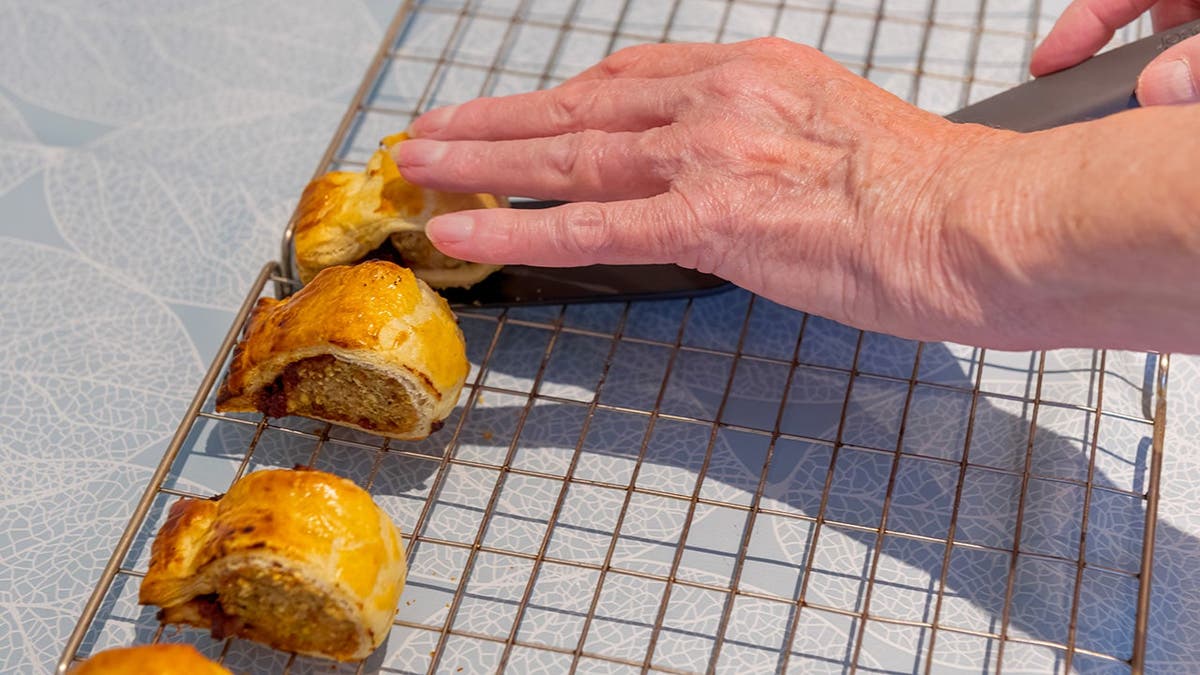
Scottish researchers at Heriot-Watt University in Edinburgh are working on a health-focused initiative to create a plant-based substitute for the saturated fats in classic sausage rolls. This project has moved from lab experiments to real-world kitchen tests with the goal of maintaining the pastry’s traditional flavor and flakiness, but with reduced saturated fat.
“By taking innovative food science out of the lab into the kitchen and testing it with everyday consumers, it has the potential to make the nation’s favorite snacks healthier and make a genuine difference to our health and wellbeing,” said Stephen Euston, a professor involved in the research.
The popular British snack, sausage rolls, typically contain high amounts of saturated fats—11 to 12.4 grams per serving which exceeds 60% of the recommended daily limit for adults. The researchers aim to reduce this figure without losing the texture and taste that people love.
The modification process involves oleogelation, a method that transforms liquid plant-derived oils, such as sunflower and rapeseed oils, into solid forms to mimic traditional fats like butter and lard.
Euston emphasized the use of oils that can be sustainably sourced within the UK, aiming to minimize the environmental impact. This pioneering approach addresses consumer health concerns while offering potential environmental benefits.
Despite the promising developments, some health experts urge caution until more research verifies the health benefits. Skaneateles-based dietitian Kelly Springer mentioned a need for additional studies before conclusions can be drawn about the product’s health implications.
This research coincides with broader discussions in the United States around the health effects of refined seed oils. Some political movements criticize seed oils, advocating for a return to animal fats, though Euston and his team cite credible sources like the British Heart Foundation to contest these claims.
The oleogelation procedure emphasizes using cold-pressed oils, which only require mechanical pressing and filtration, avoiding chemical processing entirely. Euston noted that the researchers hope their technique will allow pastry dough to remain stable at higher temperatures, reducing or eliminating the need for refrigeration during production.