
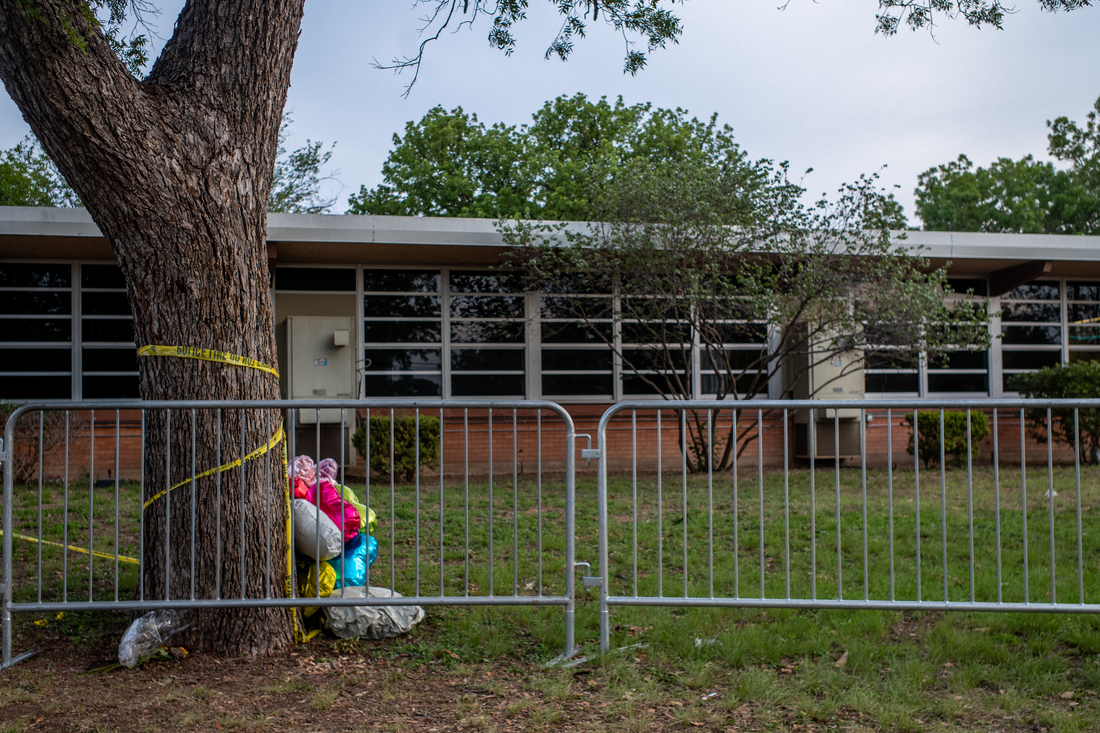
Balloons were seen wrapped around a tree in caution tape at Robb Elementary School on May 31, 2022, in Uvalde, Texas. This was a week after the tragic school shooting. In February, Pastor Julián Moreno was stopped by a metal detector at his grandson’s school field day. He had to put his orange pocket knife back in his truck. Although it was frustrating, the memory of the Uvalde shooting reminded him of the necessity for these measures. Moreno lost his great-granddaughter, Lexi Rubio, in that incident.
Many U.S. schools have added metal detectors and fortified entrances against school shooting threats. Others, like Michigan’s Fruitport High School, have spent $48 million to redesign buildings with safety-driven features like curved hallways and hiding spaces.
School Safety Evolution
Gregory Saville, editor of the International Crime Prevention Through Environmental Design Association’s guidebook, notes that school safety initiatives have evolved since the 1970s. Initially, schools were simple structures with minimal security beyond staff supervision. Gradually, security cameras and sightline improvements were added.
Now, experts advocate for designs that support both physical security and mental health. Architect Rene Berndt mentions the need for spaces that encourage social cohesion to prevent alienation.
Michigan-based TowerPinkster, working with many districts, integrates these principles into their designs, including common areas, winged walls, and private nooks. Director Matt Slagle highlights the increasing demand for safety in school projects.
Designing for Safety
Judith Hoskens, of the American Institute of Architects, emphasizes the need for community spaces and flexible designs in emergency situations. She notes the example of learning communities that allow close-knit student interactions while offering emergency options.
Since the Columbine High School shooting in 1999, many schools focus on single secure entrances. Director Jill Renihan of Florida’s Hernando School District, with an $800,000 budget, enhanced security while maintaining a welcoming educational environment.
Considerations and Challenges
Hoskens warns of over-fortification in schools, which can increase anxiety rather than provide comfort. There’s a push for schools to remain welcoming spaces while ensuring security.
Architectural firms, like Berndt’s, survey communities to address varying safety perceptions. They propose solutions like displaying student artwork to foster community and incorporating natural elements indoors.
Funding and Implementation
Limited funding and fears of alarming parents hinder widespread safety redesigns. Saville mentions the slow adoption of new safety practices. Communities’ capabilities in implementing designs vary based on funding.
Urgency and Broader Solutions
While architectural changes can reduce violence risks, advocates like March For Our Lives stress stricter gun laws as a long-term solution. Pew Research in 2022 found many parents concerned about school shooter threats. There’s a consensus on the need to address mental illness to reduce school shootings.
Gregory Saville points out that due to widespread gun availability, immediate safety measures are essential, despite ongoing debates about deeper systemic issues.