
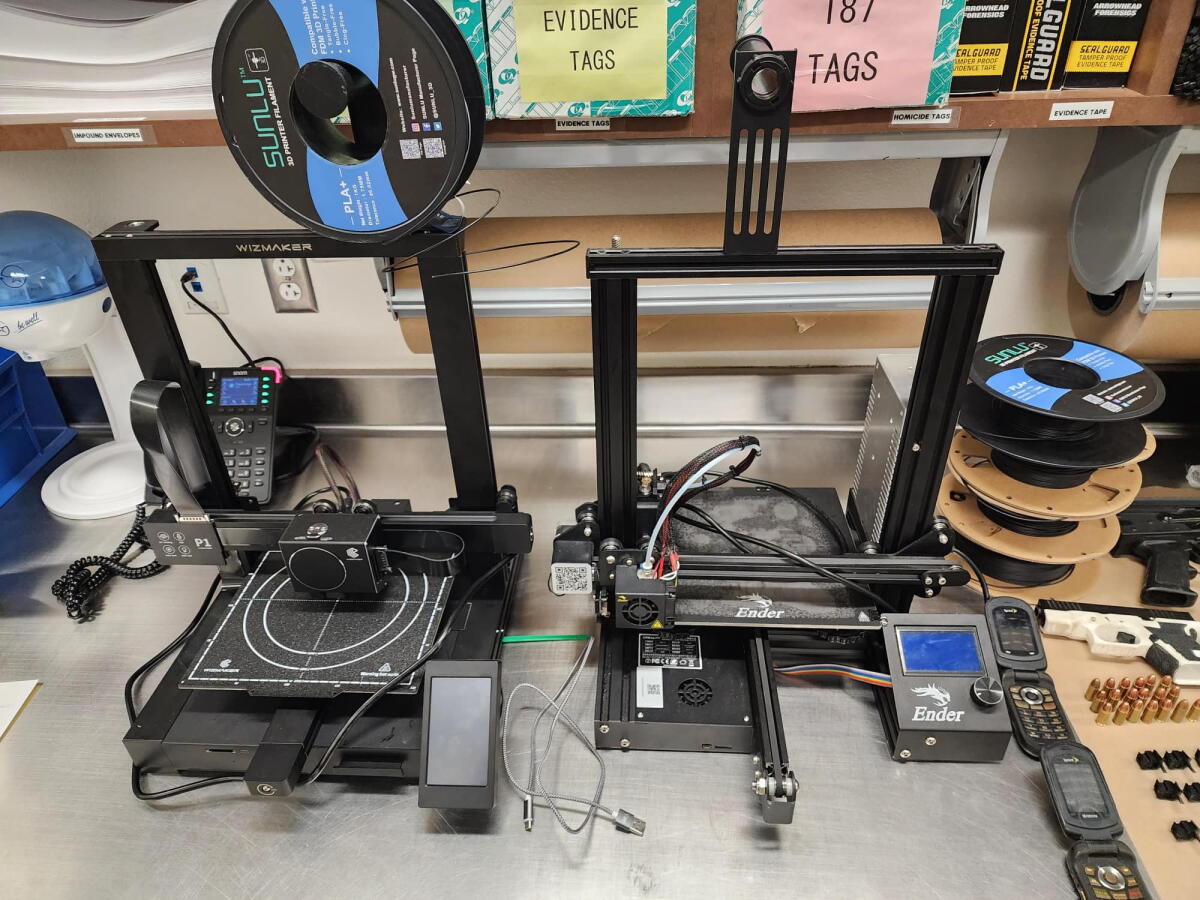
San Diego County recently stepped into California’s ongoing battle against ghost guns by filing a lawsuit against a 3-D printing filament manufacturer. The county, in collaboration with the Giffords Law Center, sued Polymaker, accusing the company of intentionally selling 3-D printer filament to craft illegal firearms, violating state laws.
These filaments, sold in spools, are used in 3-D printers to create homemade designs. According to the lawsuit, unlike ghost guns made from commercially available unfinished parts, those produced from 3-D printing require only consumer-grade equipment and can be completed in under nine hours. This year, San Diego’s Ghost Gun Team seized such filaments and printed weapons from a teenager’s home, emphasizing the alleged harm caused by the manufacturer.
Polymaker has not commented on the lawsuit. The suit is part of California’s broader efforts to curb the illegal gun industry by limiting access to essential components. Earlier, San Francisco and the state’s attorney general sued Gatalog, an online library known for its digital firearm manufacturing codes.
The lawsuit claims that consumer-grade 3-D printers, costing around $200, can now produce firearm parts and accessories, with filaments priced between $20-$30 sufficient for multiple components. This makes producing a 3-D-printed firearm cost roughly half the price of a commercial one.
Escondido police recently uncovered materials for 3-D gun printing in an RV, highlighting the growing presence of ghost guns. State law enforcement now recovers about 11,000 ghost guns annually, compared to a few dozen ten years ago. Over half of these are found in California, but the exact number made by 3-D printing or mail-order kits remains unspecified. State and local authorities are extending their reach to control the tools that enable easy weapon production.
Gatalog and Polymaker market their products through influencers specializing in ghost gun content. They also have features targeting California residents, placing them in conflict with state laws. Gatalog attempted to counter the claims in federal court, asserting that California’s actions infringed on their constitutional rights. The court rejected this, with a judge citing the state’s right to protect its citizens.
This legal action is part of California’s strategy using the Unfair Competition Law. San Diego’s lawsuit is among three recent ones from a newly established department focused on such litigation. However, enforcing new gun control measures remains largely untested in courts. The 9th Circuit Court of Appeals has shown resistance to gun control efforts, influenced by past federal judicial appointments.
In recent rulings, the court has faced decisions involving what constitutes a firearm. A Supreme Court decision last year on gun kits highlighted ongoing debates about components being considered as complete weapons. Justice Neil Gorsuch expressed skepticism, while a dissenting opinion warned that the definition might depend too heavily on marketing materials, as California’s laws suggest.