
The Ideal Immigrant Design
In a speculative scenario akin to the MAGA movement’s vision, the concept of an ‘ideal’ immigrant might include entering a country legally, securing a job before arrival, and leaving once the work is complete. This vision is not far from becoming reality in Russia, as the Interior Ministry suggests a system to tackle labor shortages.
Under current review, the proposal involves Russian companies contacting a state-run migration service to hire foreign workers through specialist recruiters. These workers are brought in under contract, provided state accommodation, and transported to and from their workplaces. After their contract ends, they are sent back abroad.
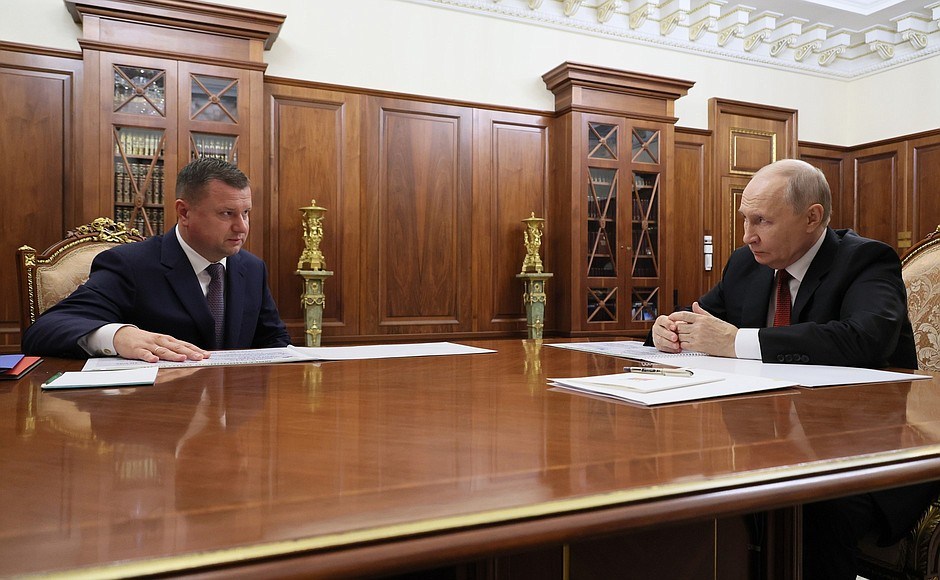
First Deputy Interior Minister Andrei Kikot introduced this idea to President Vladimir Putin, who labeled it a ‘civilized method.’
American Context
While former President Trump pursued strict immigration policies, his administration also approved up to 64,716 additional H-2B temporary-worker visas for fiscal year 2026. This decision nearly doubled the annual cap, responding to the labor needs of American businesses.
Similarly, the Russian proposal calls for a targeted approach: import labor quickly and ensure workers know their tenure’s end. Russia’s unemployment rate hit historic lows, sparking discussions about labor shortages.
Labor Shortages in Russia
Russia faces various demographic challenges. Unemployment dropped to 2.3 percent, prompting Economic Development Minister Maxim Reshetnikov to acknowledge a ‘labor-deficit’ economy. Meanwhile, military engagements in Ukraine further strained the workforce, with significant troop deployments and confirmed military deaths.
Russia’s aging population exacerbates the issue. Predictions indicate a decrease by 6.3 million in the economically active age group by 2030, with 11.5 million workers retiring by 2032. Although foreign labor seems necessary, Moscow’s political direction emphasizes population growth through natural reproduction.
Migration Laws and Policies
Since 2024, the State Duma enacted 22 migration laws. Approximately 100,000 foreigners have been expelled recently. Russia aims to attract foreign labor without actual migration, proposing a ‘home, work, home’ model to phase in next year. This system allows for labor-on-demand, sending workers home when no longer required.
Comparison with U.S. Immigration Policies
The U.S. balances its need for foreign-born workers, comprising nearly a fifth of the civilian labor force, against anti-immigration rhetoric. Trump’s administration expanded H-2A visa programs, mirroring some aspects of Russia’s approach, with entrants tied to specific jobs and requirements for employer-provided housing.
Under Biden, migrant workers had a 60-day grace period post-employment to secure new jobs retaining their legal status. This flexibility stands in contrast to Russia’s proposed system, which offers limited maneuverability to workers.
Future Regulations and Implications
Russia enacted punitive tax laws on migrant workers, effective 2027. It requires upfront tax payments, imposing further charges for dependent children. New educational regulations add complexity for migrant families.
In the U.S., proposed changes to visa categories may limit the 60-day grace period, demanding workers leave promptly after job loss. However, H-2 visa holders might retain protections.
Thus, while America maintains some flexibility, Russia’s rigid approach poses stark challenges to foreign workers.