
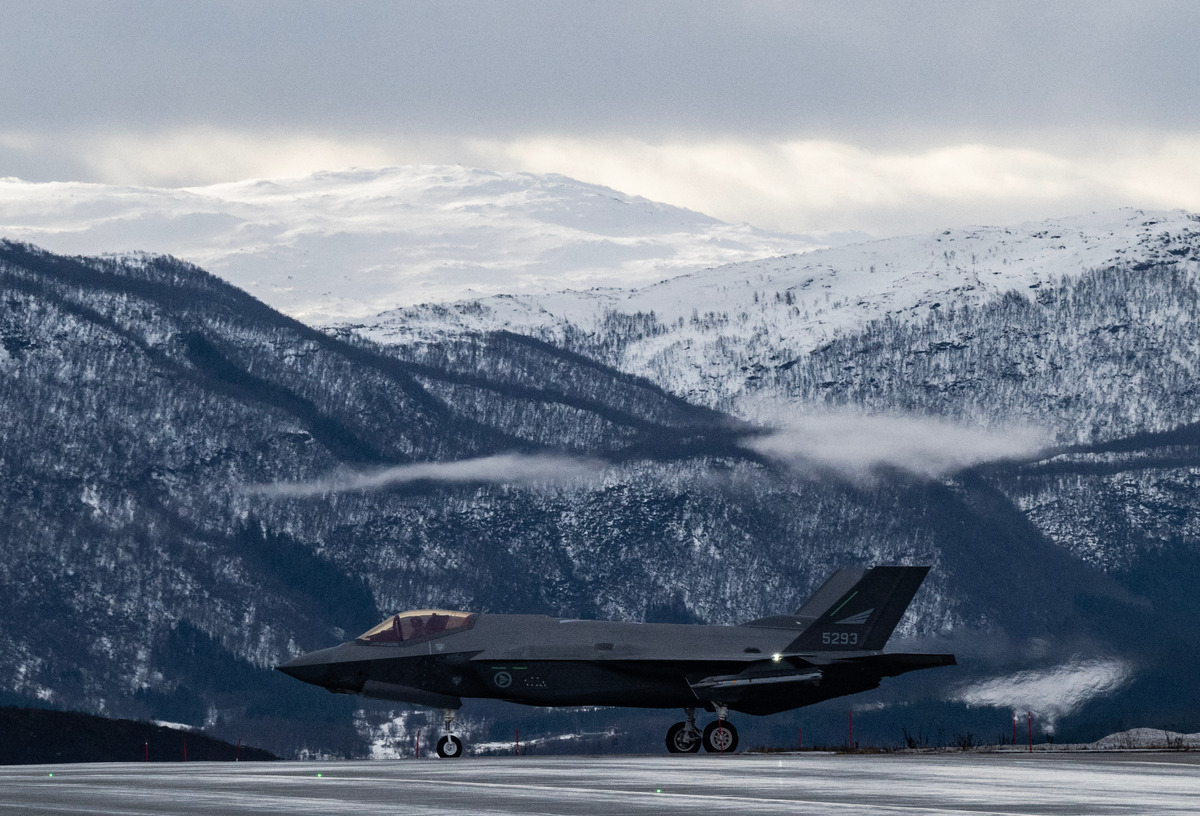
Russian military flights are increasing along NATO’s northern border, as reported by officials. This activity coincides with Moscow’s worries about Ukraine’s successful drone strikes deep within Russian territory and growing NATO interest in the Arctic.
Data from the Norwegian military highlighted that between January 1 and July 3, 2026, NATO fighter jets were launched 62 times in response to Russian aircraft near NATO’s northeast perimeter. A military spokesperson in Norway conveyed this information to Newsweek.
Norwegian fighter jets identified more Russian aircraft close to their airspace in the first half of 2026 than in any full year since 2021. Deploying jets in response to Russian aircraft near NATO airspace is common, but when sophisticated bombers approach, it’s often perceived as a threat, particularly with concerns over Arctic dominance.
Norway shares roughly 120 miles of border with Russia, stopping near strategic military bases at Murmansk and Severomorsk. These bases include essential nuclear submarines important for Russia’s nuclear strike capabilities.
The rise in Russian flights near Norway is believed to stem from fears of potential Ukrainian drone assaults targeting bases on the Kola Peninsula. Ukraine has maintained pressure by strategically striking bases and oil sites over 1,000 kilometers from the frontline. Recently, Ukraine targeted four Russian oil refineries, leading to Moscow’s retaliatory actions dating Thursday night, reportedly resulting in 30 casualties in Kyiv.
According to Norwegian data, Russian planes have been detected almost daily, with NATO scrambling jets 41 times in 2025, slightly up from previous years. The full-scale invasion of Ukraine in 2022 saw just half a dozen scrambles.
Norwegian assessments note increased Russian flights towards the Norwegian Sea, forcing regular identification missions by NATO jets. Notably, on June 22, Norway deployed two F-35 jets after detecting Russian Tu-160s and MiG-31s. Russian authorities acknowledged the event, claiming their bombers were escorted by foreign fighters.
Norway’s quick reaction alert system keeps F-35 jets ready to respond within 15 minutes of detecting unidentified aircraft. NATO usually executes approximately 40 of these alert missions annually.
Norway anticipates sustained Russian flight activity, enhanced by NATO’s bolstered Arctic presence. NATO allies introduced the Arctic Sentry initiative to affirm Europe and Canada’s capabilities in protecting the alliance’s northern sector against Russian maneuvers. This measure followed President Donald Trump’s assertions about U.S.’s role in Greenland’s security, Greenland being a strategic location for intercepting missiles aimed at the U.S.