
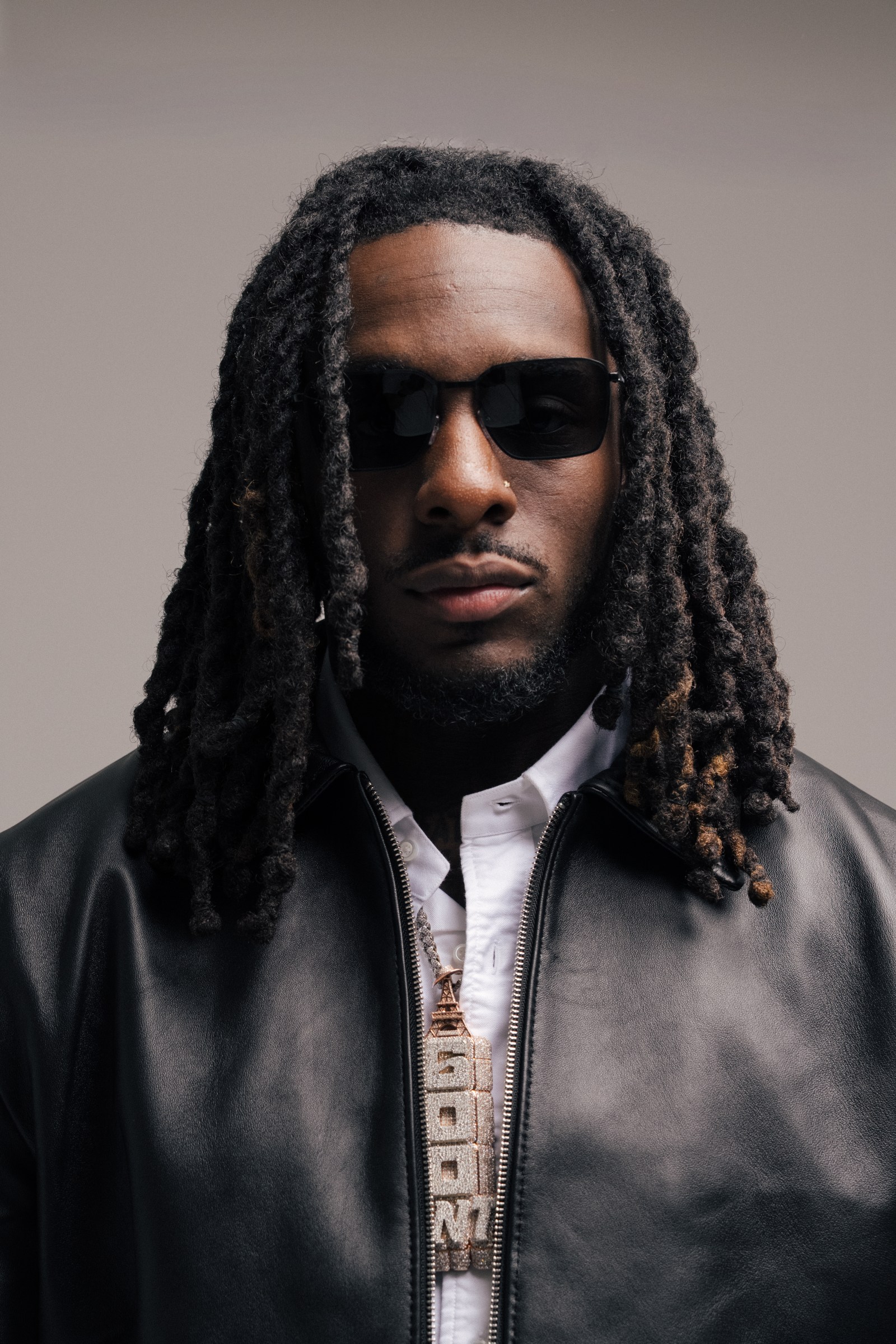
Before Ro$ama became known for his solo album My Forte, he started with humble tools and childhood companions. Growing up in Paris, Texas, he had a PlayStation, a cassette recorder, and a circle of friends. The 2009 video game 50 Cent: Blood in the Sand provided the instrumentals, while his imagination supplied the creativity. As a nine-year-old, he positioned the television next to the cassette recorder, pressed play, and began freestyling. Ro$ama recalled to Newsweek, “Once you beat the game, they give you all the instrumentals. It didn’t matter what beat it was.”
Music quickly became a family tradition. Reunions often featured informal freestyle battles, and Ro$ama was expected to perform. He humorously noted how, even today, family requests resurface during gatherings. “They knew we would freestyle on the cassette tape, so they would make me rap during the family reunion,” he said, reflecting on those times with a laugh.
A Family Name Finds Its Sound
Ro$ama’s early experiences now echo through My Forte, his latest solo album. The title captures his musical talents and honors his maternal lineage. “Forte is my mama’s last name,” Ro$ama explained. The term’s musical meaning and association with a person’s strongest skill offered a path to a profoundly personal concept. According to Ro$ama, the coincidence allowed him a framework wide enough for diverse subjects that showcased his range.
The album’s scope, with 20 tracks, lets Ro$ama explore varied themes. He delves into reflection, flexing, and regional storytelling. His stated aim was clear: to demonstrate his versatility, “I was trying to do different types of topics and skill-based songs to show I can do a lot of things.”
Writing Backward, Landing Forward
Ro$ama’s aspirations were influenced by rappers who viewed the genre as a proving ground. Artists like Lil Wayne, T.I., DMX, the Notorious B.I.G., Tupac Shakur, Nipsey Hussle, and Ludacris shaped his ambitions. Wayne’s clever wordplay set a high bar, with Ro$ama noting, “I love how he played with words and how he made you think.” This admiration became competitive drive, as he aspired to excel and demonstrate his skills.
Ro$ama’s songwriting process begins with a beat that suggests the emotional direction, but his verses often emerge from the conclusion backward. “I write backwards,” he explained. Starting with the last bar of a setup, he crafts the preceding lines so each phrase builds intensity. “So long as I got this last one, I can make it set up, and it’ll hit you.” This technique reveals the architectural nature of his verses, with similes, metaphors, and layered meanings arranged around impact, retaining narrative cohesion.
Two Sides of the Story
On “E.T.”, an album standout, a beat switch enables Ro$ama to transition between energies without losing narrative continuity. The initial slower rhythm allowed him to “build up” through storytelling; when the tempo changed, he seized the moment to accelerate while keeping the story intact. “When the beat switched, I was like, I can pop it and keep the story going as well,” he described.
Another track, “93”, highlights conditions in his hometown, while “E.T.” presents his current life phase, covering his highs and lows. These tracks showcase how Ro$ama moves fluidly between personal autobiography and community observations. Even if the album primarily focuses on skill, the strongest examples are rooted in actual experiences.
Ro$ama’s instincts also extend to film music. He contributed to “BEAST MODE (Godzilla x Kong),” preparing by previewing the film, visualizing its magnitude, and responding to the dynamics of BigXthaPlug’s verse. “I really just came on there trying to beat his verse and talk about the movie too.” This competitive spirit aligns with the song’s theme of cinematic giants clashing, reflecting the same logic in his solo work.
From the Room to the Center
The collaborative project 6WA offered Ro$ama a broader stage. Released in February 2026, it brought him together with new talents under the 600 Entertainment label. Initially, Ro$ama felt overlooked, saying, “I felt like I was in the room, but people didn’t notice me.” However, with the release, audiences began linking the voice with his identity: “Oh, you’ve been here, but I didn’t know it was you.”
6WA felt like a trial period, with its success setting expectations for future performances. “6WA was like the preseason, like trying to make the cut,” Ro$ama said. “Now I finally got y’all attention. Let’s see what he’s gonna do in the regular season.” At Rolling Loud, Ro$ama made this shift visible, reversing familiar dynamics by inviting BigXthaPlug onto his stage. “Instead of X bringing me out, I brought him out,” illustrating gratitude and symbolizing his journey from being unnoticed to commanding invitations.
With My Forte, Ro$ama seeks to show listeners a comprehensive view of his abilities, developed from cassette sessions in Paris, Texas. “I just want to let them know I can do everything,” he said with determination. “I’m coming for everything.”