
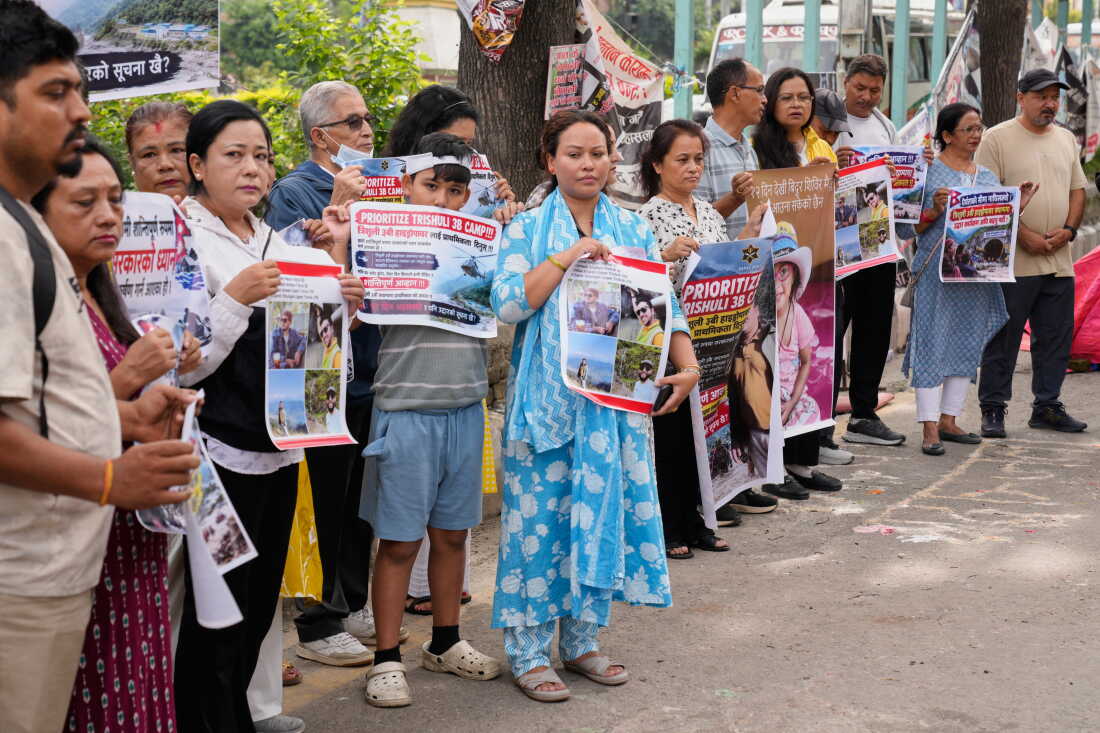
In Kathmandu, Nepal, relatives of flash flood victims are calling for increased efforts from authorities to locate missing individuals. Demonstrators displayed banners on Monday as they seek answers about their loved ones.
The flash floods on August 26, which struck areas along the Nepal-China border, have led to significant international attention. Following the tragedy, Nepalese officials promptly released details about the missing, including names, ages, and nationalities. Meanwhile, Chinese authorities took longer, revealing days later that 261 foreigners were missing in Tibet, spanning 23 nations.
So far, over 1,300 people have been reported dead in Nepal, and nearly 5,000 are missing. China reported over 40 deaths and more than 500 missing individuals. According to David Bandurski of the China Media Project, state-run Chinese news outlets like Xinhua and CCTV manage the information flow and shape public perception of the disaster. Bandurski notes that media control in China has intensified over the past decade.
Lack of Independent Access
Rights groups monitoring the situation have highlighted restricted access to affected areas in Gyirong County, Tibet. Ryan Fioresi from the International Campaign for Tibet emphasized the contrast with Nepal, where journalists and humanitarian organizations received immediate access.
NPR, which is closely monitoring the rescue efforts, has been in contact with international aid agencies and a rescue pilot operating in Nepal. Nepalese authorities actively share updates through social media. However, China’s limitations on foreign journalists accessing Tibet remain a challenge.
Although foreign journalists gained limited access to Tibet a week after repeated requests, large media organizations like NPR were not included. Reports suggest around 300 homes were destroyed in Gyirong County, with the casualty count potentially exceeding reported figures. The communication restrictions placed on affected Tibetans hindered local rescue efforts.
Chinese foreign ministry spokesperson Guo Jiakun refuted claims of underreporting, stating that China remains open in sharing disaster information. Guo dismissed criticisms and emphasized the country’s timely response.
Media Coverage in China
According to Rose Luqiu from Hong Kong Baptist University, Chinese commercial media traditionally had more freedom but are now facing stricter censorship. Outlets like Beijing News and Southern Weekly have attempted their own coverage, mainly focusing on tourists.
In past events like the 2008 Sichuan earthquake, Chinese media defied censorship with widespread coverage. Recently, Southern Metropolis Daily relied on reprints from Xinhua, limiting original reporting.
While Guo denied allegations of deleting social media content, observers noted the removal of flood-related videos. Additionally, Chinese authorities penalized individuals for spreading what they termed misinformation.
State media journalists have accompanied rescue teams to affected regions, detailing rescue operations and government responses. However, coverage of the flood victims and local communities remained minimal compared to the focus on rescue missions.
This summary draws on reporting by NPR’s Diaa Hadid in Mumbai and Mamita Bhandari in Kathmandu.