
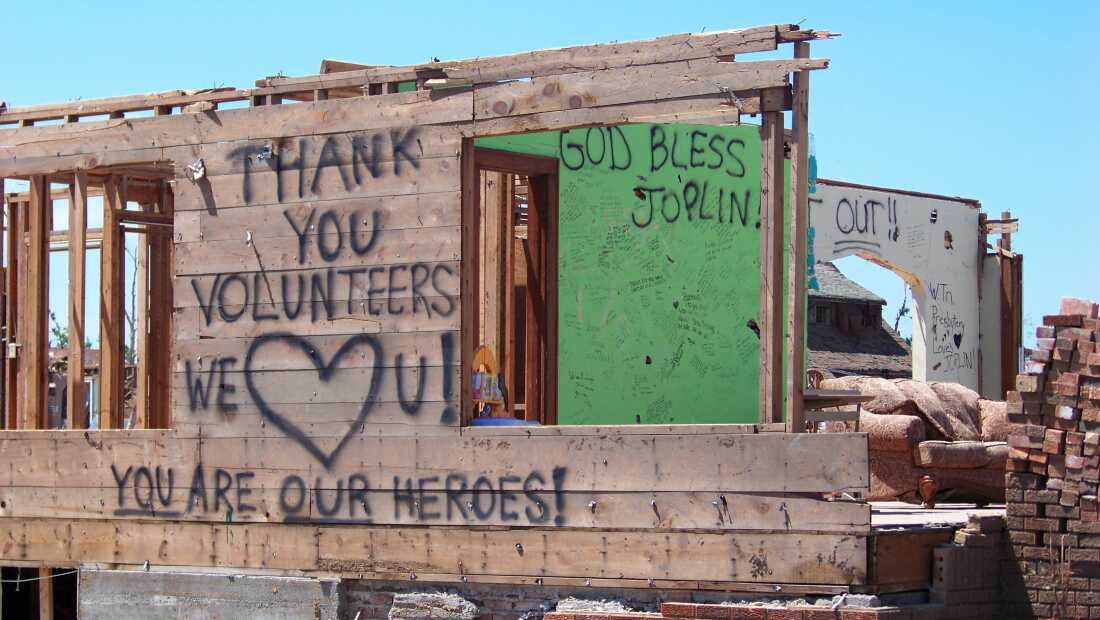
In the aftermath of a devastating tornado, Joplin, Missouri witnessed a remarkable outpouring of support and kindness. Thousands of volunteers from across the United States came to help the community recover. Expressions of hope were written on damaged buildings, and Joplin’s residents responded with gratitude by thanking the volunteers.
On May 22, 2011, Nanda Nunnelly returned home just as a massive, multi-vortex tornado struck. She described the sky as having a sickly green hue. When the tornado sirens sounded, Nunnelly, her husband, and their dog took shelter in a closet. There, amidst the chaos, she prayed for a painless experience if she were to die. Nunnelly survived, though her home was destroyed, and a significant portion of Joplin’s population was displaced.
This tornado, one of the deadliest in U.S. history, resulted in nearly 160 fatalities and immense physical destruction. Yet, Joplin soon became noted not for the tragedy, but for the compassion displayed during recovery efforts. Almost a century thousand volunteers helped clear debris and reconstruct the city, demonstrating unity and resilience. Columbia University’s disaster researchers noted minimal political conflict during this period.
Darren Fullerton, who managed an emergency shelter at Missouri Southern State University, recalled acts of kindness, such as ranchers cooking steaks for volunteers and individuals dressing as clowns to entertain children at the shelter. These efforts were a testament to the altruistic spirit fostered by the disaster.
Vice-Mayor Melodee Colbert-Kean emphasized how the recovery encouraged people to connect, breaking barriers of race and political affiliation. This phenomenon is termed catastrophe compassion, whereby disasters instigate an extraordinary level of kindness amongst people, transcending existing social divisions.
Social psychologist Jamil Zaki explained that, contrary to popular belief, disasters often inspire unity rather than chaos. Suddenly faced with shared circumstances, individuals prioritize collective welfare over personal identities. This emotional shift was evidenced in survivors forming deep connections during the recovery process.
Nanda Nunnelly’s ordeal prompted introspection and reconciliation. During the tornado, she recalled someone she bullied in adolescence, and later reached out to apologize on Facebook. This desire to give back led Nunnelly to join the board of a community center aiding the homeless during extreme weather.
Zaki theorized that personal trials can lead to altruism when individuals who received aid during hardship extend this kindness to others. This cycle was evident with volunteers rebuilding Joplin’s homes.
Jane Cage, who chaired Joplin’s Recovery Team, mentioned that shared experiences among tornado survivors forged a lasting communal identity. Despite the risk of fading solidarity after a disaster, efforts like local group meetings can sustain mutual aid. Joplin’s One Joplin organization emerged from recovery funds, advocating for affordable housing and community welfare.
Minister Jay St. Clair, who transformed his church into a shelter post-storm, continues to lead community efforts, recognizing increased attention towards meeting local needs since the tornado.
Zaki further highlighted society’s tendency to overlook disaster compassion, noting increased acts of kindness during crises like the COVID-19 pandemic. Contrary to perceptions of societal degradation during hardships, global data illustrates heightened generosity and cooperative spirit.
Pauline Bartolone, a journalist in the San Francisco Bay Area, explored these themes further in her coverage supported by the UC Berkeley Greater Good Science Center’s initiative.