
NABATIYEH, Lebanon — From the early hours of Tuesday, Aida Jleilati and her daughter sifted through the debris of what was once their home in Nabatiyeh, southern Lebanon. Their home was destroyed by a late May airstrike by Israel. They are part of the few returning residents seeking remnants of their belongings, following a deal between the U.S. and Iran aimed at ending their war. Iranian officials indicate the deal also requires cessation of the Israel-Hezbollah conflict in Lebanon.
Although fighting in southern Lebanon continues, airstrikes have decreased since the U.S.-Iran agreement. Many displaced residents are taking this chance to return and check their homes. Jleilati and her daughter, 22-year-old Sukaina al-Muhtadi, lived on the first floor of a three-story building that suffered collapse due to the strike.
The city has been targeted by intensive airstrikes and shelling, resulting in numerous casualties. Jleilati managed to salvage her husband’s scuba gear and some clothing. Her daughter hoped to find a childhood photo album. “All that we have gathered in our life has been wasted,” Jleilati stated. They realized their home’s destruction when al-Muhtadi saw images of the wrecked building shared online.
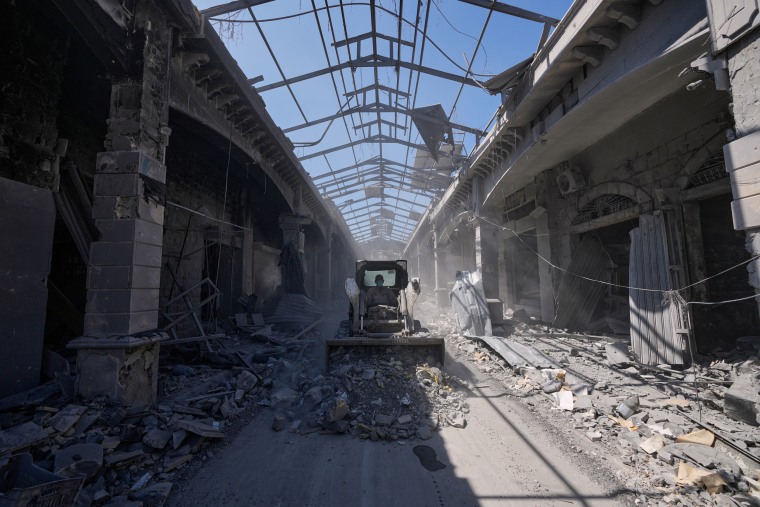
Nabatiyeh, a city with historical market importance, experienced significant devastation. On Tuesday, bulldozers worked to clear debris as residents returned, following the U.S.-Iran deal announced late Sunday. However, residents remain uncertain if the truce will hold, given prior fragile ceasefires started on April 17.
Recent weeks saw Israeli forces advancing up to 4 kilometers southeast of Nabatiyeh, a traditional trade hub. A municipality worker was seen cleaning a destroyed market shop on Tuesday.
The Historical Importance of Nabatiyeh
Established in 1920 following the Ottoman Empire’s fall, Nabatiyeh became a center for religious and cultural activities, hosting Shiite clerics linked to the holy cities Najaf and Karbala in Iraq. Historically, it was the capital of Jabal Amel, from where Shiite scholars traveled to Iran in the 16th century to aid in the conversion of Persia to Shiite Islam. Nabatiyeh remains integral to Shiite Muslims, especially during Ashoura, commemorating Imam Hussein’s martyrdom with mourning rituals.
The city suffered vast destruction while fighting continued nearby. At the city center, 75-year-old Kamel al-Kamel witnessed the devastation of his supermarket and coffee roastery, now reduced to ashes. With past experiences in various conflicts, al-Kamel expresses that this latest war has been the harshest. Despite the destruction, he feels grateful to be alive.
Samar Zuraik found her home standing but damaged and mourned the loss of her son Ali, 27, who perished in an Israeli airstrike. According to Zuraik, Nabatiyeh remains uninhabitable due to ongoing shelling and lack of essential services.
The human toll in Nabatiyeh is severe. Najdeh El Chaabiyeh Hospital, the area’s oldest, treated hundreds of wounded from the recent conflict. Medical director Dr. Shafi Fouani notes it was as harsh as previous wars and cites around 500 deaths and 1,200 treated patients, some requiring transfer to facilities in Beirut or Sidon.
The Lebanese Health Ministry reports over 3,800 deaths in the latest conflict, with losses on both Lebanese and Israeli sides. Intense artillery exchanges persist as Israeli forces attempt strategic captures near Nabatiyeh, prompting Lebanese military roadblocks.
For Jleilati and al-Muhtadi, discovering valuables among the rubble brought some solace. Though planning to return to Beirut, they hope the truce will endure, allowing them to eventually return and rebuild.