
Texas has long been a stronghold for Republicans. In 2024, President Donald Trump won the state by 14 points. Democrats have not secured a statewide election victory there in over thirty years. Despite this history, the GOP now contends with challenges in the state.
Recently, the American Airlines Center in Dallas hosted the first-ever midterm election party convention. This event reflected concerns about potential Republican setbacks in the upcoming November elections. Alarmingly, the Cook Political Report categorized the Senate race between Republican Ken Paxton and Democrat James Talarico as a toss-up. Governor Greg Abbott’s reelection campaign also faces unexpected pressure.
This GOP strategy entails a controversial parallel to medical practices. Doctors use antivenom, derived from a controlled exposure to the original toxin, to treat snakebites. Analogously, the Republican Party attempts to use Donald Trump’s influence to address his own campaign’s shortcomings. This political strategy hopes to energize the Republican base ahead of elections.
The convention in Dallas deviates from traditional formats. While the RNC describes it as a candidate and policy showcase for the midterms, it involves no candidate nominations or platform approvals. Instead, it appears to focus extensively on Trump, the one notable absent candidate from the ballot this year. Trump will deliver keynote speeches, sharing the stage with Vice President JD Vance.
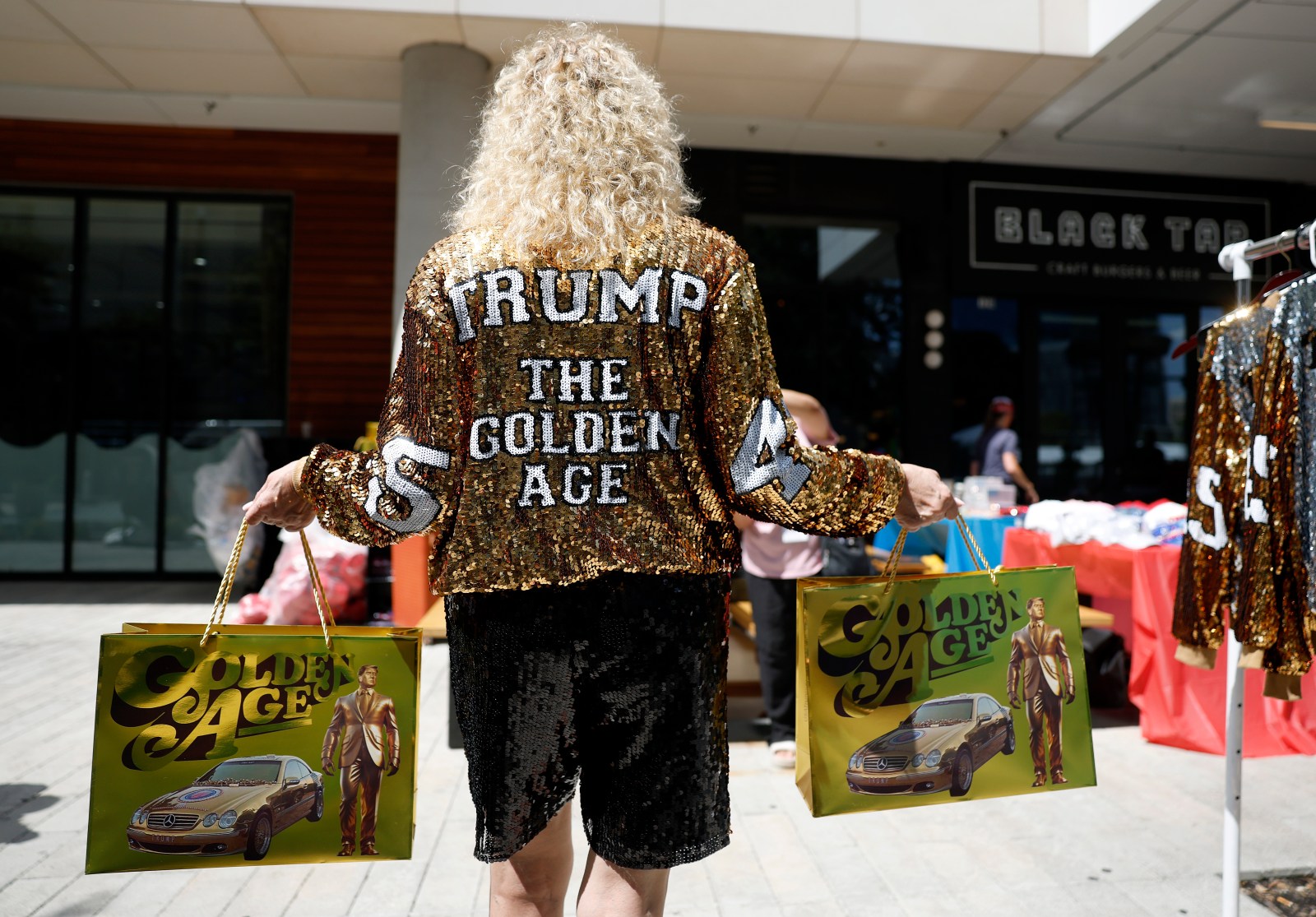
Attendees can purchase merchandise reminiscent of a Trump rally. Offerings include a $16 beer koozie portraying the 80-year-old president in cowboy fashion, complete with a Dallas logo resembling the Marlboro brand.
Trump’s Influence and GOP Strategy
Trump candidly alerted his supporters to a prevailing issue: low enthusiasm for elections where he is not directly on the ballot. He encouraged voters to act as if his name were part of the elections. This approach is bold given his presidency’s trajectory.
Trump began his term with 47% approval. By late August, according to Ipsos polling, this figure had dipped to 33%. Among independents, the decline was steeper, dropping by 20 points. In parallel, registered voters leaned 43% toward a Democratic congressional candidate compared to 38% for a Republican candidate.
The cost of living stood out as a major concern for voters. While 47% cited it as their main voting issue, Trump’s handling of the matter garnered disapproval from 70% of adults surveyed. Diesel prices had reached a record high of $5.85 per gallon, with gasoline prices close at $4.15. Moreover, crude oil exceeded $100 a barrel amid military tensions with Iran.
The Core Issue at Stake
Trump’s approval ratings remain low, yet among Republicans, 82% still support his presidency. Remarkably, midterms hinge more on voter turnout than candidate popularity.
Pew Research Center data indicates registered voters disillusioned with Trump may still support Republican candidates. Among those who disapprove of him but not strongly, 31% would vote Republican, 31% Democratic, 28% remain undecided, and 10% would opt for another candidate.
The Democratic Party does not enjoy overwhelming support, with 59% of Americans viewing it unfavorably. Thus, a large portion of the electorate holds negative views of both parties, creating potential for low voter turnout.
Challenges and Future GOP Dynamics
Despite Trump mobilizing the Republican base, turnout poses a challenge. The RNC event represents a gamble that Trump can activate more voters than he repels. However, Trump’s core support remains critical to overcoming voter apathy.
The question remains: How will Republicans sustain voter engagement once Trump’s influence wanes? As Trump ages and plays a reduced role in future elections, the GOP’s strategic alignment with the MAGA movement must adapt to a landscape potentially devoid of its leading figure.