
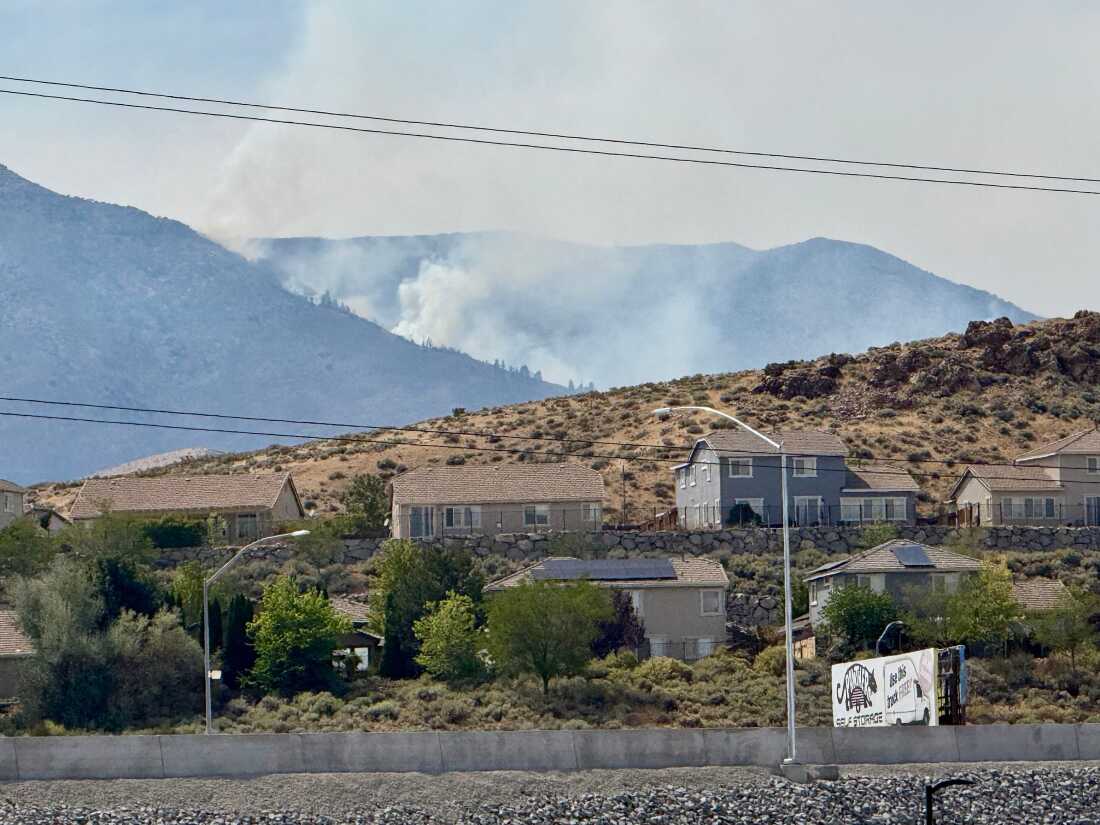
In Reno, Nevada, a fast-growing wildfire known as the Hawk Fire prompted the evacuation of 42,000 residents on Sunday, August 23, 2026. Another 45,000 individuals were advised to prepare for potential evacuation as the fire spread towards northern neighborhoods.
The Hawk Fire expanded to more than 15,000 acres since it ignited on Saturday in the Sierra Nevada foothills, according to the National Interagency Fire Center’s Inciweb. “We can confirm that the fire was human caused,” stated Shane Akerson, battalion chief with the Truckee Meadows Fire Protection District. While the cause remains under investigation, the fire has injured six people, including first responders, and destroyed several properties.
About 800 emergency responders are engaged in battling the fire. The evacuation zone extended to the edge of the University of Nevada by Sunday. Due to unpredictable winds complicating efforts to contain the blaze, officials warned evacuees to prepare for an extended absence from home.
Nevada Governor Joe Lombardo declared a state of emergency in Washoe County, covering areas like Reno and Lake Tahoe, activating the National Guard and unlocking federal resources. “This is an active and rapidly evolving situation,” Lombardo said, urging residents to follow local authorities’ guidance.
As the fire approached urban areas, officials urged those in “be ready to evacuate” zones to stay alert and have “go bags” ready for swift evacuation. Sheriff Darin Balaam emphasized the importance of using the Watch Duty app for real-time wildfire updates. “If you can get out now, please do so,” Balaam advised, facilitating firefighters’ operations.
The Reno-Sparks Convention Center offered refuge to evacuees, with hundreds spending Saturday night there, reported NPR member station KUNR. The Hawk Fire was first reported just after 11 a.m. Pacific Time on Saturday. “Red flag” conditions—warm temperatures, low humidity, and strong winds—fueled the fire, stated Richard Edwards, fire chief at Truckee Meadows Fire and Rescue.
Edwards highlighted the wind-driven nature of the fire, making it challenging to protect residential areas and lives. “The Hawk Fire is very dynamic,” he commented in a social media video, explaining the difficulties faced by firefighters.
Notably, the Hawk Fire follows two other major wildfires in Northern Nevada recently. The Bug Fire, started on August 8, burned nearly 94,000 acres and is 94% contained. Meanwhile, the Stallion Fire, igniting two days later, consumed over 40,000 acres and reached 98% containment.
This year, wildfires have charred over 7.7 million acres across the U.S.—the largest year-to-date burned area in a decade, according to National Interagency Fire Center data. Currently, firefighters are working to contain 79 large fires across 18 states.