
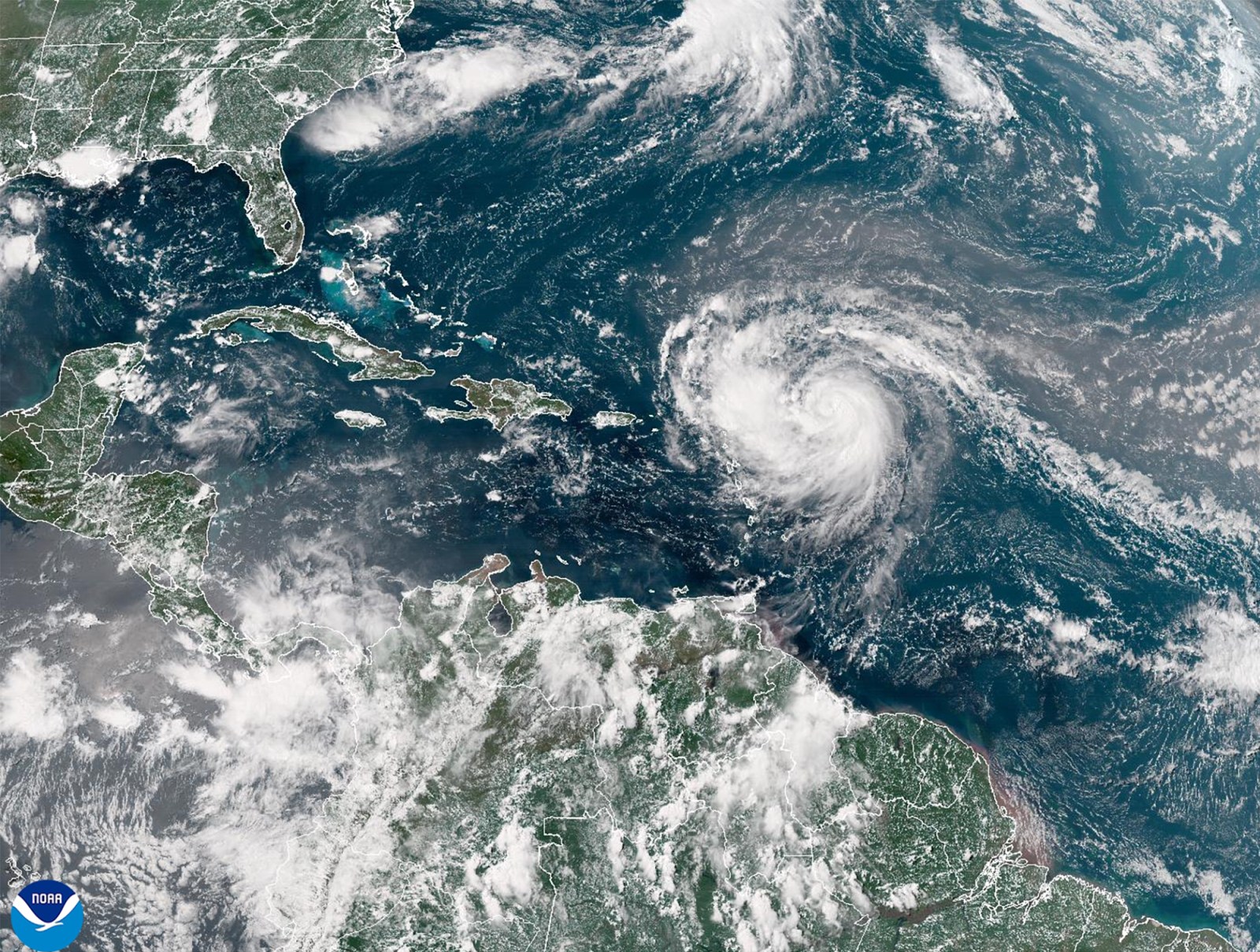
AccuWeather has adjusted its forecast for the 2026 Atlantic hurricane season. The change is due to the earlier-than-expected arrival of El Niño and growing confidence in its potential to strengthen considerably in the coming months. The private forecasting firm now anticipates between eight and 14 named storms, a decrease from the 11 to 16 storms predicted in March.
The revision follows the emergence of El Niño conditions in June, with predictions suggesting the phenomenon might intensify into a strong or possible “Super” El Niño later this year. According to Alex DaSilva, AccuWeather’s lead hurricane expert, El Niño has been the main factor in predicting a quieter season. “The stronger the El Niño gets, the fewer named storms we’re likely to get,” DaSilva stated, referencing the 2015 Atlantic season, which coincided with a strong El Niño and produced 11 named storms. He believes this pattern will repeat this year.
Despite the reduced storm forecast, AccuWeather has maintained other crucial aspects of its seasonal outlook. It continues to predict four to seven hurricanes, including two to four major hurricanes, with expectations that three to five storms will make direct impacts in the U.S. The areas facing the highest risk remain the northern and eastern Gulf Coast, the southeastern U.S. coastline, and parts of the Caribbean.
DaSilva explained that storms developing close to the coast pose a unique challenge compared to those forming off Africa and crossing the Atlantic. In such instances, warning times may be significantly shorter.
AccuWeather attributed the adjusted storm forecast to the early arrival of El Niño in June and its potential intensification into Super El Niño later this year. The company estimates a 70 percent chance of Super El Niño emerging and continuing into early 2027. El Niño generally suppresses Atlantic hurricane activity by increasing wind shear across the basin, disrupting the formation and strengthening of tropical systems.
Besides predicting fewer storms overall, AccuWeather expects broader weather patterns in summer and fall to lower the risk of major tropical impacts along the central and lower Texas coastline.
Understanding El Niño
El Niño is the warm phase of the El Niño-Southern Oscillation (ENSO), a natural climate phenomenon in the Pacific. According to the National Oceanic and Atmospheric Administration (NOAA), ENSO involves shifts between warm and cool waters in the central and eastern equatorial Pacific. These changes affect ocean heat release into the atmosphere, impacting circulation, temperatures, precipitation, and other weather events.
NOAA notes that El Niño occurs every two to seven years on average and typically lasts nine to 12 months. El Niño contrasts with La Niña, the cool phase of ENSO, while neutral conditions lie between the two phases. For El Niño conditions to develop, sea surface temperatures in the central and eastern tropical Pacific must rise at least 0.5 degrees Celsius above average, accompanied by atmospheric changes such as weakened trade winds and altered tropical rainfall patterns, according to NOAA.
2026 Atlantic Hurricane Season Storm Names
The Atlantic hurricane season continues through November. This year’s first named storm, Tropical Storm Arthur, emerged in June. Below is the full list of storm names for the season:
- Arthur
- Bertha
- Cristobal
- Dolly
- Edouard
- Fay
- Gonzalo
- Hanna
- Isaias
- Josephine
- Kyle
- Leah
- Marco
- Nana
- Omar
- Paulette
- Rene
- Sally
- Teddy
- Vicky
- Wilfred