
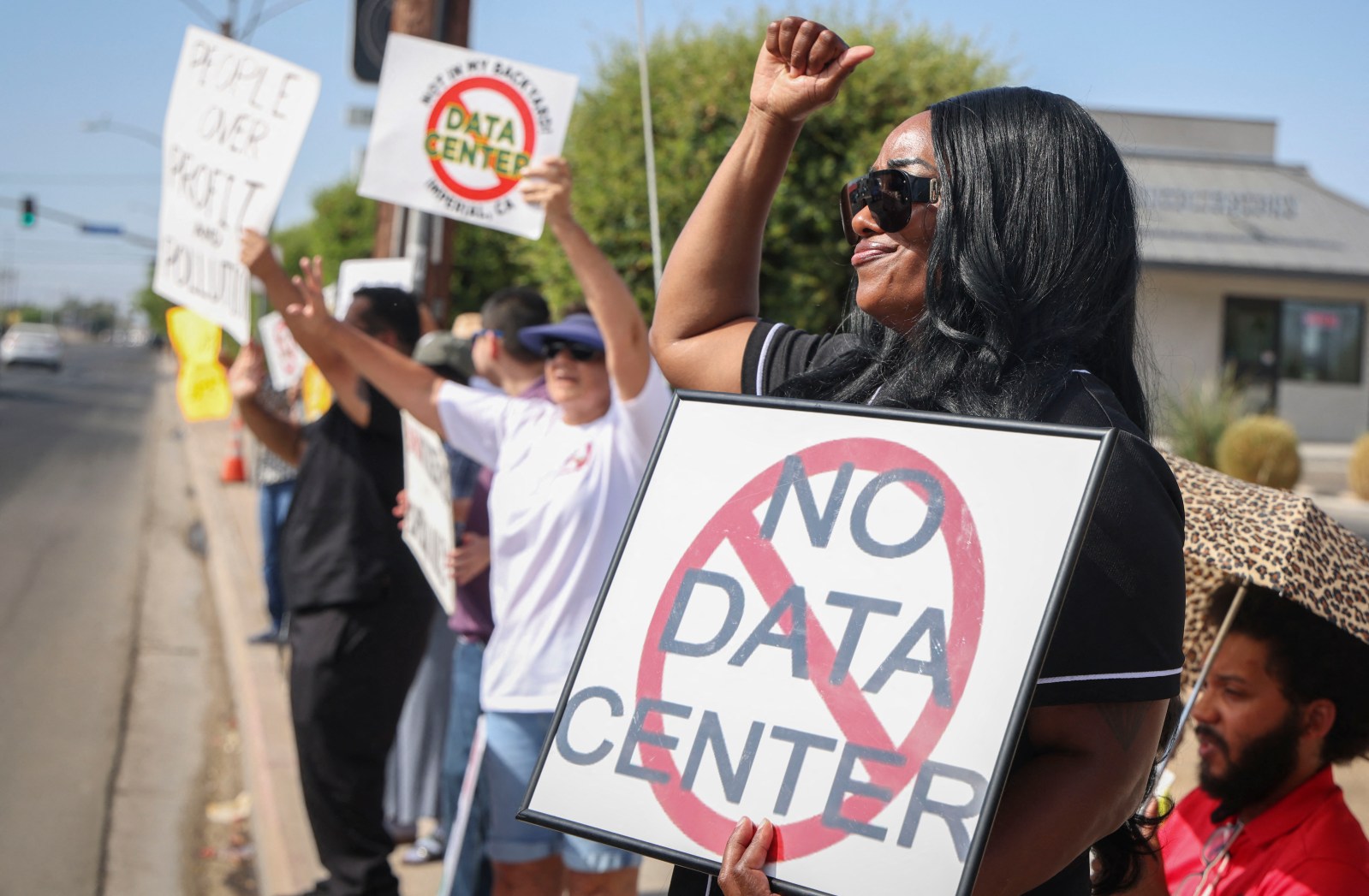
Sixty-three percent of U.S. voters now oppose the construction of AI data centers near their communities, according to a new poll by Emerson College. This is an increase of 21 percentage points from December 2025. The shift signals growing concerns over the costs associated with these facilities, such as increased electricity bills and fears about dwindling water supplies.
American Views on AI Data Centers
The Emerson College poll, conducted between July 19 and 20 among 1,100 likely 2026 voters, highlights a general unease about AI. Sixty-three percent express concern, while only 14 percent feel excited about artificial intelligence. Another 22 percent remain neutral.
When considering the facilities that power AI and machine learning, skepticism grows with educational attainment. A staggering 79 percent of those holding postgraduate degrees oppose data centers, marking a 27-point increase since December. For college graduates, 72 percent express opposition, up by 25 points. Among those with only a high school diploma, the opposition is lower at 37 percent, yet still shows a 9-point rise.
Overall, 27 percent of U.S. voters are supportive of AI data centers in their area, while 10 percent are neutral on the issue.
Community Concerns and Survey Insights
A Redfin survey from May also reveals that 53 percent of Americans resist building data centers in their regions, with only 34 percent in support. The opposition is prominent among baby boomers and Gen Xers, with 65 percent and 60 percent against, respectively. Comparatively, 42 percent of Gen Zers and 43 percent of millennials share this sentiment.
Data centers often face resistance more than other types of developments. For instance, 39 percent of respondents oppose nearby apartment complexes. Matt Ferris, a Redfin Premier agent in northern Virginia, notes clients’ concerns about noise, increased traffic, and high resource use. These factors contribute to a perception that data centers may negatively impact neighborhoods.
“A buyer recently asked me, unprompted, to make sure there wasn’t a data center planned near a home she was considering,” Ferris stated.
Growing Opposition and Responses
Nationwide, at least 430 groups across 40 states oppose AI data centers, with 192 forming in the past three months alone. These groups are built mostly through Facebook, indicating grassroots resistance to hyperscale data centers.
States are responding to these concerns by reconsidering incentives for data centers. New York recently imposed a one-year moratorium on new constructions as Governor Kathy Hochul aims to develop environmental standards. Other states like Maine and Virginia have proposed similar measures, although not all have passed or been enacted.
Oregon has also restricted new data centers from accessing tax breaks while assessing their effects on energy and the environment. Illinois, through the proposed POWER Act, could require data centers to cover their energy infrastructure costs, disclose water usage, and meet community-benefit criteria.
Benefits of Hosting AI Data Centers
Despite concerns, some communities benefit from hosting AI data centers. A Redfin analysis shows that Virginia’s Loudoun and Prince William Counties have outpaced neighboring regions in education spending growth, driven by personal property tax revenues from data centers.
Loudoun County, housing 176 data centers, has seen a 639 percent increase in personal property tax revenue per resident over 15 years. For Prince William County, where there are 77 facilities, that figure rose 349 percent. These funds have significantly bolstered education budgets, with spending per resident increasing by 82 percent in Prince William and 77 percent in Loudoun County.
The Federal Reserve Bank of St. Louis reports that the AI data center boom has positively influenced local economic activity in these regions.