
The ongoing conflict in Iran has left the public expressing several concerns. Many feel a lack of clarity about daily events in the Strait of Hormuz. Diverse goals are seen as important for the U.S., especially now that the conflict is prolonged. Opinions suggest the conflict is not progressing well.
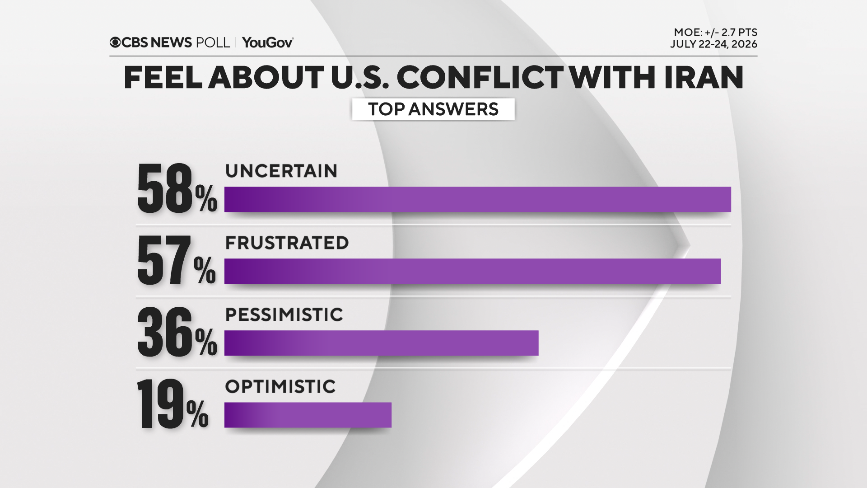
As fighting intensifies again, most Americans describe their feelings as ‘uncertain’ and ‘frustrated.’ It is expected that the conflict might stretch for several more months, if not years. A substantial portion of the public thinks the situation is more complicated than anticipated by the Trump administration. The public’s goals remain focused on opening the Strait of Hormuz, halting Iran’s nuclear pursuits, and addressing regional threats. Despite these aspirations, many feel the conflict’s resolution could be protracted.
While there is still a preference for ending the war over pursuing further concessions from Iran, fewer people now demand an immediate end. This change is driven mainly by Republican voters. Previously, many supported the president when a ceasefire memorandum was announced in June, but opinions shifted after the deal collapsed.
Public Divides and Uncertainty
A third of the population seeks additional concessions from Iran, prioritizing the aforementioned goals. Age considerations reveal younger individuals more readily advocate for ending the conflict compared to those over 65.
The uncertainty also stems from insufficient understanding of daily happenings in the Strait of Hormuz. President Trump is seen by many as not providing necessary clarity. Perceptions of the war’s progress have lessened, with mixed opinions on which side currently holds an advantage.
Domestic Concerns and Economic Impact
Domestically, conditions appear unchanged. Inflation outpaces income for most families, and the president’s efforts to address rising prices are seen as lacking. Half the population struggles with gas prices, mirroring disapproval for the ongoing military actions. The connection between economic hardship and the conflict is clear, as those suffering more tend to disapprove of military actions.
Overall economic sentiment remains negative but stable. Those experiencing stagnant incomes largely oppose new tariffs. President Trump’s approval ratings on Iran remain lower than his overall approval, though they have risen slightly since June. There is no clear political advantage regarding Iran strategy between Democrats and Republicans. People feeling no confidence in either party express higher levels of uncertainty.
This CBS News/YouGov survey involved 2,193 U.S. adults, conducted from July 22-24, 2026. The sample was weighted to reflect U.S. demographics according to various surveys. The margin of error sits at ±2.7 points.