
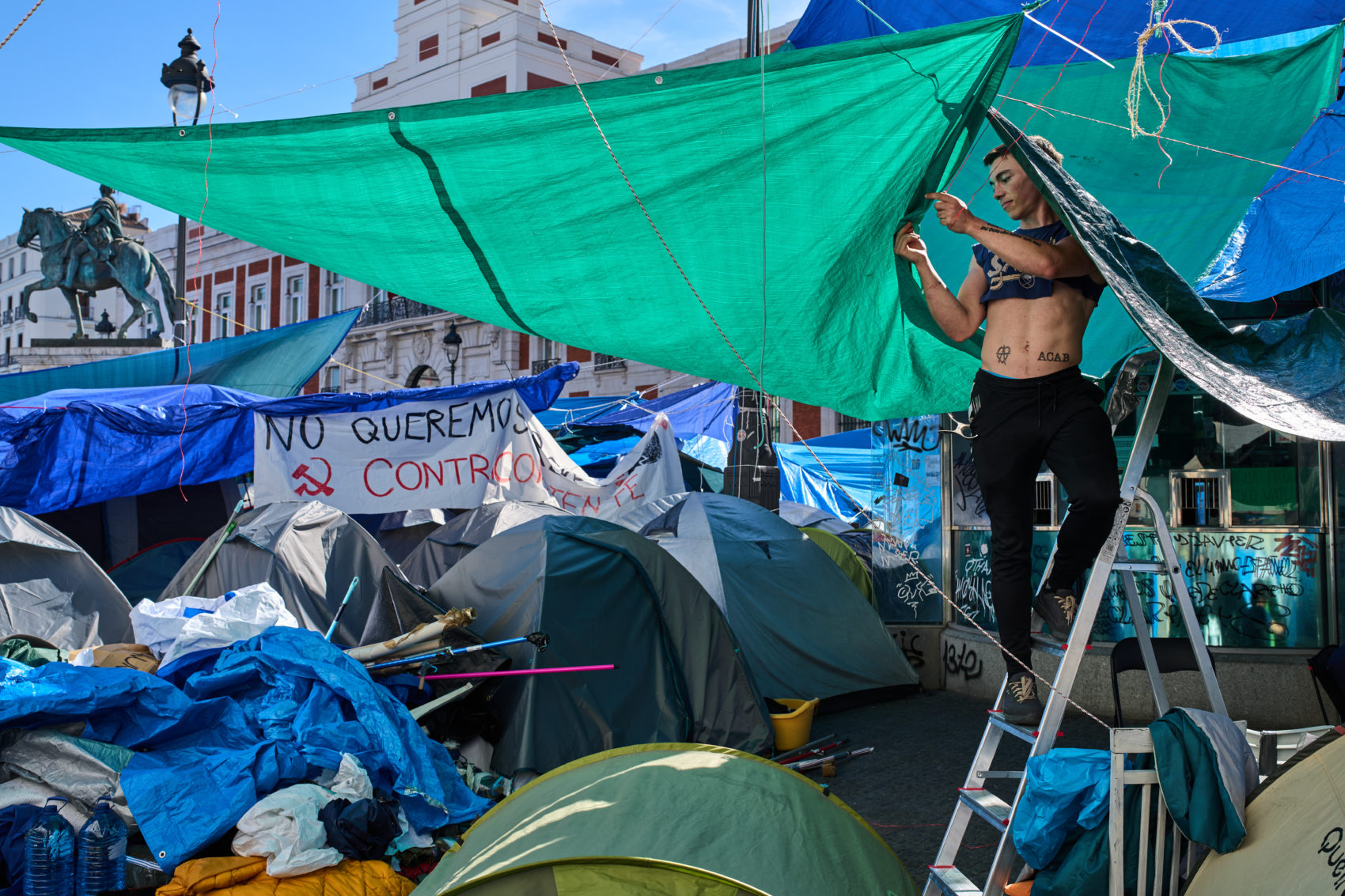
In Europe, rising fuel costs, dissatisfaction with schools, declining public services, and a housing crisis have sparked protests in several major cities. These demonstrations have led to arrests, looting, injuries, and violence across countries such as France, Italy, and Albania. Spain and Portugal have seen the rise of tent camps as people protest unaffordable rents and housing prices.
Fueling Discontent Among Young Europeans
María Silvestre, a sociology professor at the University of Deusto in Spain, highlights a strong sense of uncertainty and lack of control among young Europeans. She notes that specific situations can ignite this discontent, driving protests in the streets. France, Italy, and Spain are approaching important elections, with far-right parties gaining ground in Germany. The unrest also coincides with Europe’s critical support period for Ukraine, amidst external tensions.
Tension in France’s Streets
In France, protests have been large-scale, with some speculating blame on immigrants, while others see broader societal causes. French President Emmanuel Macron condemned the violence, accusing far-left activists of instigating chaos. Education is a major focus for protests, as students and unions demand more resources for understaffed and decaying schools. The protests have grown, encompassing concerns over living costs and public services.
Over the weekend, unrest resulted in numerous arrests and disturbances, including looting and property damage in cities like Paris and Marseille. French authorities have not attributed violence to immigrants. However, influential figures like Donald Trump have made inflammatory comments on social media.
Spanish Housing Concerns
In Spain, protesters have occupied central areas, like Madrid’s Puerta del Sol, calling attention to rising housing costs. The protests intensified after the eviction of an elderly woman. Although the government approved measures for affordable housing, parliamentary support was lacking, leading to early elections. Spain experiences challenges with high rent compared to salaries.
Similar housing protests have occurred in Portugal, highlighting widespread dissatisfaction with living conditions.
Italy’s Rising Living Costs
In Italy, the “Italia in Piazza” movement demands better working conditions, healthcare, education, and higher wages. Protests have seen peaceful demonstrations and violent outbreaks in cities like Milan. Italy’s inflation rate surpasses the eurozone average, contributing to the unrest.
A new protest group, the “Oct. 17 Movement,” has committed to regular demonstrations, keeping the pressure on the government to address these issues.
Albania and Anti-Corruption Efforts
In Albania, the Flamingo movement calls for Prime Minister Edi Rama’s resignation, linking him to controversial developments. High school and university students joined the anti-government protests, aimed at tackling corruption and governmental policies. Similar movements are evident in Serbia, where students lead protests against former leader Aleksandar Vucic’s political ambitions.
A free and trustworthy press is vital for democracy, highlighting the role of reliable journalism in fostering civil dialogue.