
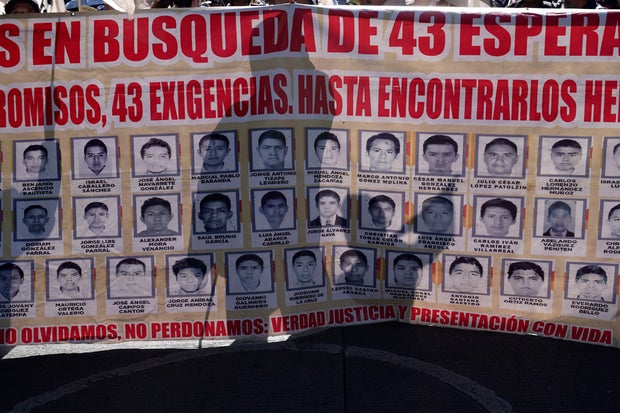
Twelve years have passed since the disappearance of dozens of students from a rural university in Mexico. Allegedly, the students were taken by drug traffickers and police. Recently, authorities identified 17 new suspects related to the incident.
A large march took place in Mexico City, attended by thousands, to seek justice for the 43 students from Ayotzinapa. They were studying to be rural teachers in Guerrero, a region known for violence. The students were intercepted by police in Iguala while traveling to a protest on September 26, 2014. Investigations indicate that the police handed them over to a local cartel.
In 2024, one leader of the Guerreros Unidos cartel faced arrest concerning the case. Although many arrests have been made, no convictions have occurred. The affair has deeply impacted Mexico, leaving a significant mark on its reputation. To date, only three bodies have been recovered.
Mauricio Pazaran, the special prosecutor, noted that a fresh analysis of phone calls from the night of the disappearance led to the 17 arrests. The investigation revealed communications between officials, police, crime syndicate members, and private citizens.
At a funeral home, investigators discovered an illegal weapon, a bone, and unregistered bone fragments and teeth. A public employee and a municipal police officer had used the cellphones of two students after their disappearance, according to Pazaran.
One new witness, involved directly but only a minor at the time, was a member of the Guerreros Unidos cartel. This individual was arrested in April. Currently, 168 individuals are being prosecuted, with 130 in pretrial detention.
During the ninth anniversary of the disappearance, relatives and supporters marched with a banner showing portraits and names of the missing students. Significant arrests, including a former governor and senior judge, have occurred over time.
Authorities managed to identify burned bone fragments belonging to a few of the missing students. The challenging investigation involves locating hidden burial sites in remote areas controlled by cartels.
Cartel violence in Mexico is a significant issue. It has led to over half a million people being killed or missing in recent decades, according to government estimates.