
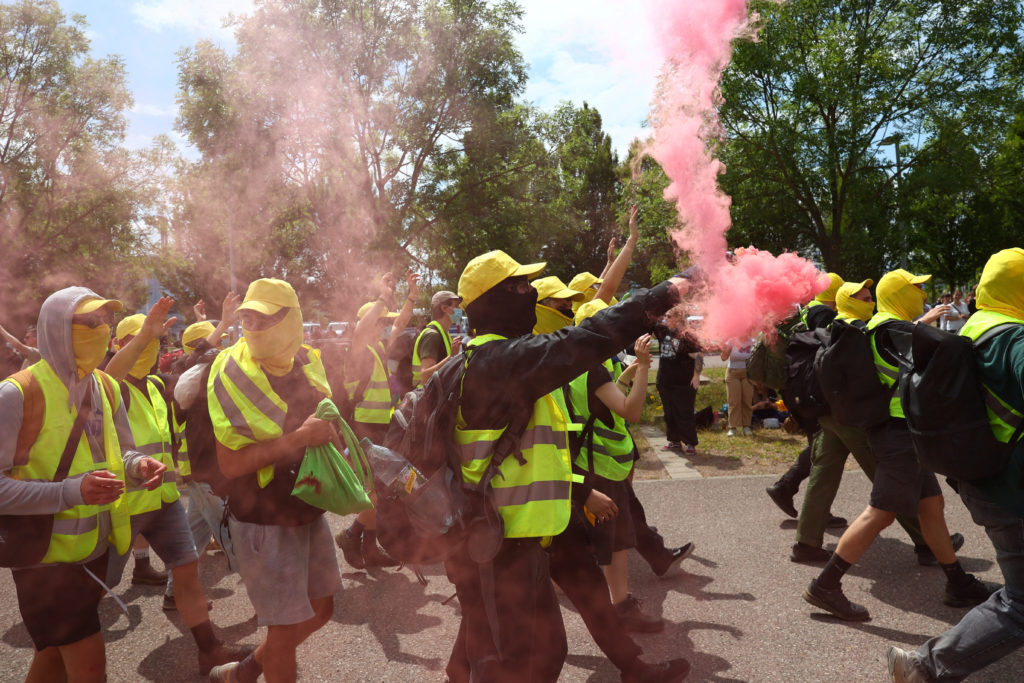
In Erfurt, Germany, the far-right Alternative for Germany (AfD) party convened its national convention, where delegates reelected their leaders, Alice Weidel and Tino Chrupalla, amid protest efforts aimed at disrupting the event. The election results saw Weidel securing 81% of the votes, while Chrupalla garnered 70%. Party leaders are elected every two years, and both ran unopposed.
Demonstrations outside the convention highlight the deep division AfD causes in Germany despite becoming the largest opposition party nationwide, particularly strong in Germany’s eastern regions. Tens of thousands protested, reflecting calls for the party’s ban; however, Germany’s supreme court has historically set a high bar for prohibiting parties.
AfD’s convention occurred alongside the 100-year anniversary of a Nazi Party meeting nearby, stirring controversy with accusations of symbolic timing, which the party denies. Historically, AfD’s influence continues to rise as it recently achieved second place in national elections and has become Germany’s leading political party.
“There are no peaceful seated blockades. There are no democratic roadblocks,” Chrupalla stated, dismissing protestors as mere tools of political rivals.
Police reported around 31,000 demonstrators in Erfurt, predominantly holding peaceful rallies against AfD. Lena Raupach, from the anti-fascist alliance “widersetzen”—meaning “resist”—voiced the group’s desire to stop the convention, critiquing AfD as pursuing policies benefiting the wealthy while neglecting ordinary citizens and equal opportunities.
Germany’s domestic intelligence agency classified AfD as a proven right-wing extremist group, a designation suspended amid legal challenges. AfD disputes these extremism claims, alleging the agency is politically motivated by mainstream parties.
AfD harnesses the unpopularity of government economic reforms beyond anti-migration themes that initially elevated the party. With upcoming elections in Saxony-Anhalt, AfD aims for an absolute majority, potentially seeing its first state governor, with aspirations of attracting defectors from rival parties.
Björn Höcke, a party regional leader, invoked Trump’s “Make America Great Again” slogan, suggesting Germany aspirations on the platform, drawing parallels to U.S. politics despite AfD’s criticisms of the Trump administration’s Iran war and alliances.
AfD continues advocacy for lifting sanctions against Russia and opposes weapon deliveries to Ukraine. The party’s platform increasingly influential, potentially reshaping Germany’s political landscape with upcoming elections.
Journalism plays an essential role in fostering democracy and civil dialogue. Supporting the free press remains fundamental.