
President Donald Trump launched unexpected military strikes on Iran during a NATO meeting in Turkey. These actions occurred after Iran was accused of attacking three merchant ships in the Strait of Hormuz. Trump’s decision to strike prompted a significant shift in the summit, originally meant to emphasize increased defense spending and support for Ukraine’s conflict with Russia.
The attacks came after a dinner hosted by Turkish President Recep Tayyip Erdogan, attended by leaders from NATO’s 32 member nations. The summit was intended to focus on progress in meeting defense spending targets. However, Trump’s actions highlighted tensions regarding the fragile interim agreement aimed at ending conflict between the U.S. and Iran. Despite the surprise move, Trump did not comment on the strikes immediately.
NATO allies were apprehensive about Trump’s potential grievances over the U.S.’s conflict with Iran, an issue many member countries had not been consulted on. Trump’s insistence on NATO allies’ “loyalty” led to some tensions, especially when some countries, including Italy, Germany, and France, declined to provide open access to their bases for U.S. operations.
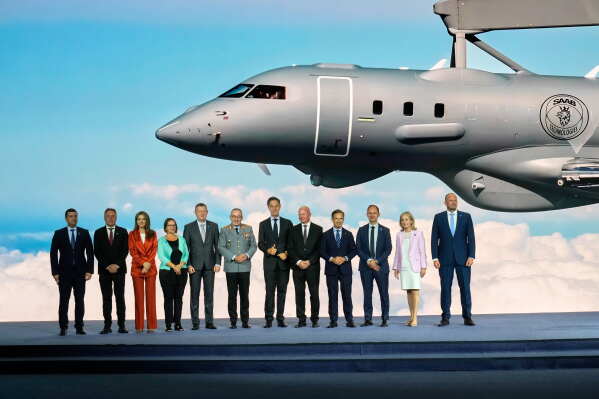
As the NATO summit unfolded, there was a renewed focus on defense spending. NATO Secretary-General Mark Rutte highlighted the “Trump Trillion,” referring to the $1.2 trillion added to defense budgets by European allies and Canada since Trump’s presidency. This increase was showcased during a “big reveal” event, emphasizing deals that would create jobs in the U.S.
Despite these efforts, Trump reopened old debates by suggesting the U.S. should control Greenland, a move that contradicted NATO’s principles of mutual defense. His claims about the burden the U.S. carries in NATO resurfaced, highlighting dissatisfaction with how some countries, like Slovenia, Belgium, Spain, and the Czech Republic, were meeting spending targets.
Another key topic at the summit was the future of U.S. military presence in Europe. The Trump administration’s vision for a “NATO 3.0” involved Europe taking a larger role in its own defense. A pending Pentagon review will consider troop reductions in relation to European defense spending and cooperation on base usage.
Amid these discussions, Ukrainian President Volodymyr Zelenskyy pressed for NATO membership for Ukraine. Zelenskyy emphasized his country’s robust military capabilities and the strategic advantage they would provide to NATO. Concerns about potential Russian hybrid attacks have risen, with northern and eastern European countries remaining watchful.
In another significant meeting, Trump was set to meet Syrian President Ahmad al-Sharaa. Despite al-Sharaa’s controversial history, Trump supports his efforts to rebuild Syria and its Western connections. Al-Sharaa’s stance on Hezbollah operations in Lebanon has caused concern in both Lebanon and Israel.