
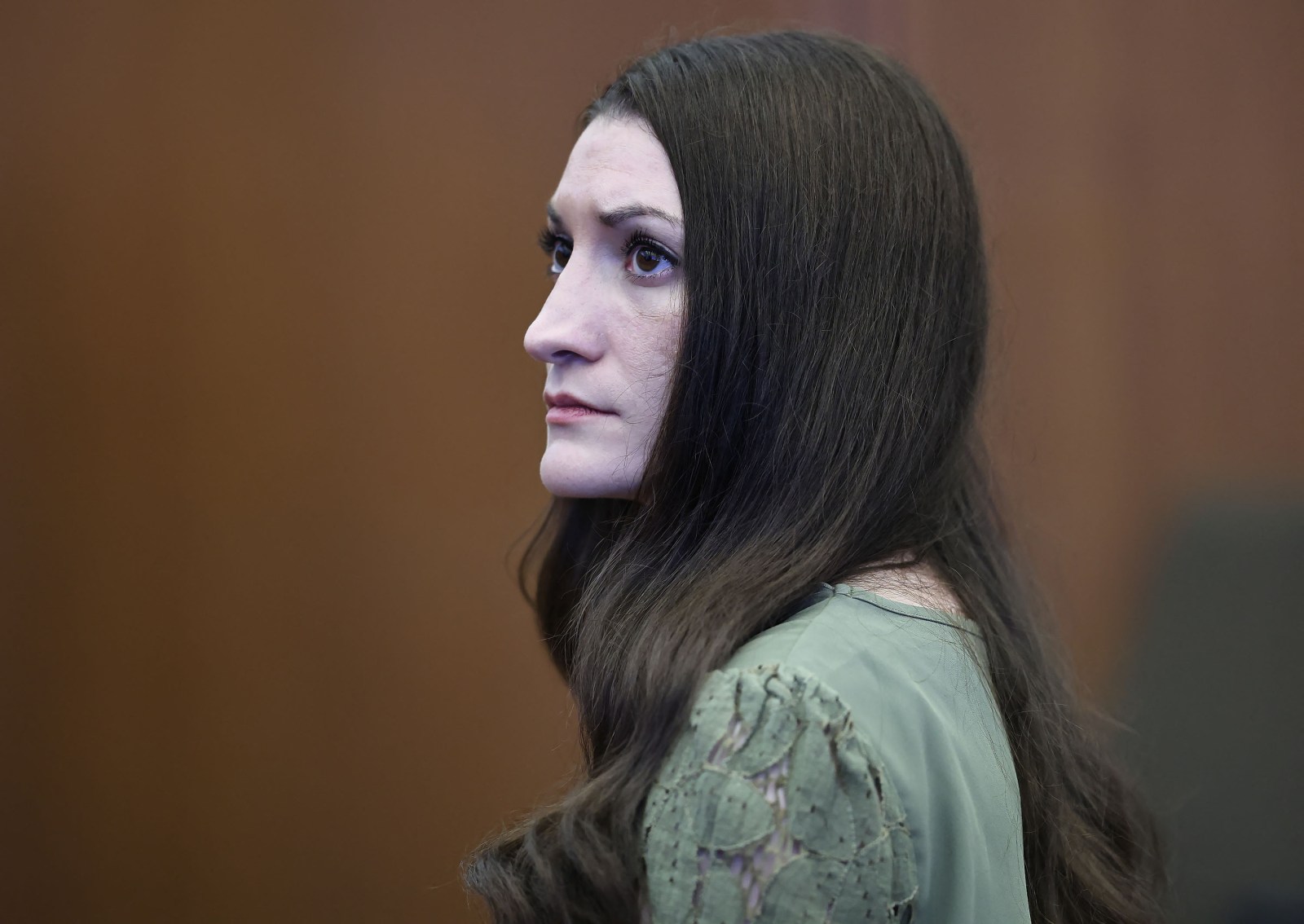
Legislation aimed at restricting the insanity defense in federal criminal cases is set to be introduced. This move follows the high-profile mistrial of Lindsay Clancy’s Massachusetts murder trial. Representative Clay Fuller, a Republican from Georgia, advocates for limiting the use of the insanity plea, arguing that mental illness should not excuse defendants from facing consequences.
Fuller stated, “I’m introducing federal legislation to limit the insanity defense in federal crimes.” He referenced the Clancy trial in a Facebook post, highlighting the national attention it received.
The Clancy trial spanned five weeks with testimony from dozens of witnesses. Despite extensive deliberations, the jury remained deadlocked, prompting the judge to declare a mistrial. Clancy, 36, faced charges of murdering her three children in 2023. Her defense claimed she suffered from postpartum psychosis at the time.
Fuller criticized the use of the insanity defense, characterizing it as a potential “get out of jail free” card. He plans to focus on legislation that aligns with measures similar to those in several states, aiming to curb its application in federal cases.
“Plenty of scholars have asserted that an insanity defense is a due process right,” said Kay Levine, a professor of law at Emory University. Levine views Fuller’s announcement as more of a political gesture, noting the difficulty of successfully proving insanity in court.
Restricted Insanity Defense in Some States
Currently, Idaho, Kansas, Montana, and Utah do not allow a traditional insanity defense. This information is available on FindLaw.com.
Differences in Standards Between Massachusetts and Federal Law
Massachusetts law requires proof that a defendant lacked the capacity to understand or control their actions due to mental illness. In contrast, the federal criteria demand clear and convincing evidence that a mental defect prevented the defendant from understanding the nature or wrongfulness of their acts.
Since Clancy was tried under state law, the proposed federal changes would not have impacted her case.
The Future of the Clancy Case
The jury in Clancy’s trial, though split 11-1 towards acquittal, led to a mistrial. Potential outcomes could include a retrial, a dropped case, or a negotiated agreement. Charges against Clancy, who worked as a nurse, carry the possibility of a life sentence.
A hearing is scheduled for September 29. Clancy’s attorney plans to seek case dismissal based on double-jeopardy.
Newsweek reached out to Fuller’s office for further comment.