
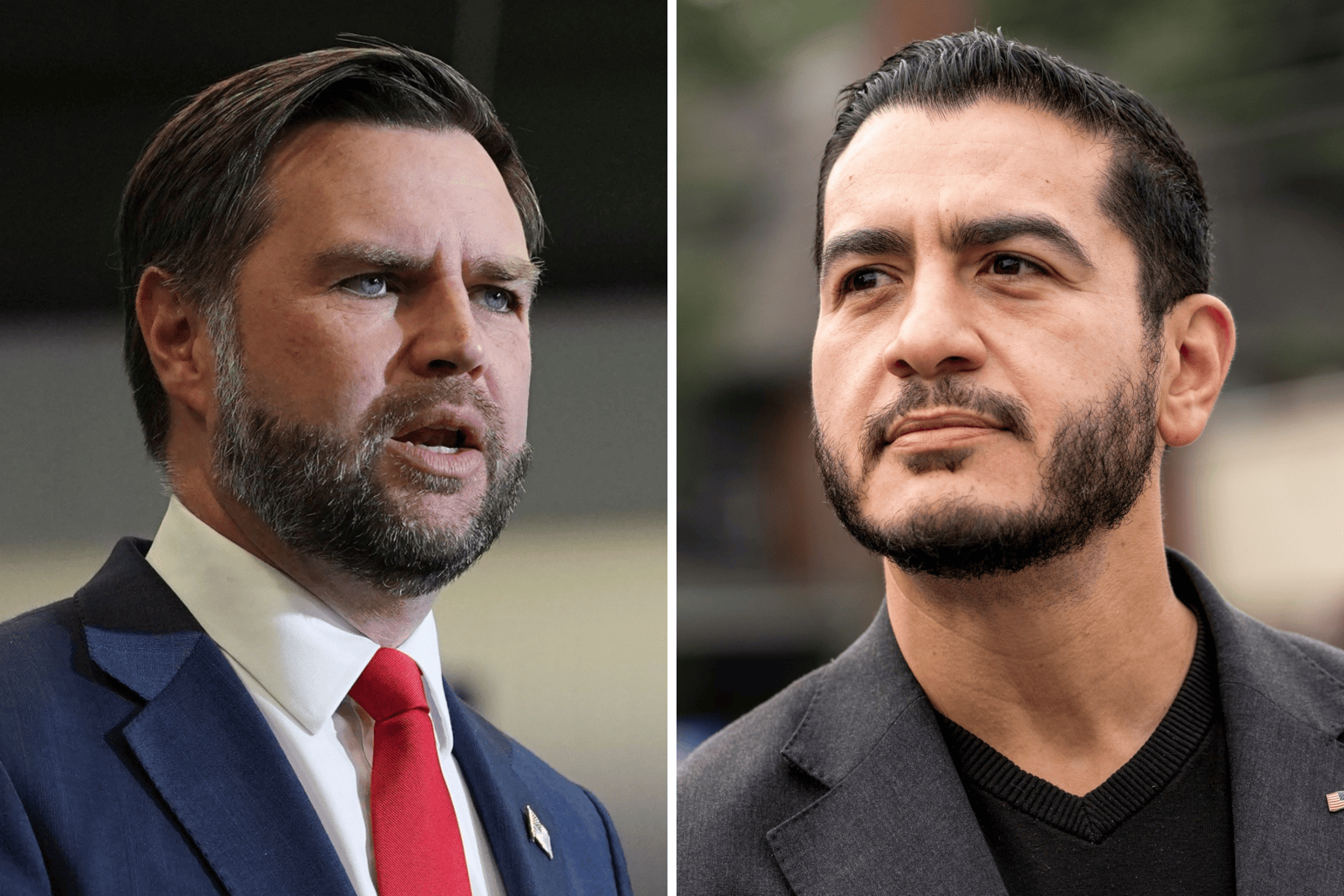
Vice President JD Vance and Michigan Senator-elect Abdul El-Sayed are planning a meeting, following their exchanges during the midterm election campaign. El-Sayed, an outspoken progressive, narrowly defeated Republican Mike Rogers in Michigan’s Senate race by a margin of about 7 points earlier in November. This contest was viewed as a key battleground and an opportunity for Republicans to reclaim a seat amid challenging national conditions. Vance, among the notable Republicans campaigning in Michigan, sought to boost voter turnout, but those efforts proved insufficient against the strong Democratic momentum that led to El-Sayed’s win.
The potential meeting is noteworthy given the contentious nature of their pre-election interactions, marked by mutual personal jabs. This meeting provides an opportunity for Vance to find points of agreement with El-Sayed, who will represent a politically divided state. At the same time, Vance may harbor ambitions for higher office.
In a statement shared during an interview on MSNow’s The Briefing With Jen Psaki, El-Sayed mentioned being contacted by Vance’s office. He expressed eagerness to engage, stating, “I understand that we have an opportunity to serve the American public. I didn’t run for office to get elected to engage in this red versus blue drama.”
Marjorie Sarbaugh-Thompson, a political science professor, noted the meeting could serve as a platform for both politicians to gauge their respective strategies and appeal. While they differ on many policies, their political ambitions and appeals to young male voters stand as commonalities.
What JD Vance, Abdul El-Sayed Have Said About Each Other
During the campaign, Vance criticized El-Sayed, who is Muslim, accusing him of backing Sharia law. At an Ohio rally, Vance stated, “There is a man who claims to stand for working people, who says not only should we have Sharia Law, but if you criticize it, you are a white supremacist.” In response, El-Sayed took to social media, retorting, “So do we think JD is taking Usha with him back in time to meet Papaw, or no…”
El-Sayed’s comment drew backlash, with Vance later demanding, “keep my wife’s name the hell out of your mouth because she’s way out of your league.” Tensions escalated when Vance labeled El-Sayed “very, very evil,” to which El-Sayed’s campaign retorted by defining evil as harmful policies that disadvantage working people while catering to billionaires.
Vance also accused El-Sayed of racist rhetoric, adding, “Abdul El-Sayed has engaged in the kind of anti-white racial hatred that has become common on the Democratic Party.”
El-Sayed’s response to Republican focus on critiques included labeling Vance as “Low T JD … brings the energy down every time you hear him talk.”
Vance Offers Olive Branch
In a bid to ease tensions, Vance extended an olive branch during a Fox News interview, offering to collaborate on improving lives in Michigan. “Let’s work together. I’m not worried about the politics of this. I’m worried about getting results for the people of Michigan,” Vance remarked.
El-Sayed responded positively, emphasizing his focus on serving working people and expressing interest in the proposed conversation.
Where Vance and El-Sayed Could Find Common Ground
Despite their differences, Vance and El-Sayed may agree on foreign policy matters, particularly concerning the Iran war. El-Sayed, who opposes the war and regards it as “illegal” and “unjustified,” is likely to support ending the conflict, a perspective Vance has shown concern over, especially in light of its perceived impact on Republican electoral losses.
Abdul El-Sayed’s Victory in Michigan
El-Sayed’s win was a triumph for progressive policies, backed by prominent figures like Bernie Sanders and Alexandria Ocasio-Cortez. Running on platforms such as Medicare for All and critical stances on Israel, he overcame concerns about his policies’ appeal to moderate Democrats. Ultimately, El-Sayed achieved a 52.6 percent victory over Rogers’ 45.4 percent, according to Michigan’s official data.
His election marks him as not only the first Muslim senator but also a leading progressive in a state once supportive of Trump in 2024.
As for the details of their anticipated meeting, including timing and discussion topics, information remains sparse. El-Sayed and other incoming officials will assume office in January 2027.