
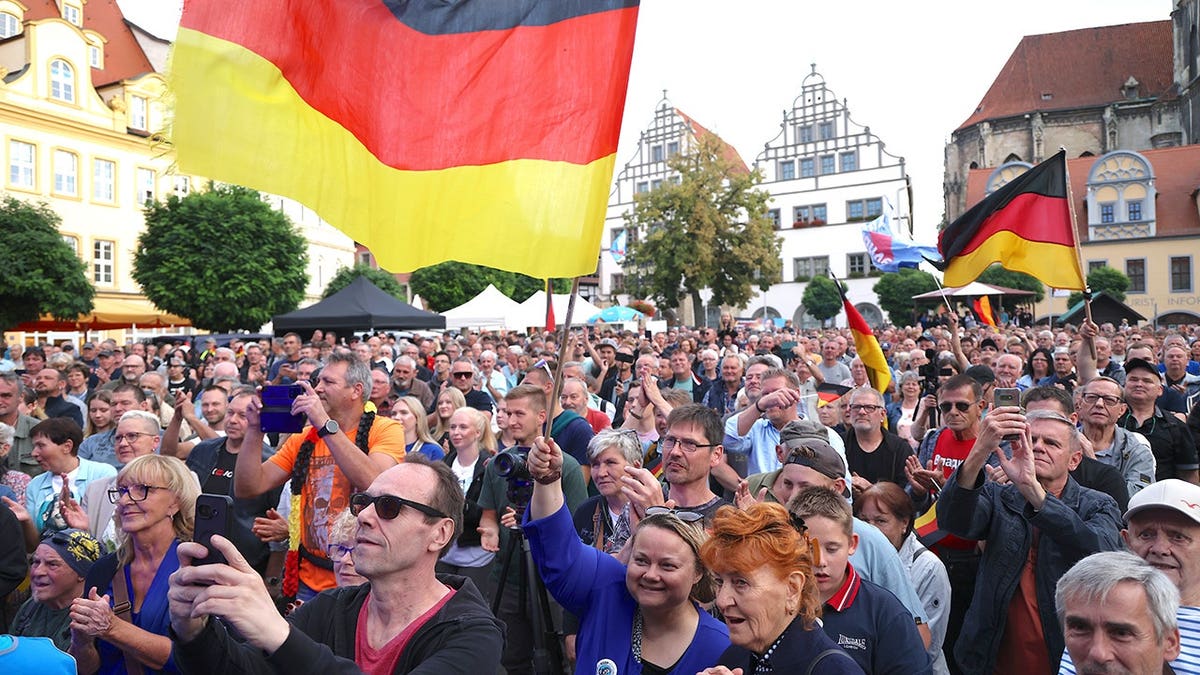
A significant political shift is anticipated in Germany’s eastern region as the far-right Alternative for Germany (AfD) party is poised to make history in the upcoming state elections in Saxony-Anhalt. The AfD, known for its nationalist and anti-immigration stance, has seen a surge in support among working-class and young voters.
Recent polls suggest that the AfD, led by charismatic candidate Ulrich Siegmund, could secure a majority in the state parliament. This outcome would be unprecedented, as no party outside the traditional center-left Social Democratic Party (SPD) or center-right Christian Democratic Union (CDU), including its Bavarian sister party the Christian Social Union (CSU), has won an outright majority in a German state parliament since 1949.
Political Implications
The reason Saxony-Anhalt matters,
political expert Daniel Schatz explained, is that the AfD is no longer just knocking on the door of power. It may be close to kicking it open.
Schatz highlights the potential symbolic impact of an AfD victory, indicating a shift in political power from established parties.
Janek Treiber, a political science researcher, noted that while the AfD’s policy influence could be limited by Germany’s federal system, their potential victory carries significant symbolic weight. It indicates a change in control that has been held by traditional parties since post-war Germany.
Party Platform and Controversy
The AfD is often criticized for its approsympatheticissian stance and strict immigration policies. In an interview, national co-chair Alice Weidel expressed support for closing borders, revoking protected status for Syrian refugees, and halting naturalization processes for migrants in Germany.
Germany’s Federal Office for the Protection of the Constitution classifies the AfD as a confirmed right-wing extremist
group, though this classification is on hold by court order. The AfD’s influence has grown as it maintains significant presence in media and public spaces, appealing to discontent with current political establishments.
The Election System and Potential Outcomes
Germany’s unique electoral system allows for potential outcomes where a party with a minority of votes can secure a majority of seats. Voters cast two ballots: one for a local candidate and one for a party, with the party vote determining seat allocation in parliament. Parties with less than 5% of the vote receive no seats, effectively boosting the results of leading parties like the AfD.
The AfD’s rise reflects broader trends in voter sentiment, especially among young people concerned about economic conditions. With regional elections approaching in neighboring states, the implications of the AfD’s growing support are significant for Germany’s political landscape.