
Pope Leo XIV has emphasized the need for stronger regulation and a cautious approach to artificial intelligence (AI) developments. His recent theological document highlights the risks of technology fueling conflicts worldwide. In the manifesto, Leo states that AI should not be controlled by a select few and stresses the importance of ‘disarming AI,’ making it less dominant over humanity. According to him, regulation alone is inadequate.
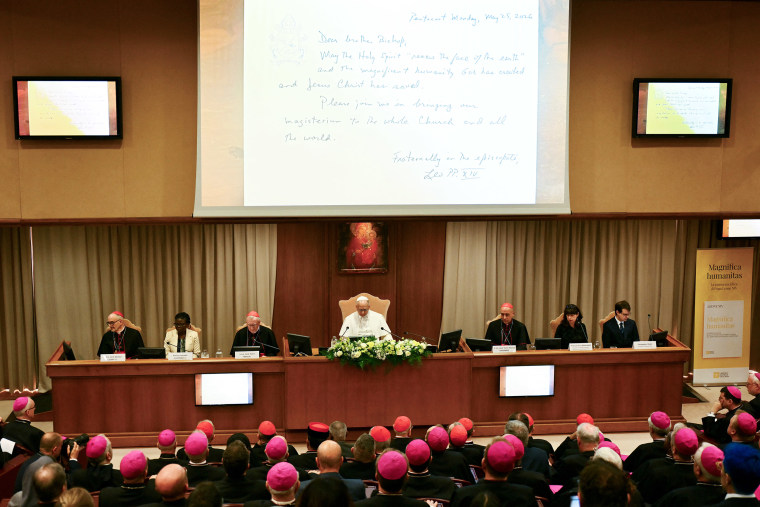
This marks the first encyclical by America’s first pope, titled ‘Magnifica Humanitas’ (Magnificent Humanity). Unveiled at the Vatican on Monday, the document was introduced by Christopher Olah, co-founder of AI giant Anthropic. The release coincided with tensions between the Vatican and former President Donald Trump, due to Anthropic’s stance against military use of AI.
During the Vatican presentation, Olah admitted that AI labs like his operate within constraints that may hinder ethical judgments. He emphasized the importance of outsiders addressing these issues. He urged religious groups, civil societies, and governments to seriously engage in this discourse, reinforcing the pope’s advocacy.
Pope Leo’s document, although signed on May 15 to honor a previous papal message from 1891, calls for an updated approach. He acknowledges technological advances but warns against undue corporate power wielded by a few. The papal message conveys that a moral AI must be broadly defined, not limited to select interests.
According to Vatican analyst Deborah Lubov, Pope Leo is passionate about science and technology and acknowledges AI’s potential risks. The document discusses the dangers of autonomous weaponry that may trivialize warfare. Pope Leo demands ethical constraints on AI’s military use to uphold human dignity and prevent an arms race.
He warns that society might embrace a violent power culture where peace seems temporary. The pope’s message is both ethical and ecological, addressing AI’s impact on human life. He argues that AI’s regulation is insufficient and that it needs to be a shared and accessible tool for all.