
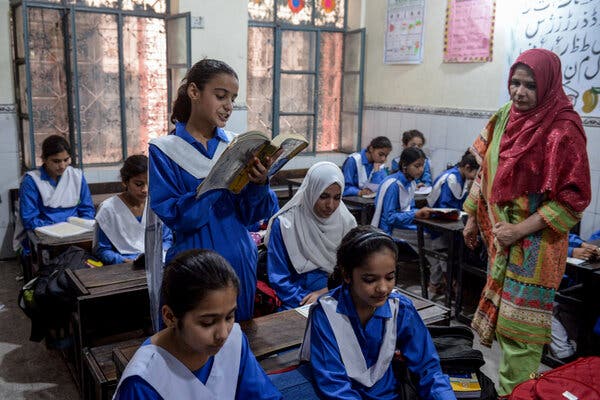
In Pakistan, activists highlight the need for more action to tackle the larger issue where only 12 percent of women and girls use safe, commercially made menstrual products. UNICEF reveals taxes contribute to about 40 percent of the products’ cost, making them unaffordable for many.
The Pakistani government aims to address this problem by abolishing sales tax on menstrual pads and tampons starting in July. This plan, announced by Finance Minister Muhammad Aurangzeb, targets making these essential products more accessible in a country where menstrual hygiene awareness is low.
Aurangzeb emphasized the importance of these products for women’s health, dignity, and their ability to fully participate in social activities. Women and rights activists have praised the initiative as a step forward in promoting menstrual health rights. This move follows public dialogue sparked after an activist challenged the tax on sanitary pads and tampons in court.
Pakistan ranks as the fifth-most-populous country globally, yet only about 12 percent of menstruating girls and women use sanitary pads. Comparatively, this usage is 36 percent in neighboring India, according to UNICEF.
Activists argue for further support in providing menstrual products and removing the stigma surrounding menstruation. In rural regions and conservative households, unhygienic rags and cloth pieces are often the sole choices. UNICEF estimates that one in five Pakistani girls miss school due to menstrual cycles.
Mahnoor Omer, a 25-year-old activist and lawyer, triggered the national discourse by petitioning the high court to classify sanitary pads and tampons as essential items. Her efforts earned her recognition as one of Time magazine’s “women of the year.” The court decision is anticipated by the year’s end.