
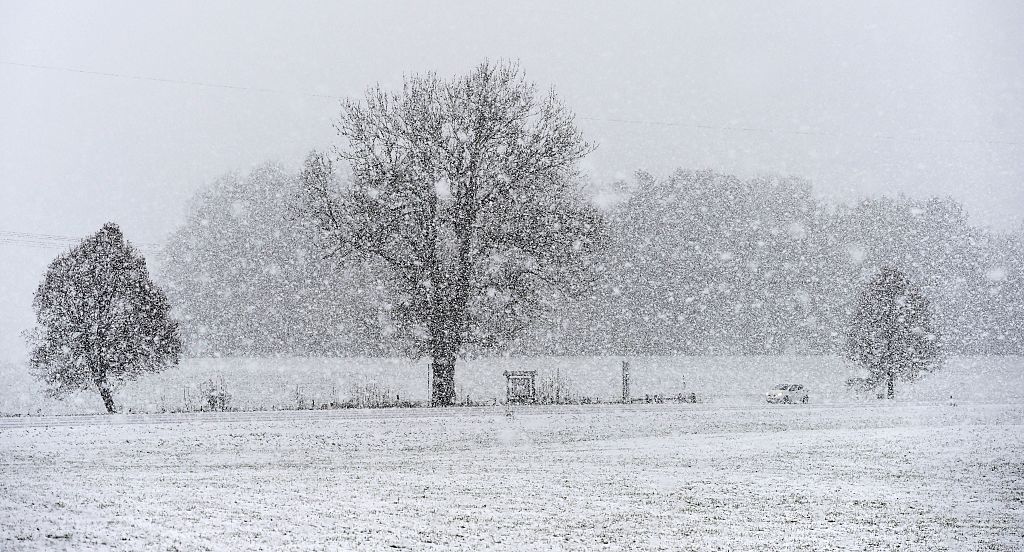
The Old Farmer’s Almanac has announced its Winter 2026–2027 forecast, highlighting the potential influence of a strengthening Super El Niño on weather patterns across the United States. Oceanic temperatures in the tropical Pacific are rising sharply, known to disrupt the jet stream and cause major winter storms. This change could bring wetter conditions, heavy snow, icy mixes, or sudden cold snaps to millions of Americans as climate signals shift for the new season.
Predictions for the 2026–2027 Winter Season
The Almanac forecasts a season marked by significant contrasts. Different regions will face varying weather conditions. An active southern storm track is anticipated, bringing wetter-than-average weather from Southern California through Texas, the Gulf Coast, and the Southeast. These regions might experience frequent storms, muddy terrain, and connections between cold air and moisture resulting in sleet, freezing rain, or heavy, wet snow.
Northern areas are expected to encounter volatile weather. The West, northern Plains, Upper Midwest, and Great Lakes are projected to have near-normal temperatures. However, “near normal” temperatures might still involve fast-moving storms, sudden cold snaps, periodic bitter cold, and brief warm spells.
The Northeast may experience several rounds of heavy, wet snow inland, whereas coastal regions could receive more rain or mixed precipitation. Minor variations in temperature can transform a prediction from slushy snow to a major winter storm.
Crystal Egger, an Emmy Award-winning meteorologist, mentioned it is premature to determine specific regional outcomes. However, early indicators suggest heightened risks for the southern tier. She emphasized, “California, the Southwest, and southern U.S. are regions I’m monitoring closely since a strengthening El Niño may lead to a more vigorous storm track in the southern part of the country.” She added that areas like the southern Plains, Gulf Coast, and Florida could face increased heavy rainfall and extreme weather risks.
Influence of Super El Niño on Winter
El Niño is the primary early signal affecting the upcoming winter, and its current fast strengthening is significant. As the tropical Pacific warms, it modifies the jet stream—the high-altitude air current directing storms over North America. A strengthened El Niño generally shifts the jet stream southward, intensifying storms and channeling moisture into the southern United States.
Super El Niño, characterized by notably warm Pacific temperatures, can magnify these effects. Wetter conditions become more likely across the southern tier, while northern states might face more varied patterns—swift cold snaps, sudden snow squalls, and alternating thaw and freeze periods.
Egger explained to Newsweek that a stronger El Niño “commonly fortifies the subtropical jet, resulting in more storms in the southern U.S.” This alteration may increase instances of heavy rainfall and flooding, particularly in California, the Southwest, and the South. “During El Niño winters, Florida specifically has seen higher severe weather including tornado occurrences,” she noted.
She stressed that when these storm systems encounter colder air pockets, they can generate substantial winter weather, such as snow and ice storms. For enterprises, she commented, the stakes are substantial: “For energy and transport sectors, it concerns operational disruptions—floods, mudslides, ice events, travel delays, infrastructure impact, and swift demand changes.”
The Role of Polar Vortex in Winter
The polar vortex, a vast pool of cold Arctic air generally concentrated near the North Pole, is still a factor of unpredictability. When its circulation weakens or shifts, frigid air can move south, sparking extreme cold episodes across parts of the U.S.
Forecasters monitor the Quasi-Biennial Oscillation (QBO)—a pattern of high-altitude winds near the equator—since alterations in these winds may influence the polar vortex later in the season. If the vortex destabilizes, areas expecting near-normal temperatures might experience abrupt drops into severe cold. The Almanac indicates that the potential occurrence of such events “is one of many questions” still observed as winter nears.
Egger noted past El Niño winters illustrate the unpredictability of these interactions. She explained, “The toughest challenges often arise from combined factors, not sole occurrences. No two El Niño events are identical.” She stressed that while strong El Niño winters have historically brought significant rainfall events, each season has diverse atmospheric setups.
Accuracy of Old Farmer’s Almanac Predictions
The Old Farmer’s Almanac claims about 80 percent accuracy for long-range weather predictions. Last winter, it reported an overall accuracy of 86.1 percent, including 88.9 percent for temperature trend forecasts and 83.3 percent for precipitation deviations. It correctly anticipated snow for the Southeast when a rare January storm deposited up to nine inches from Mobile to Pensacola, and eight inches in New Orleans.
The Almanac employs a method blending a proprietary formula dating to 1792 with modern meteorological tools, comparing solar activity, historical patterns, and long-term climate indicators to construct seasonal forecasts. Although independent reviews often show lower accuracy compared to the Almanac’s self-reported statistics, it remains one of North America’s longest-running sources for extended forecasts.
Egger urged caution regarding misconceptions about “Super El Niño.” She said, “A potent El Niño is likely to indicate a less active Atlantic hurricane season, but decreased activity does not translate to reduced impact. A single landfalling tropical storm or hurricane can create considerable ramifications.” She further explained that El Niño affects weather risks nationwide, influencing storm paths, rainfall, and temperature patterns far beyond the hurricane season.
Her advice for both businesses and individuals: “Avoid awaiting a weather crisis to understand its impacts on your operations. Preparedness for uncertainty begins with recognizing your risks prior to experiencing effects.”