
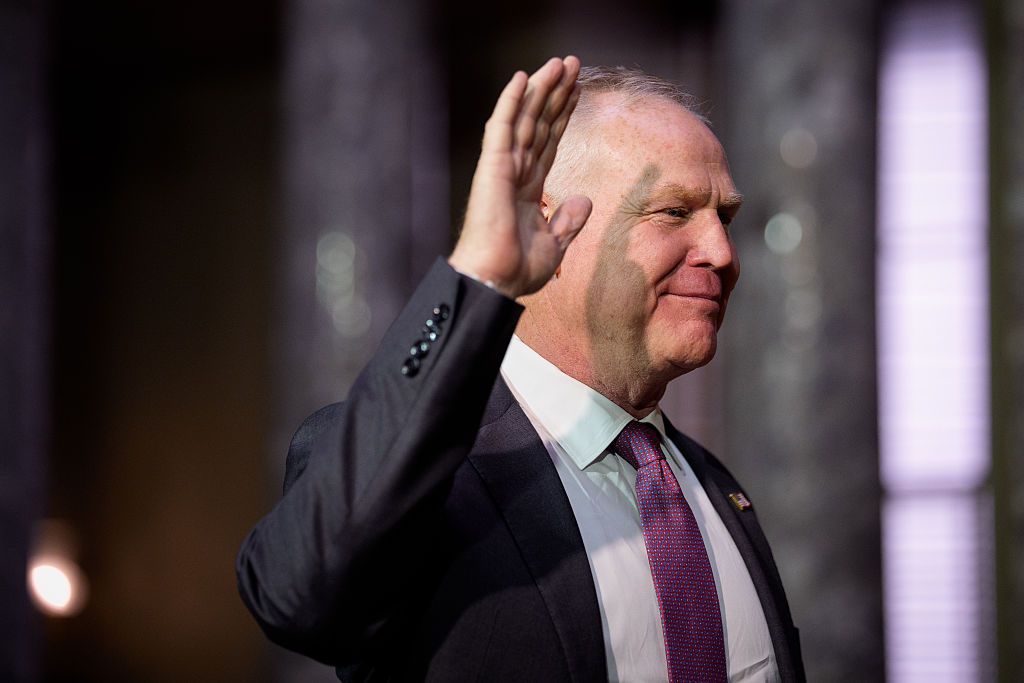
Senator Armstrong Calls for Permitting Rule Changes
Oklahoma Republican Senator Alan Armstrong advocates for an overhaul of federal permitting rules. In a Newsweek interview, Armstrong emphasizes the need for new power infrastructure to support data centers and other rising electricity demands without imposing extra costs on households.
He highlights a growing affordability issue concerning artificial intelligence infrastructure. According to Gallup, 71% of Americans oppose AI data centers in their locality. Researchers are debating if the rapid expansion of these centers is driving up household electricity prices.
Blaming Infrastructure, Not Data Centers
Recently appointed to the Senate and barred from running for a full term under Oklahoma law, Armstrong told Newsweek that data centers have become scapegoats for rising utility bills. He points to inadequate generation and grid infrastructure as the real culprits. His proposal would require new large users to shoulder the additional costs they impose on the system.
“I think that we have to have data centers. I think data centers have kind of become the scapegoat on high energy prices.” – Alan Armstrong
Public Opposition Across Party Lines
Data centers face strong public resistance. Gallup’s survey found 71% opposition to local AI data center construction, compared to 53% for nuclear plants. The survey’s margin of error is plus or minus 4 percentage points.
April’s Gallup survey reveals broader concerns. Opponents cite resource use, including water and energy, and potential economic effects like higher utility bills.
“I don’t think anybody’s ever been successful in civilization at stopping progress,” Armstrong told Newsweek. Stopping the industry could risk pushing investment overseas.
Economic Debate: The Real Impact on Electricity Bills
The demand for new infrastructure is undeniable. An analysis by Lawrence Berkeley National Laboratory and Brattle Group forecasts that U.S. data center electricity demand may triple from 2024 through 2028. Serving large users creates risks for utilities, including insufficient power supply and investments going unused.
Research by Scalera, Bosetti, and Pecci examined utility territories and data centers, revealing that residential prices increased, especially in areas with capacity constraints. They found that about 10 data centers lead to an 11-13% price increase, and a single large hyperscaler causes a 4% rise.
“Data centers do cause household electricity prices to rise.” – Cameron Scalera
Diverging Research Findings
The Electric Power Research Institute found that data-center growth from 2015 to 2024 modestly lowered average retail electricity rates. Increased capacity spread fixed system costs across more sales.
Armstrong’s plan requires data centers to pay more than their share for power, aiming to reduce other customers’ bills. Large-load tariffs are gaining traction as regulatory tools to prevent existing customers from subsidizing new infrastructure costs.
Armstrong’s Stance on Russian Diesel and U.S. Infrastructure
Armstrong criticizes President Donald Trump on Russian diesel, advocating for expanded domestic infrastructure instead of sending funds to Moscow.
His permitting agenda aims to address delayed pipelines and refining capacity restrictions, impacting America’s ability to manage domestic energy shortages. Although he hasn’t discussed the legislation with Trump, Armstrong believes the administration would support it.
Armstrong Rules Out Presidential Run
Appointed to the Senate to fill a vacancy, Armstrong doesn’t plan to seek further political office. He dismisses a 2028 presidential run and wants to engage with business opportunities post-Senate.
He expresses frustration with slow governmental processes when tackling long-term issues like permitting reform.
For Armstrong, the debate over AI infrastructure costs remains unresolved. The available power supply, required infrastructure, and who pays for these upgrades are crucial considerations.
Newsweek’s reporters and editors used Martyn, our AI assistant, to produce this story.