
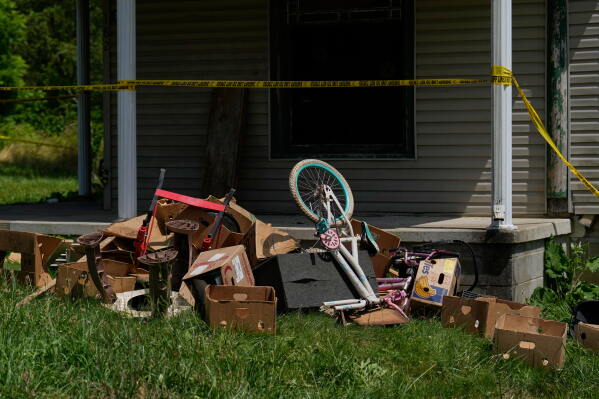
In Hamden, Ohio, a community grapples with shock after the discovery of 16 siblings living in deplorable conditions. Neighbors, local store employees, and investigators alike question how such a situation could go unnoticed for years. Investigators reveal scant details, leaving the village looking for answers.
The children, ranging from 1 1/2 to 18 years old, were confined to a small room, according to investigators. Many were unseen by neighbors and unregistered in local schools. Emily Collins, a local business owner, expressed her disbelief, stating, “Right under our noses and nobody was able to help them sooner.” She described how the incident contrasts with the close-knit nature of their community.
Authorities discovered the squalid conditions during a visit for an unrelated investigation. Seven of the children needed hospitalization, with one in critical condition. Child welfare officials now have temporary custody. The family’s parents and grandparents face child endangerment charges with bond set at $300,000 each.
Legal Perspectives
Thomas Stolly, representing the mother, Elizabeth Siders, emphasized her concern for her children. “Her first concern was not, ‘When can I get out of jail,’ but was, ‘Are my children OK,’” Stolly noted. He argued the case stems more from isolation than malice, suggesting that Elizabeth has been shaped by her circumstances since marrying at 15.
Prosecutors have not yet shared evidence with the defense. Dorian Baum, attorney for the elder Siders, also urged caution, requesting the public to reserve judgment until facts are clearer.
The Community’s Shock
Neighbor Joseph Stewart observed no signs of children over his six-year residency in the otherwise quiet neighborhood. This reflects the family’s adeptness at keeping their situation hidden, as noted by Ohio Attorney General Andy Wilson, who pointed out the family’s avoidance of creating any medical or governmental records.
Jacqueline Yahn, an associate professor at Ohio University, highlighted the issue of isolation in rural education and poverty. Without regular interactions with educational or medical personnel, trained to spot developmental issues, such neglect remains concealed.
Investigators continue to examine whether past reports about the family reached children’s services. The children resided in a cramped space surrounded by waste, reminiscent of feral conditions, according to Wilson.
Boone reported from Boise, Idaho. Ed White in Detroit contributed to this report.