
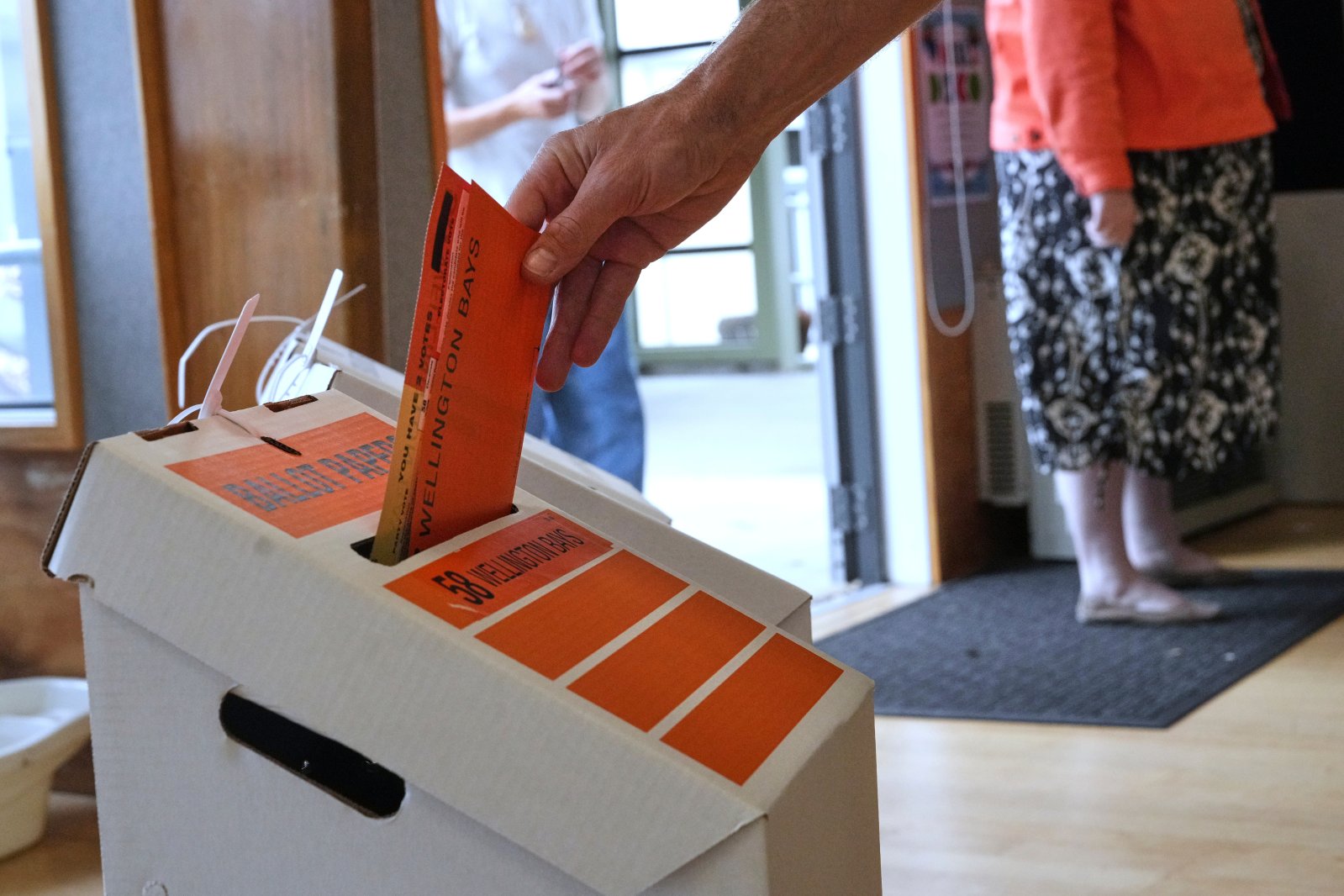
New Zealand’s recent election has ended with preliminary results showing a tight race. Prime Minister Christopher Luxon’s center-right coalition obtained a narrow, one-seat parliamentary majority. Meanwhile, the opposition Labour Party leads the nationwide party vote slightly.
With all voting places reporting, Labour gained 29.36% of the party vote compared to Luxon’s National Party with 29.21%. This translates to Labour receiving 710,330 votes while National secured 706,680 votes, resulting in a minuscule difference of 3,650 votes or 0.15 percentage points.
Projection-wise, National holds 42 seats versus Labour’s 36 due to winning more electorate contests. Their coalition partners, ACT New Zealand and New Zealand First, are predicted to win 13 and 12 seats respectively. This gives the center-right bloc a total of 67 seats, surpassing the majority threshold of 66.
“I have to tell you right now it is too close to call,” Luxon said, emphasizing the uncertainty.
New Zealand’s Electoral Commission and party leaders have been contacted for comments.
Pending Special Votes
The results are not final, with special votes pending inclusion in the official count. Around 399,000 special votes await review, potentially altering the final parliamentary composition.
Special votes include ballots from overseas voters and those who could not vote as expected. These are not part of election-night totals, which means they often adjust party percentages and seat allocations.
The final results are due by November 27, during which time the incumbent government will continue under a caretaker convention.
Labour leader Chris Hipkins highlighted this uncertainty during his address to supporters, acknowledging the indeterminate situation.
Fragmentation and Minor Party Influence
Neither major party secured over 30% of the votes, indicating voter ambivalence noted in pre-election polls. Minor parties emerged with significant roles:
- The Greens: 16 seats projected
- ACT New Zealand: 13 seats projected
- New Zealand First: 12 seats projected
- The Opportunity Party: 7 seats projected (5.96% of the vote)
- Te Pāti Māori: 5 seats projected (winning five electorate contests)
New Zealand employs a mixed-member proportional system where voters choose both local representatives and a political party. Normally, Parliament has 120 seats but currently shows 11 overhang seats, increasing the total and majority threshold.
Tight Race as Predicted by Polls
Recent polls anticipated a close election. The 1News-Verian poll reported National at 30% and Labour at 29%, placing them within the margin of error. Contrastingly, the Post-Freshwater Strategy poll gave Labour an edge at 30.7% against National’s 26.4%.
These surveys reflected similar standings for other parties and accounted for a margin of error of about 3 percentage points.
Global Political Context
New Zealand’s election contextually occurs amidst a period of increasing strength for conservative and populist parties globally, particularly in Europe. However, New Zealand’s political scene diverges somewhat from this trend. Luxon’s National Party is seen as center-right, while ACT leans libertarian and New Zealand First populist. The results do not align with a clear conservative wave, as National lost seats while ACT and New Zealand First gained.