
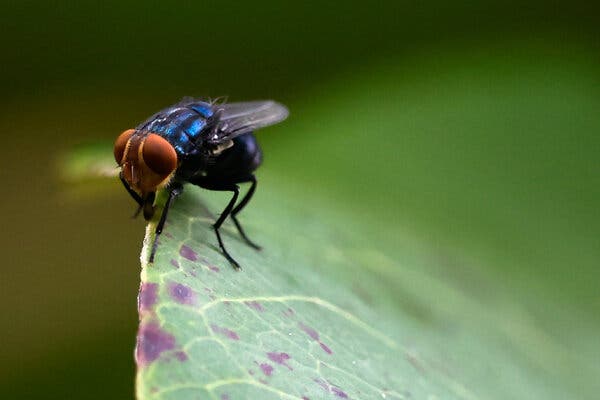
The New World screwworm, a fly whose larvae feed on the tissue of livestock, wildlife, and pets, has been confirmed in a 3-week-old calf in La Pryor, Texas, according to the Agriculture Department. This marks the first detection of this insect in US cattle since its eradication in the 1960s.
The screwworm was first identified at the Guatemalan-Mexican border in 2024 and has been gradually moving north. The presence of this parasite in the United States poses a significant threat to the cattle industry, as infestations can be fatal if left untreated.
Brooke Rollins, the Agriculture Secretary, stated, “We are taking immediate action this afternoon and evening to deploy resources to contain and eradicate this case of the New World screwworm in South Texas.”
If additional cases emerge beyond the initial detection, it may lead to severe consequences for American agriculture. The Agriculture Department had already been preparing for a potential resurgence of the screwworm in the area.
By the mid-2000s, the screwworm had been eliminated from North and Central America, but it was detected on Mexico’s border with Guatemala in 2024. Screwworm flies typically do not travel far, but they can spread through the movement of infected animals, especially when transported to new locations. Over 20,000 cases have been reported in Mexico, leading to a ban on Mexican cattle entering the US for over a year.
Unlike other pests, screwworm flies do not affect fruits or vegetables. The Agriculture Department’s Food Safety and Inspection Service has assured the public that all beef, poultry, and eggs remain safe for consumption.
The department has designated a 20-kilometer “infested zone” around where the infected calf was found. In this zone, animal movement is restricted, and surveillance has intensified. Veterinary and animal health officials from both the Agriculture Department and the Texas Animal Health Commission have been deployed to the area.
Efforts to control the screwworm population include dispersing millions of sterile flies both aerially and by truck. The release of sterile flies, which mate with wild female flies and reduce the population, is the current method to manage the fly’s spread.
Currently, only one facility in Panama produces sterile flies, generating about 100 million per week. However, the U.S. Army Corps of Engineers has begun constructing a new $750 million production facility at Moore Air Base in Edinburg, Texas. This facility aims to begin producing 100 million sterile flies per week by late 2027, with plans to increase production to 300 million weekly thereafter.