
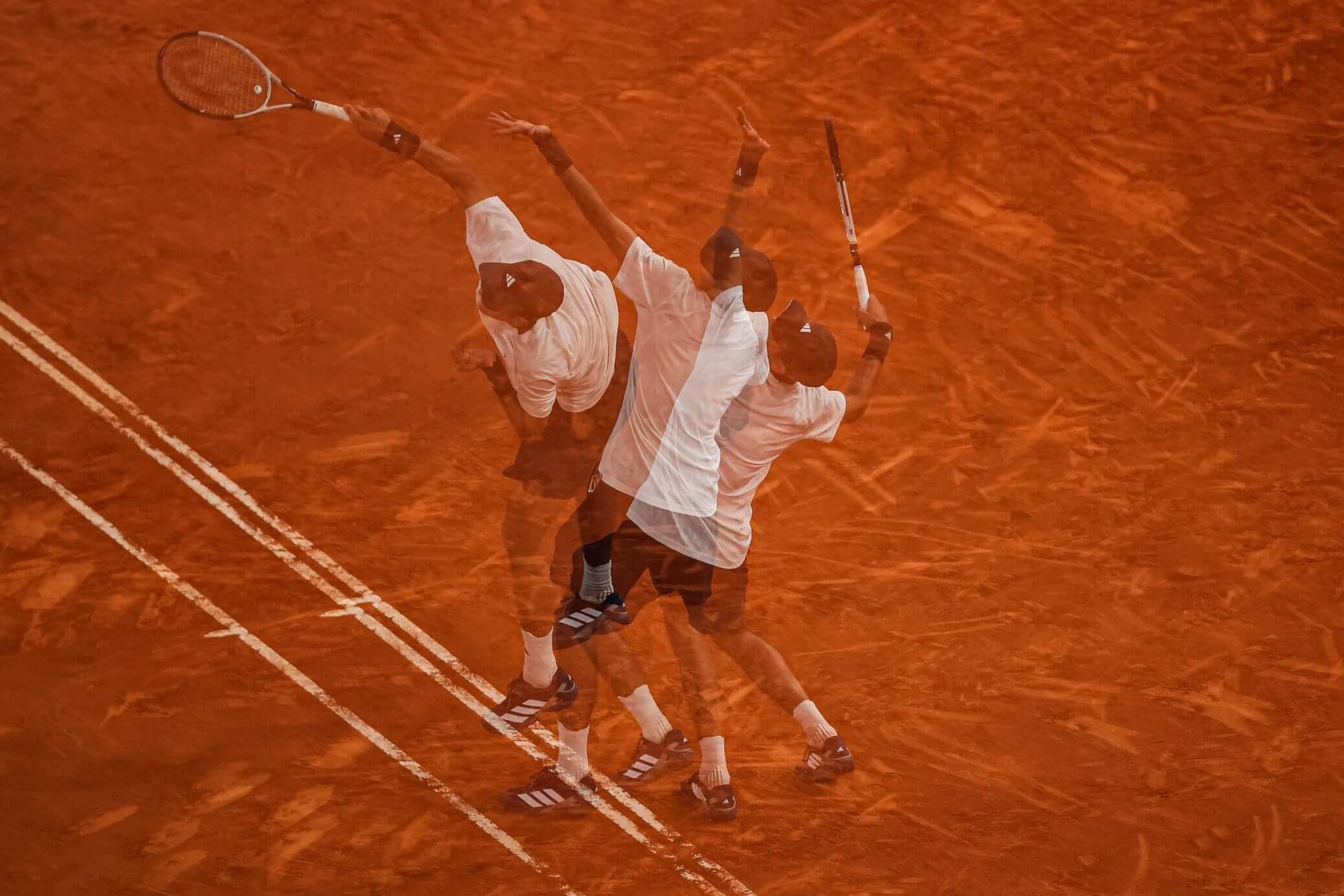
At the 2026 French Open, some of the most promising young talents in men’s tennis have stepped into the spotlight. Despite the absence of stars like Carlos Alcaraz and Jannik Sinner due to injury and health issues, their influence is evident in the emerging players who are shaping the future of the sport.
Young Players Making Waves
The tournament saw standout performances from young players like João Fonseca, Rafael Jódar, and Moïse Kouame. Fonseca, a 19-year-old from Brazil, impressed by challenging seasoned players like Novak Djokovic. He demonstrated a dynamic playing style, combining power and finesse. Jódar, also 19, displayed attributes of his role models, particularly Alcaraz, with his aggressive play and strategic point construction.
Moïse Kouame, a 17-year-old French contender, showcased his potential with a strong forehand and a versatile backhand. His ability to transition seamlessly from defense to attack highlights the evolving nature of tennis, inspired by the likes of Alcaraz and Sinner.
Influence of Alcaraz and Sinner
Younger players attribute their development to the influence of Alcaraz and Sinner. Jódar openly discussed how Alcaraz’s style has shaped his approach to the game. Fonseca and other rising stars have also cited the fast-paced, fearless play of these trailblazers as a blueprint for their success.
This evolution in playing style marks a shift from the traditional strategies of previous generations. Veteran players like Félix Auger-Aliassime (25) and Casper Ruud (27) note the change in tennis tactics. They grew up practicing point construction strategies akin to Federer, Nadal, and Djokovic, but now face the challenge of adapting to this new era dominated by aggressive, fast-paced play.
New Talents in Action
Several upcoming stars are making their mark in the tournament. Jakub Menšík, at 20, showed resilience against seasoned opponents despite facing physical exhaustion. Learner Tien and Alex Michelsen, both 20 and 21 respectively, are pushing boundaries, eager to prove their worth against more established players.
Spain’s Martín Landaluce, another promising talent, demonstrated his potential through multiple five-set triumphs. These players share a common belief in their ability to compete at the highest level, spurred by a deep confidence and desire to challenge the top-tier players.
Defining the Next Era
The hallmark of this new generation is their versatility and skill on the court. Fonseca’s forehand, at over 3,000 RPMs and 81 mph, underscores the technical prowess these players possess. Similarly, Jódar’s powerful shots reflect the emphasis on spin and speed that characterizes modern tennis.
These emerging stars are not only following the path paved by Alcaraz and Sinner but are also adding their own elements to their game. They focus on developing every aspect of their skills, from serves to returns, to compete effectively on different surfaces. This comprehensive approach is central to their growth and success.
Upcoming Challenges
The tournament continues with thrilling matches between generations, as Jódar prepares to face 34-year-old Pablo Carreño Busta, while Fonseca aims to take on Ruud. These encounters symbolize the ongoing evolution of men’s tennis, with younger players consistently closing the gap on their older counterparts.