
For close to 70 years, food and beverage companies have managed to introduce new ingredients to the market by self-certifying them as ‘generally recognized as safe’ (GRAS), without any obligation to inform the Food and Drug Administration (FDA). However, a new proposal aims to change this by requiring companies to notify the FDA when adding new substances to human or animal food.
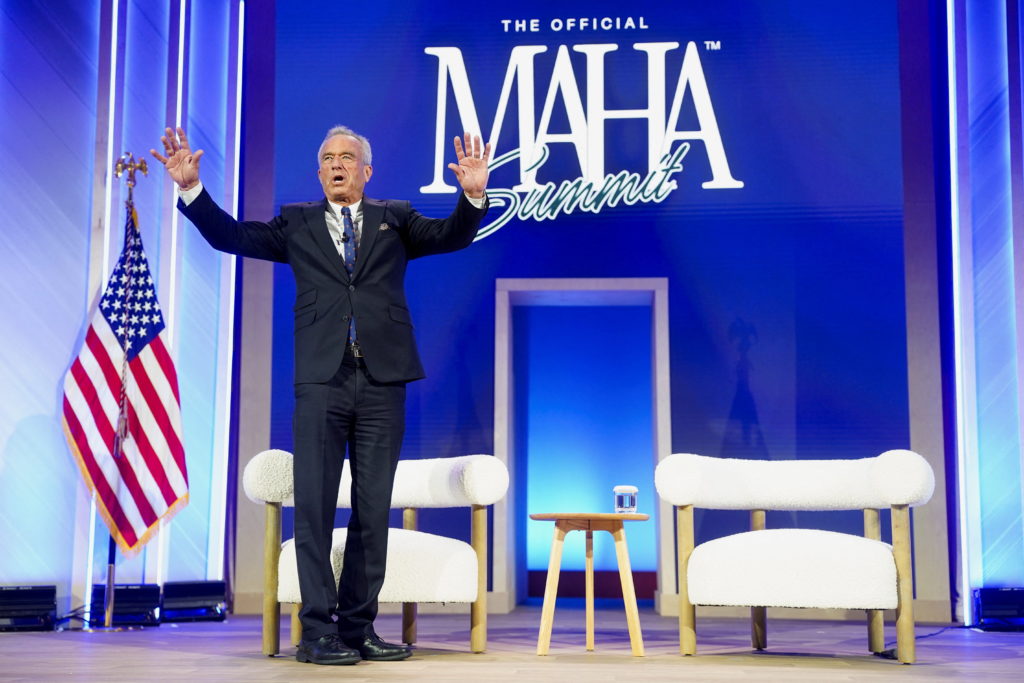
This proposal seeks to address an information gap criticized by food safety experts for years. While it doesn’t mandate waiting for FDA approval before selling an ingredient, it marks a step towards enhanced oversight. It’s part of Health Secretary Robert F. Kennedy Jr.’s larger agenda to revamp federal food supply oversight under the ‘Make America Healthy Again’ (MAHA) initiative.
Peter Lurie, president of the Center for Science in the Public Interest and a former FDA official, commented that the change is ‘something of a step forward,’ although not as significant as it appears.
History of the GRAS Exemption
The GRAS exemption was established by Congress in 1958, allowing certain widely accepted substances like salt and vinegar to bypass FDA review. Over time, this exemption has been used for a broader range of ingredients than initially intended. According to a 2025 Environmental Working Group analysis, 99% of food chemicals introduced since 1958 have entered the market via the GRAS pathway instead of the FDA’s formal approval process.
Uncertainty around ingredient usage has complicated food safety scenarios, exemplified by the 2022 tara flour incident. Linked to Daily Harvest products, a foodborne illness outbreak landed 133 consumers in hospitals before the FDA confirmed tara flour didn’t meet GRAS standards and reclassified it as an unapproved additive.
Understanding the Proposed Changes
The proposal seeks to make the current voluntary GRAS notification program mandatory. Under this change, companies must inform the FDA of their reasoning for deeming a new substance safe for use. However, failure to notify the FDA won’t automatically prevent selling the substance, although it would influence the agency’s prioritization for post-market safety reviews.
The notification process involves only presenting the company’s opinion, rather than a detailed scientific safety review. This stands in contrast to the extensive data and public consultation required in the formal food additive approval process. If implemented, companies with existing GRAS determinations must submit streamlined notifications, sans detailed safety data, within a year.
Charles Benbrook, an agricultural economist, criticizes the proposal for not requiring scientific evidence or FDA evaluation, highlighting the difference between the GRAS and formal additive approval processes.
Concerns persist over the FDA’s capacity to evaluate notices independently, as noted by Marion Nestle, professor emerita at New York University.
Impact on Food Safety
Secretary Kennedy’s MAHA initiative zeroes in on food additives and chemicals in American diets as part of improving nutrition science and food supply oversight. Nonetheless, experts like Nestle clarify that the GRAS rule focuses solely on additives, not addressing microbial food safety issues like cyclospora or salmonella.
Critics like Lurie question whether focusing on additives diverts attention from more pressing dietary issues like sodium, sugar, and saturated fat.
Lurie states that while there is suspicion around additives potentially being dangerous, more attention should be given to dietary factors with established health risks.
Timing and Public Response
Public comments on the GRAS proposal are open through early December, with a final rule potentially emerging in 2027. The FDA is legally bound to consider these comments, which might influence the eventual rule. Anticipated objections may come from industry stakeholders and opponents of increased regulation.
Enforcement mechanisms, staffing adequacy, and the sufficiency of notifications to tackle safety concerns are all likely subjects of discussion during the commenting period.
Lurie advocates for a public database of GRAS determinations and independent FDA evaluations of safety data.
The proposal could enhance FDA’s insight into ingredients entering the food supply, ensuring better safety claims instead of relying solely on industry determinations.