
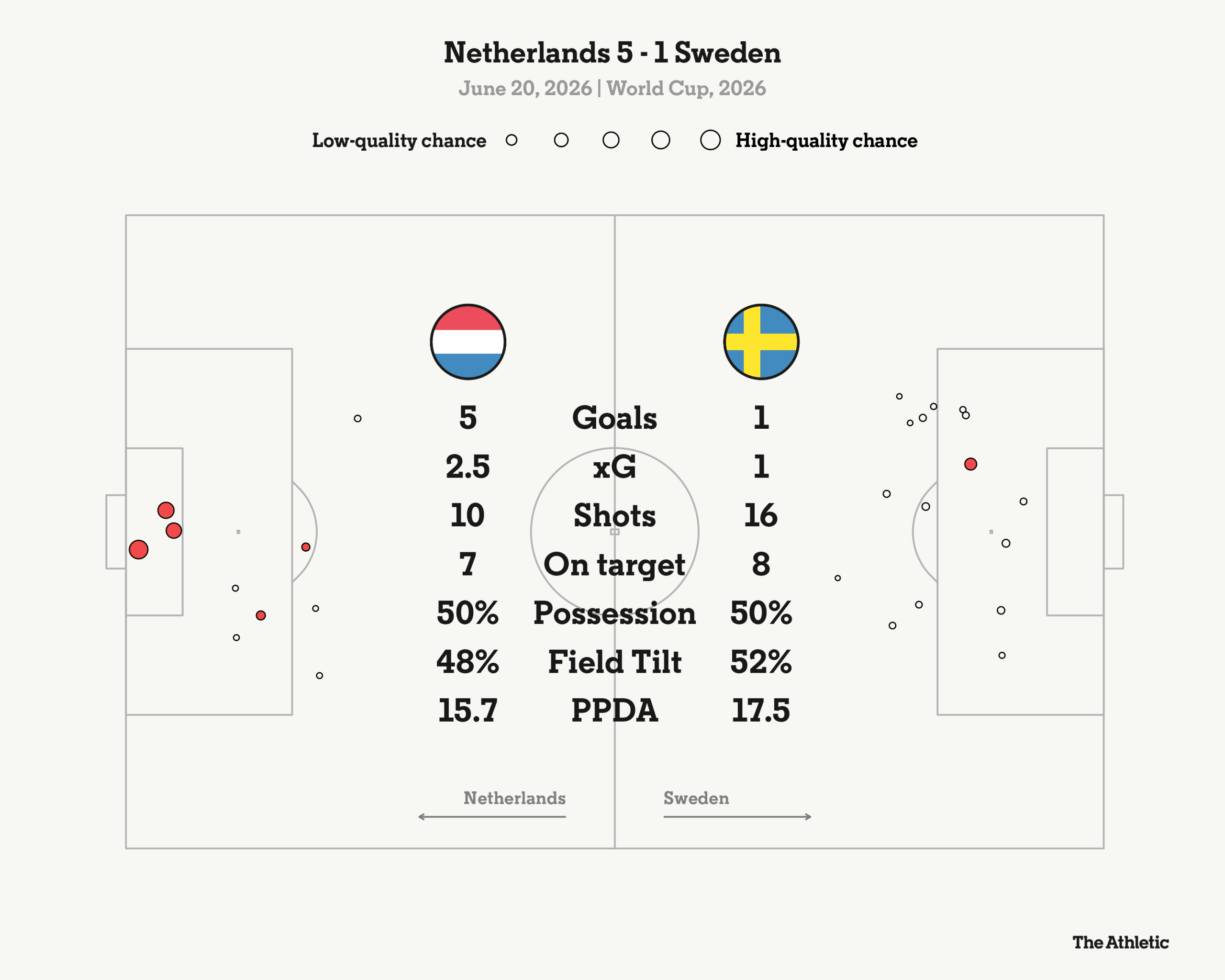
The Netherlands achieved a commanding 5-1 victory over Sweden in Houston, with Cody Gakpo and Bryan Brobbey playing key roles. Gakpo, the Liverpool forward, and Sunderland’s Brobbey both scored twice, with Crysencio Summerville adding a late fifth goal. This performance was a decisive win for Ronald Koeman’s team in the World Cup.
Sweden had previously defeated Tunisia 5-1 but struggled to withstand the Netherlands’ aggressive attack at the NRG Stadium. Anthony Elanga managed a goal for Graham Potter’s team in the second half, yet the Swedish side could not contend with the Dutch offensive tactics.
Netherlands’ World Cup Prospects
The Netherlands failed to win their opening match against Japan, sparking questions about their ability to win the tournament. However, if they continue playing at this level, they emerge as strong contenders. Koeman’s finding in Brobbey as a No. 9 allows a solid foundation for team building. Brobbey’s ability to enhance those around him played a significant part in the match, with the Dutch displaying intensity and tactical versatility from the start.
They demonstrated variability in their attacking strategy, alternating between direct approaches, midfield breakthroughs, and exploiting wide spaces. Gakpo’s confident performance highlighted his growth, a significant contrast to his previous struggles at Liverpool. Despite a few defensive gaps that Sweden exposed, the Dutch defensive line held strong overall.
Koeman’s Tactical Innovations
In a bold tactical shift, Koeman repositioned Donyell Malen from central attack to the right flank. Although Malen had excelled as a central striker in Serie A, Koeman opted for Bryan Brobbey in the center and yielded impressive results. Brobbey’s physical dominance over Sweden’s defense led to early goals after receiving precise low crosses from Gakpo and Denzel Dumfries.
Koeman’s tactical foresight in identifying a vulnerability in Sweden’s defense paid off, with Brobbey targeting central defender Isak Hien. Potter responded with a defensive restructuring that stabilized Sweden temporarily but couldn’t reverse the match’s trajectory.
Focus on Wide Attacks
Three of the Netherlands’ goals originated from wide-area attacks, a tactic increasingly popular in this World Cup. Gakpo, Dumfries, and Summerville frequently stretched Sweden’s defense, leading to scoring opportunities through low, driven crosses.
Gakpo’s assist involved conventional wing play, contrasting his typical inside cutting style. The Dutch have evidently committed to this strategic approach, optimizing their speedy wide players and creating multiple scoring opportunities by crowding the six-yard box.
Profiling Bryan Brobbey
Bearing the strategic weight of Koeman’s game plan, Brobbey excelled in his role, scoring twice in rapid succession. Brobbey’s physique is not typical for a top-tier forward; at 180cm, he is shorter than most. Nonetheless, his strength and mobility posed significant challenges to taller defenders such as Sweden’s Hien.
Brobbey’s career trajectory included developing years at Ajax, a less impactful period at RB Leipzig, and a resurgence leading to a Premier League stint with Sunderland, scoring seven goals in 31 matches. His physical presence and clinical finishing make him a valuable asset for the Dutch team.
Sweden’s Challenges and Prospects
Sweden’s traditional strengths in major football tournaments include defensive solidity and strategic reliance on star forwards. Gyokeres and Isak represent Sweden’s attacking capabilities, yet their defensive frailties against the Netherlands raise concerns.
Despite conceding four goals early in each half, Sweden showed sustained moments of promise. Changes in formation facilitated playmaking opportunities for Yasin Ayari, while Elanga’s second-half substitution added an attacking threat. Sweden still has the potential to advance, dependent on overcoming Japan and leveraging their attacking prowess.
Analyzing the Dutch’s First Goal
Brobbey’s opening goal testified to the Netherlands’ aggressive approach from the outset. The move involved direct play and quick transitions. Brobbey featured prominently by controlling a long pass, leading to Gakpo delivering a precise cross for the finish.
This goal exemplified the Dutch’s effective tactical decision-making and fluidity in transitioning from dynamic movement to goal-scoring positions. Koeman’s strategic decisions undeniably contributed to the team’s overall effective performance against Sweden, reinforcing their status as serious competitors in the tournament.