
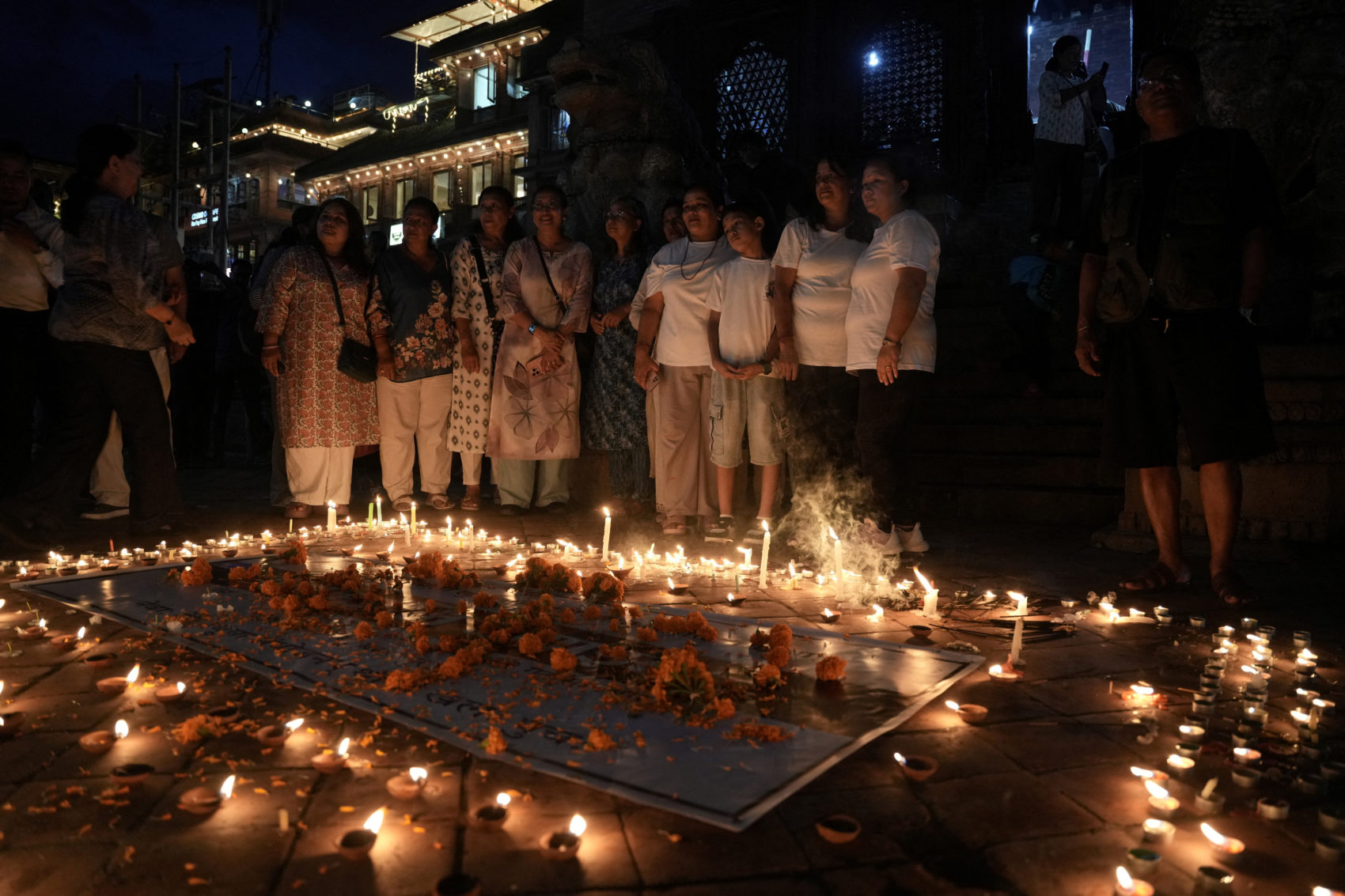
Nepal observed a day of mourning on Monday, honoring those lost in the devastating floods of August 26. The disaster claimed over 1,300 lives across Nepal and Tibet, with nearly 5,000 individuals still unaccounted for, including foreign nationals, as reported by Nepal’s disaster management agency.
Throughout Nepal—where Hindu customs prevail—mourning extends for 13 days. During this period, immediate family members stay at home, and the final day involves rituals intended for the spiritual peace of the deceased. Several families, faced with missing kin, conducted symbolic funerals. In Hindu tradition, cremation serves as a critical final rite. Many families, without the physical presence of their loved ones, found some solace in completing these spiritual ceremonies.
The government declared Monday as an official day of mourning, directing flags at government offices to be lowered. In Kathmandu’s Basantapur Durbar Square, lamps and candles illuminated the plaza as citizens commemorated those lost to the recent floods and mudslides.
The search for missing individuals persists, but frustrations have emerged. Relatives assembled in Kathmandu near governmental offices, pressing for accelerated search and rescue for hundreds swept away by the rapid Bhotekhoshi River or trapped beneath landslide debris. These included workers from hydropower plants in the area.
Sumana Shrestha stood amidst her family with a poster of her missing husband, a 55-year-old consulting geologist. He was last seen at the Trishuli hydropower plant project office, now buried below debris. “We haven’t received news of rescue operations at this site,” she said.
Another concerned individual, Mahesh Prasad Shrestha, displayed a photo of his brother—the engineer Niraj Shrestha—who also worked at the site. He expressed dissatisfaction with the delayed arrival of excavation equipment and suggested that larger equipment should have been transported by helicopter from neighboring nations.
Candlelit vigils took place throughout Kathmandu, honoring those who perished in the catastrophe. Rescue operations are heavily concentrated on 12 hydropower project sites, where approximately 900 workers are missing. Authorities estimate 500 individuals remain trapped in tunnels.
International rescue teams from countries such as India, China, South Korea, and the United States have been combing through debris, infrastructure, and tunnels. Noteworthy rescues include two Nepalese workers last Friday and a Chinese individual recovered on Saturday.
Strong journalism is vital for democracy. Support reputable reporting and meaningful discourse.
Left: A moment of silence in memory of the flood victims at Basantapur Durbar Square, Kathmandu. Photo by Sabrina Dango/Reuters