
As students adjust to the current school year, parents join them, providing support and guidance throughout the unpredictable back-to-school season. School year journeys can sometimes resemble a “Choose Your Own Adventure” book, where one wrong decision might lead to unfortunate consequences affecting a young person’s future. “The talk,” however, remains a constant in Black and brown families. It is the conversation about systemic racism and racial profiling, which can escalate to deadly encounters. Parents share this dialogue with their children to arm them with knowledge essential for safety during routine activities that may become racially charged interactions.
Joy Sapp from Chatham recalls having “the talk” with her children, Robert Wise III at age 9 and Elliott Donaldson Jr. at age 5. Parents like Sapp are revisiting the conversation, now including friends to ensure safety, awareness of biases, and effective responses to harmful situations.
The death of Nolan Wells, a Black teenager, on a July Fourth boating trip has sparked significant discussion. Wells, who traveled with white friends to an uninhabited island off Mississippi’s Gulf Coast, did not return alive. His body was discovered two days later off the island. Wells’ family, legal representatives, and the Black community have expressed concern over the swift investigation process and assumptions of no foul play, while information dissemination to the public has been slow. An independent autopsy revealed his death cause as “undetermined,” prompting further inquiry. Recently, a Mississippi grand jury chose not to indict in the case.
“You have to keep a watchful eye,” Sapp advises. She tells her children that their friends’ actions and behaviors must be scrutinized. If activities seem suspicious or unsafe, they should distance themselves or inform someone. This advice arises from Wells’ situation, where the presumed friendships proved unreliable.
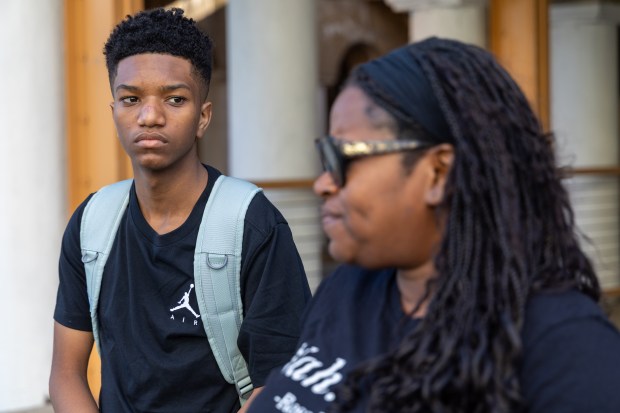
On August 25, 2026, Langston Golden, 16, walked to Kenwood Academy High School with his mother, Jamie Nesbitt Golden, in Hyde Park. His recent encounter with law enforcement left him feeling irritated but not fearing for his life. The incident marked his first intense interaction with the Chicago Police Department.
This summer, Jamie Nesbitt Golden learned of her son Langston’s interaction with law enforcement while waiting at a South Side bus stop. The encounter involved two plainclothes officers in a blue, unmarked vehicle. Langston felt misjudged and described assumptions likely based on his posture and lack of visibility on the phone. The officers asked about weapons and familiarity with the area. The interaction, lasting about five minutes, ended when a passerby interrupted.
Langston reflected on mistakes during the encounter, ones his parents previously warned about during “the talk.” These included moving closer to supposed law enforcement without verifying their identity and conversing with officers without parental presence. His parents took precautionary measures by using rideshare services following the incident.
Riana Elyse Anderson, a licensed clinical psychologist at Columbia University and CEO of RACE Space Inc., concentrates on coping strategies to reduce race-related stress among Black families. Her mental health app, Teens Navigating the Talk, assists teens in discussing, managing, and confronting racism. Anderson remarked on the complexity of the Wells case, acknowledging racial elements but seeing it as a broader adolescent issue.
Nesbitt Golden’s son Langston participates in TMH Mancave, focusing on boxing and mental health for Black boys. Discussions about Wells’ situation have occurred within this supportive community. “Kids are resilient,” Nesbitt Golden asserted, emphasizing ongoing conversations about safety and awareness. When Langston described his interaction with law enforcement, his mother’s protective instincts surfaced, reiterating lessons about awareness and seeking parental guidance during tense situations.
Anderson mentioned that principles from “the talk” may falter under stress, affecting decision-making. However, having these discussions enhances young people’s psychological well-being as they develop recognition and regulation in pressure situations.
The importance of “the talk” continues as boys like Langston grow older, and both parents emphasize its necessity. Nesbitt Golden underscored methods of safe navigation beyond police encounters, advising children on party environments and personal safety. Sapp reaffirms vigilance, particularly for college-bound youth, covering social settings and peer influences.
Anderson advises starting “the talk” early. Resources assist adults in facilitating age-appropriate exchanges with children. She employs relatable comparisons, like candy preferences, to introduce discrimination concepts. Anderson’s program for Black families fosters discussion among 10 to 14-year-olds, enabling them to express feelings and raise questions. Emphasizing unconditional support and engagement is crucial for effective family dialogues about discrimination experiences.