
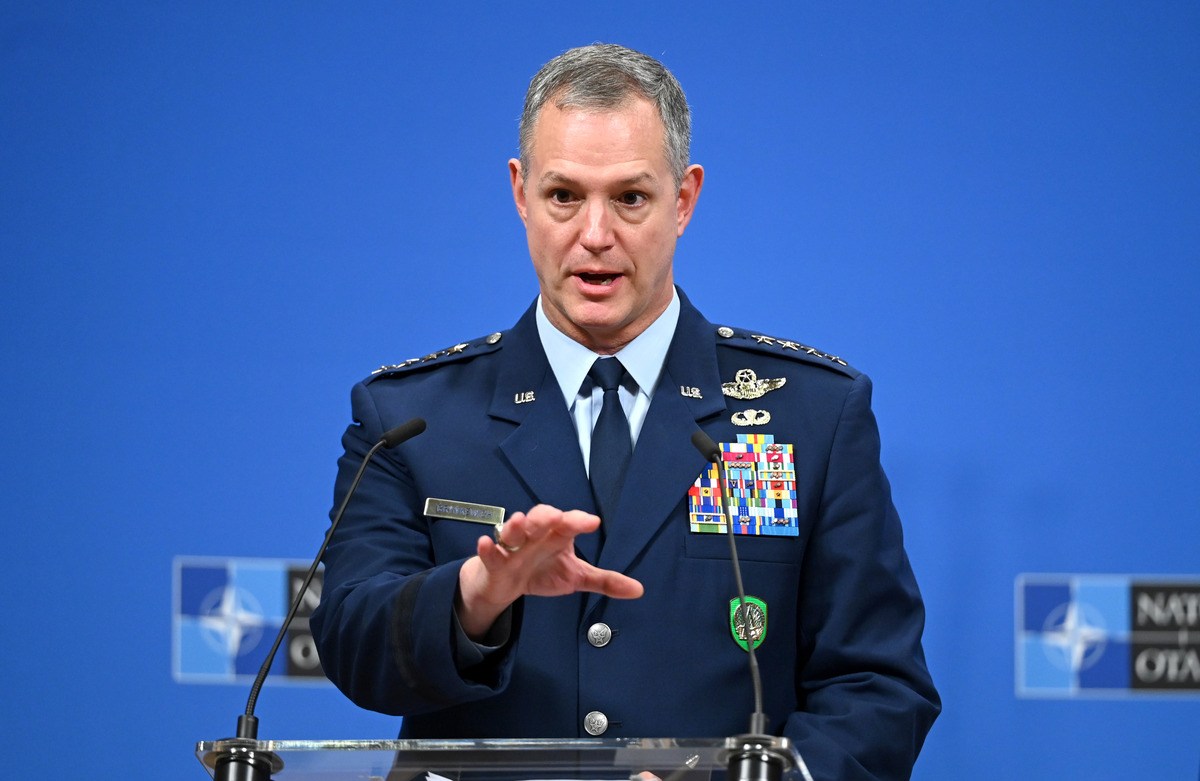
NATO’s top military commander has outlined a strategy for responding to any attack on its member states. This comes amid heightened concerns from intelligence leaders about potential Russian aggression on NATO’s eastern flank. General Alexus Grynkewich, the current Supreme Allied Commander Europe, explained that all 32 NATO members had embraced a cohesive strategy he referred to as a “theory of victory.” This strategy aims to deter any aggression against a NATO member and enable a robust defense if such an attack occurs.
During a security forum in Warsaw, Poland, General Grynkewich elaborated on the alliance’s commitment to defense and deterrence. Recent signals from NATO officials indicate that Russia might escalate “hybrid warfare” tactics. These tactics include cyberattacks, misinformation campaigns, and targeting critical infrastructure, all of which stop short of open warfare. A limited territorial incursion rather than a large-scale invasion is seen as the most plausible threat to NATO.
The Danish military and foreign intelligence services issued a warning in late September, observing an increase in Russian cyberattacks and sabotage activities in Europe. They described Russia as more willing to engage in risky maneuvers. Concurrently, NATO countries are boosting their military capabilities and defense spending, recognizing a need for independence from U.S. military support. This shift also allows the U.S. to focus on countering potential threats from China regarding Taiwan.
European NATO members, particularly those close to Russia, are feeling more vulnerable. They have been subjected to drone and missile incursions, which might be attempts by Moscow to test NATO’s resolve and undermine its support for Ukraine. Although concerns about an imminent conflict remain, General Grynkewich assured that the likelihood of such a confrontation is not immediate or unavoidable.
How Would NATO Respond?
In the event of an attack on NATO, its land forces would be mobilized to repel the incursion. NATO would deploy aircraft and naval assets, utilizing both inexpensive and sophisticated weapons to dismantle enemy forces. The plan includes activating space and cyber capabilities, though specific details on their deployment remain unspecified. Advanced sensors would detect and neutralize any other forms of aggression before they can escalate.
Should enemy forces persist in their assault or reinforce their ranks, NATO would broaden its targets to include the enemy’s support systems. General Grynkewich emphasized using numerous affordable weapons alongside a select few high-precision missiles to neutralize the threat effectively. This approach seeks to overwhelm and disable the adversary’s capacity to sustain their attack.
This is a developing story and updates will follow.