
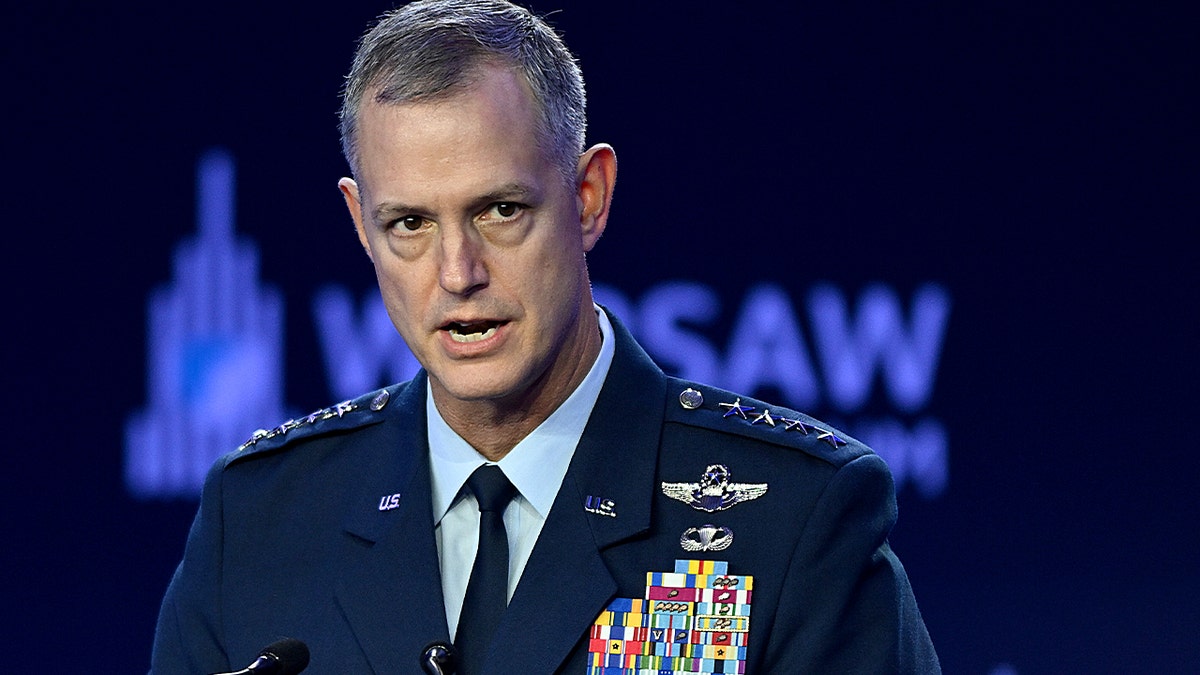
NATO’s top military commander, U.S. Air Force Gen. Alexus Grynkewich, issued a strong warning regarding defense strategy against potential Russian aggression. Grynkewich emphasized the alliance’s readiness to dismantle any support systems enabling attacks on NATO territories.
At the Warsaw Security Forum, Grynkewich stated, “Should the adversary choose to press the attack or commit his reserves, we will break the warfighting system engaged against us.” His assertion highlighted NATO’s preparedness to disrupt not only the attacking forces but also the infrastructures supporting them.
Grynkewich underscored a strategy composed of three actions—blocking, blunting, and breaking enemy forces. The goal remains to nullify any assault on NATO’s 32 member nations. “If someone is foolish enough to attack us, we will fight,” he remarked, promising an effective resistance to any threats.
NATO remains strong, united, and ready to defend against potential assaults.
As tensions rise due to drone incursions and suspected sabotage linked to Moscow, European officials accuse Russia of engaging in hybrid warfare tactics. This includes military provocations near NATO borders.
Recent events, including Russian drone activities over Poland, have prompted NATO to augment defenses eastern boundaries through Operation Eastern Sentry. Romania reported similar incidents, while Estonia noted airspace violations by Russian aircraft.
During the Warsaw address, Grynkewich refrained from naming Russia explicitly, but reaffirmed NATO’s defense approach outlined in the 2022 Strategic Concept, identifying Russia as a primary security threat.
In response to recent diplomatic tensions, including threats of nuclear retaliation from Russia should NATO isolate Kaliningrad, NATO Secretary-General Mark Rutte emphasized the defensive nature of NATO, urging cessation of hostility in Ukraine.
While President Trump has prompted European allies to increase defense spending, Grynkewich reassured confidence in NATO’s plans and commitment, citing positive dialogue at the 2025 NATO summit in The Hague as an example.
The Warsaw Security Forum’s assembly of European leaders illustrated collective efforts to address rising threats and reinforce strategic defenses amid ongoing conflicts.