
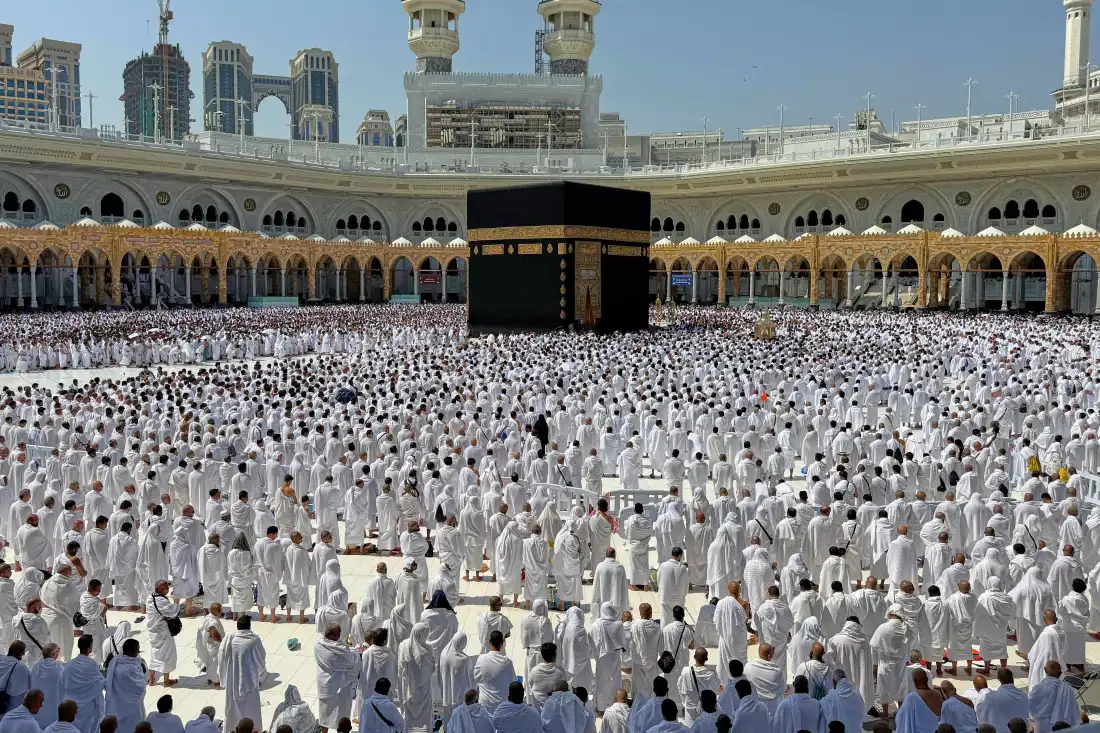
According to a recent report from the Pew Research Center, Muslims are expected to become the largest religious group globally by 2035, surpassing Christians who will then be the second-largest group. Both populations are expected to increase, but Muslim growth is predicted to be faster.
If current trends persist, Pew estimates that by 2070, the number of Muslims worldwide will reach 3.6 billion, while the Christian population will be just under 3 billion. These projections are based on national census data, fertility rates, religious switching patterns, United Nations reports, and global migration estimates.
Hindus and Jews are anticipated to increase in absolute numbers but decrease as a percentage of the global population. Meanwhile, Buddhists are expected to decline in both number and percentage of the world population.
Pew highlights that population growth is a significant factor. Most growth in the 21st century is expected to occur in Africa, with over a quarter of the global population in sub-Saharan Africa by 2070. The majority of this region’s population will be Christian or Muslim, with Muslims growing faster due to high fertility rates and increased lifespans.
The Pew Center’s Alan Cooperman describes these shifts as a “global change in what one might think of as the center of gravity of Christianity.”
For example, by 2070, the Democratic Republic of the Congo is projected to surpass the United States as the country with the largest number of Christians.
Birth Rates and Religious Shifts
Differences in fertility rates significantly influence religious population changes. Globally, Muslims have more children than other religious groups. The average fertility rate for Muslims has been 3.1 children per woman, compared to about 2 for non-Muslim women.
Additional religious projections by 2070 include a decrease in the populations of China, Japan, and South Korea, leading to a similar decrease in their Buddhist populations by half. The global Jewish population will see a larger share living in Israel, rising from 46% in 2020 to 62% by 2070.
One somewhat unexpected projection is an increase in the percentage of people identifying with no religious affiliation in many countries. However, the overall number of “nones” is expected to shrink due to significant population declines in China, where many religiously unaffiliated people reside.
U.S. Religious Trends
The report also sheds light on religious changes in the United States. Pew predicts that by 2070, Christians will no longer form a majority, though they will remain the largest single religious group at just under 48%, down from 62% today. The percentage of religiously unaffiliated individuals will rise to 41%.
These changes in the U.S. will primarily be driven by religious switching rather than birth rates. Christians generally lose more adherents than they gain, with most switching to no religious affiliation instead of another faith.
Pew’s report also indicates increasing religious diversity in the U.S., projecting that, by 2070, both Muslims and Hindus will outnumber Jews if current demographic trends persist.