
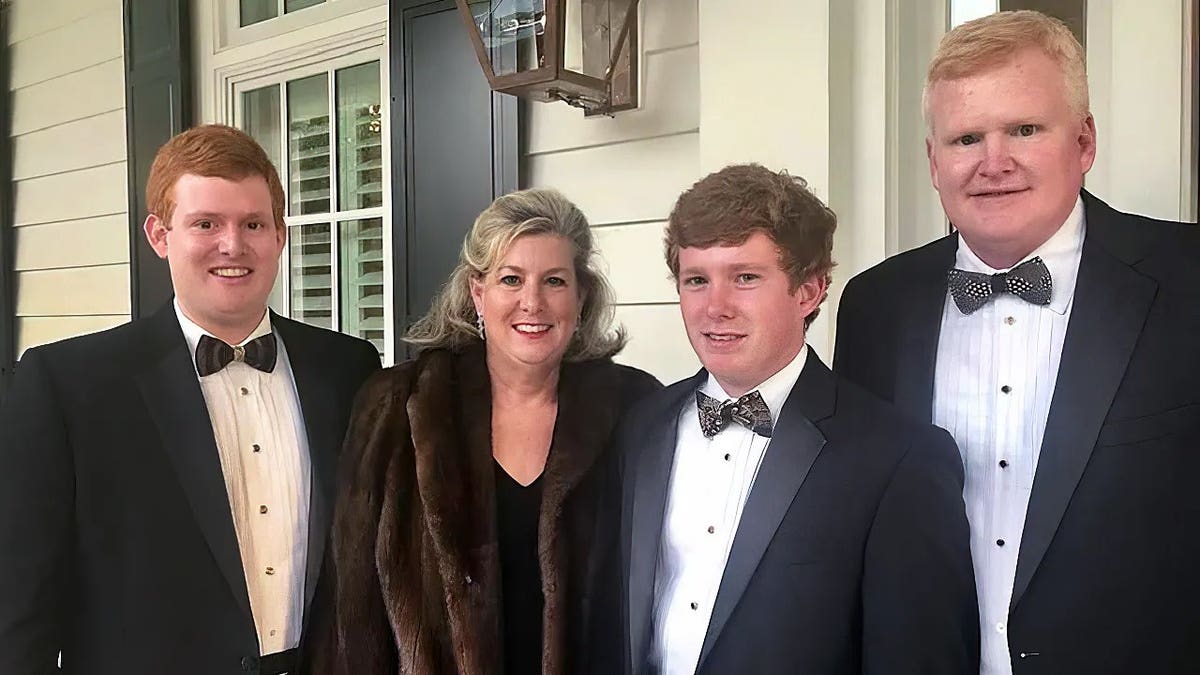
Alex Murdaugh returned to a South Carolina courtroom for a pretrial hearing as his defense team pushed to dismiss the original murder indictments against him. Defense attorney Jim Griffin claimed that a South Carolina Law Enforcement Division (SLED) investigator presented false testimony to the grand jury regarding blood spatter on Murdaugh’s shirt. Prosecutors denied the allegations as Murdaugh prepared for a retrial related to the murders of his wife and son.
The judge overseeing Murdaugh’s double murder retrial refused to dismiss the charges, delivering a setback to the former attorney before his April court date. On Friday, November 13, during a pre-trial hearing, Murdaugh’s attorneys argued that SLED investigator David Owen provided misleading testimony about blood-spatter evidence and shotgun ammunition. They claimed this testimony compromised the integrity of the grand jury proceedings.
Judge Debra R. McCaslin acknowledged major errors in the state’s presentation but emphasized that other evidence strongly supported the indictment. “Even if the challenged testimony concerning the blood spatter on the T-shirt and shotgun ammunition were excluded from consideration by the grand jury, the remaining unchallenged evidence overwhelmingly established probable cause,” McCaslin wrote in her ruling.
While McCaslin refused to dismiss the indictment, she criticized the lead investigator’s oversight. “The Court does not take lightly Special Agent Owen’s failure to recognize and account for a laboratory report addressed directly to him prior to presenting testimony in this case,” she stated. These oversights, she noted, could undermine public confidence in the justice system.
McCaslin also commented on inaccuracies regarding ammunition evidence but clarified that there was no evidence of intentional misconduct. “Even accepting that the challenged testimony was inaccurate, the record presented does not establish intentional fabrication or prosecutorial misconduct,” she said. The defense can challenge disputed evidence during the trial scheduled for April.
The defense team argued that Owen misled the grand jury about blood-spatter evidence on the shirt Murdaugh wore on June 7, 2021, when his wife Maggie and son Paul were murdered at their home in Colleton County. Owen contended that blood spatter linked Murdaugh to the killings despite earlier tests failing to detect human blood on the shirt.
In Murdaugh’s first trial, Owen testified he did not intend to mislead the grand jury and acknowledged not seeing the final SLED lab report before the indictment. During the hearing on November 13, prosecutors stressed that negative test results did not necessarily invalidate blood-spatter findings. They referenced additional expert testing indicating that chemical treatments might have produced false negatives.
Prosecutors maintained that Owen’s grand jury testimony accurately reflected the investigators’ understanding at that time. They also addressed claims about shotgun ammunition found on Murdaugh’s property. According to prosecutors, while Owen’s description may have been imprecise, there was no intent to mislead the grand jury.
Murdaugh’s lawyers asserted that the shotguns on the property did not match the combination of shells found at the murder scene. Prosecutors acknowledged potential imprecisions but stood by the integrity of the investigation.
Murdaugh’s convictions for the murders in 2023 were overturned by the South Carolina Supreme Court, citing jury tampering by former Colleton County Clerk of Court Becky Hill. A retrial is set for April 5, 2027.