
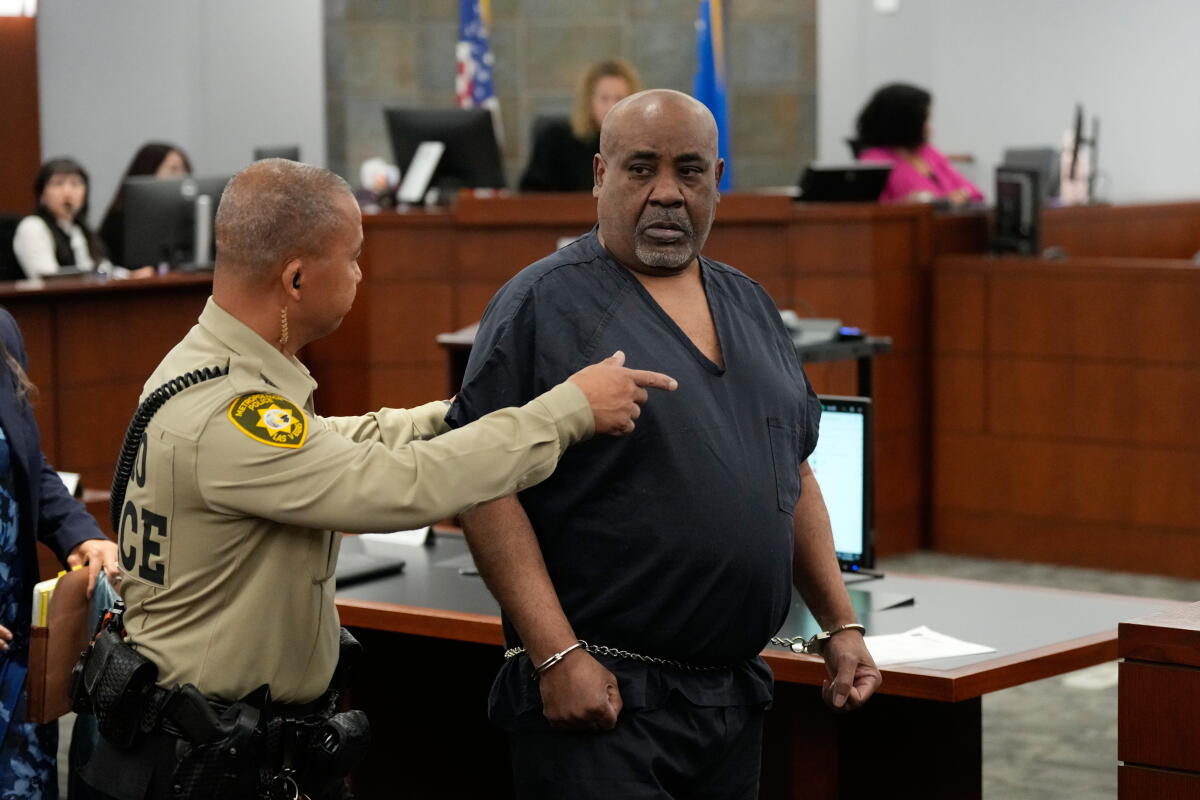
Duane “Keffe D” Davis has been sentenced to 40 years to life in prison for organizing the murder of rapper Tupac Shakur. The sentencing was delivered by Clark County District Court Judge Carli Lynn Kierny, who stated, “You don’t get to take a man from his family and just walk away from it, especially Tupac Shakur. The world never forgot about him and his death, and neither did Las Vegas.” Davis, aged 63, was convicted of murder and use of a deadly weapon. He received two consecutive terms of 20 years to life, totaling 40 years to life in prison.
The trial lasted two weeks, where prosecutors showed that Davis, a leader in the Southside Crips-Burris Street gang, orchestrated Shakur’s murder by handing a .40-caliber gun to gang members as they rode in a Cadillac near the Las Vegas Strip. Key evidence included Davis’ own interviews with authorities, a documentary, and his 2019 memoir outlining the killing.
Davis expressed his intent to appeal the verdict, stating, “I am going to appeal this case for sure,” before his sentencing. The case against him has drawn significant media attention, with many examining its impact on the music industry and associated events of that era. Shakur’s killing ignited a 10-day gang conflict in Compton and sparked introspection and conspiracy theories within the music world.
Sekyiwa Shakur, Tupac’s sister, emphasized the profound effect his death had on their family. She described how Tupac was the provider for many relatives and termed him “my shining star, my shining prince.” His death, she noted, has left her with serious psychological challenges, stating, “I do believe that when you take a life like that, you deserve every minute, every minute of the maximum amount of punishment, time to sit down and contemplate what you’ve done to this world, not just to me.”
Prosecutor Marc DiGiacomo argued that Davis profited from the rapper’s death by writing his memoir and stated he “deserved the maximum possible sentence.” Prosecutors highlighted that the murder was in retaliation for a previous incident where Shakur, along with members of Death Row Records, assaulted Davis’ nephew, Orlando Anderson, at the MGM Grand. This event was captured on security cameras following a Mike Tyson fight drawing a high-profile audience.
During the trial, the prosecution relied on testimonies from Los Angeles and Las Vegas police investigators, journalists, and Davis’ own admissions. Defense attorney Anthony Michael Sanft contended the prosecution relied on hearsay without tangible forensic evidence, eyewitnesses, or proof placing Davis at the crime scene. “The state wants you to believe this was a confession, that he was somehow there in person at the time of the shooting,” argued Sanft, “We can’t even put Davis in Las Vegas.”
Investigators broke the case after delving into the 1997 murder of Christopher “Biggie Smalls” Wallace. Former LAPD detective Daryn Dupree revealed Davis linked himself to Shakur’s case during a federal investigation, indicating his involvement in both murders. Davis was granted a proffer agreement, where he provided information for leniency, yet statements during his memoir led to his indictment.
Prosecutors used Davis’ memoir, claiming it invalidated his previous proffer deal. Defense argued the memoir aimed to sell books and exaggerated his role in the killing. The prosecution, however, presented recorded LAPD interviews where Davis detailed the murder night’s events and implicated others involved.