
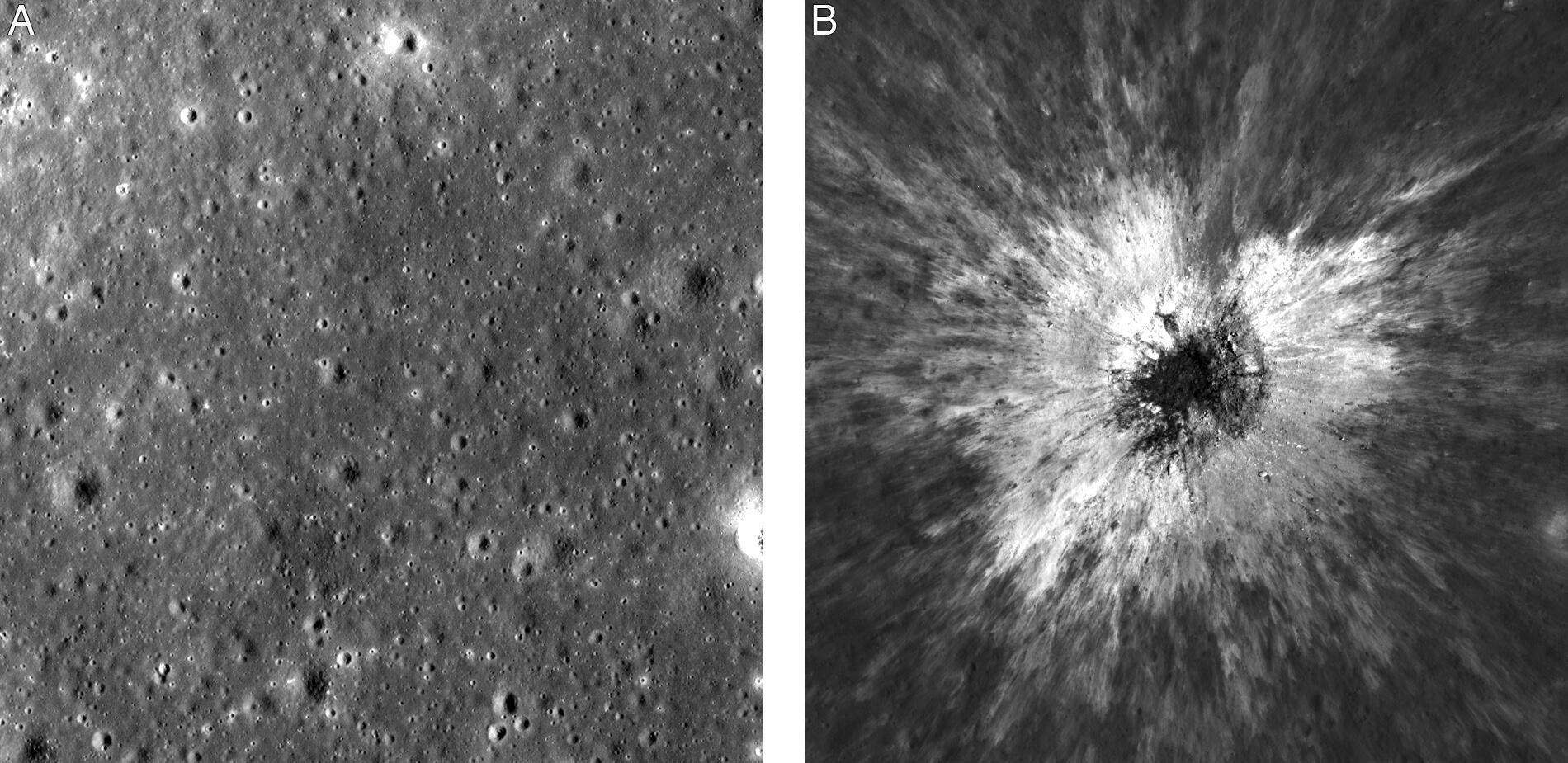
Scientists have identified a massive crater on the moon, larger than the Roman Colosseum, resulting from a significant impact two years ago. Initially unnoticed, this discovery showcases the moon’s dynamic surface changes. NASA’s data reveals the crater measures approximately 728 feet across, similar to two football fields, and reaches depths of 141 feet, akin to the height of three school buses stacked. This event marks the largest known impact crater in the solar system formed in modern times.
Researchers estimate such impacts occur only once every 132 years. This discovery offers crucial insights as NASA advances plans to establish a lunar base for astronauts. Scientists indicate the rarity of this event in their studies published in the journal Science Advances. NASA’s Lunar Reconnaissance Orbiter (LRO) captured images showing the moon’s surface changes due to the crater formed between April 11 and May 22, 2024. The impact, caused by a fragment of an asteroid or comet, went undetected by telescopes but was later identified through LRO’s comprehensive imaging analysis in August 2025.
The newly named McGetchin Crater, honoring the late Thomas McGetchin of the Lunar and Planetary Institute, surpasses the previous record crater found by the LRO. The moon showcases ancient impact craters, with some spanning over 1,500 miles. This latest impact disturbed the lunar surface over 66 miles wide, with debris dispersal exceeding expectations. Mark Robinson, LRO’s chief scientist and lead author for one of the studies, emphasized these findings.
Complementary research identified a 4-mile-wide cold spot around the crater, reflecting shifts in the moon’s topsoil. Dr. David Paige from the University of California, Los Angeles, likens such impacts to gardening, as they stir up sediments, revealing layers typically beneath the surface. The LRO has orbited the moon since 2009, providing detailed surface imagery that informs NASA’s upcoming astronaut missions.
Robinson highlighted the ongoing turnover of the moon’s surface, faster than previously understood. The top inch of lunar soil undergoes change roughly every 80,000 years. Contrary to the belief that Apollo moonwalkers’ footprints might last indefinitely, they will erode over time. Calculating the risk of crater debris affecting the anticipated moon base is a next step, aiming to enhance structure resilience.