
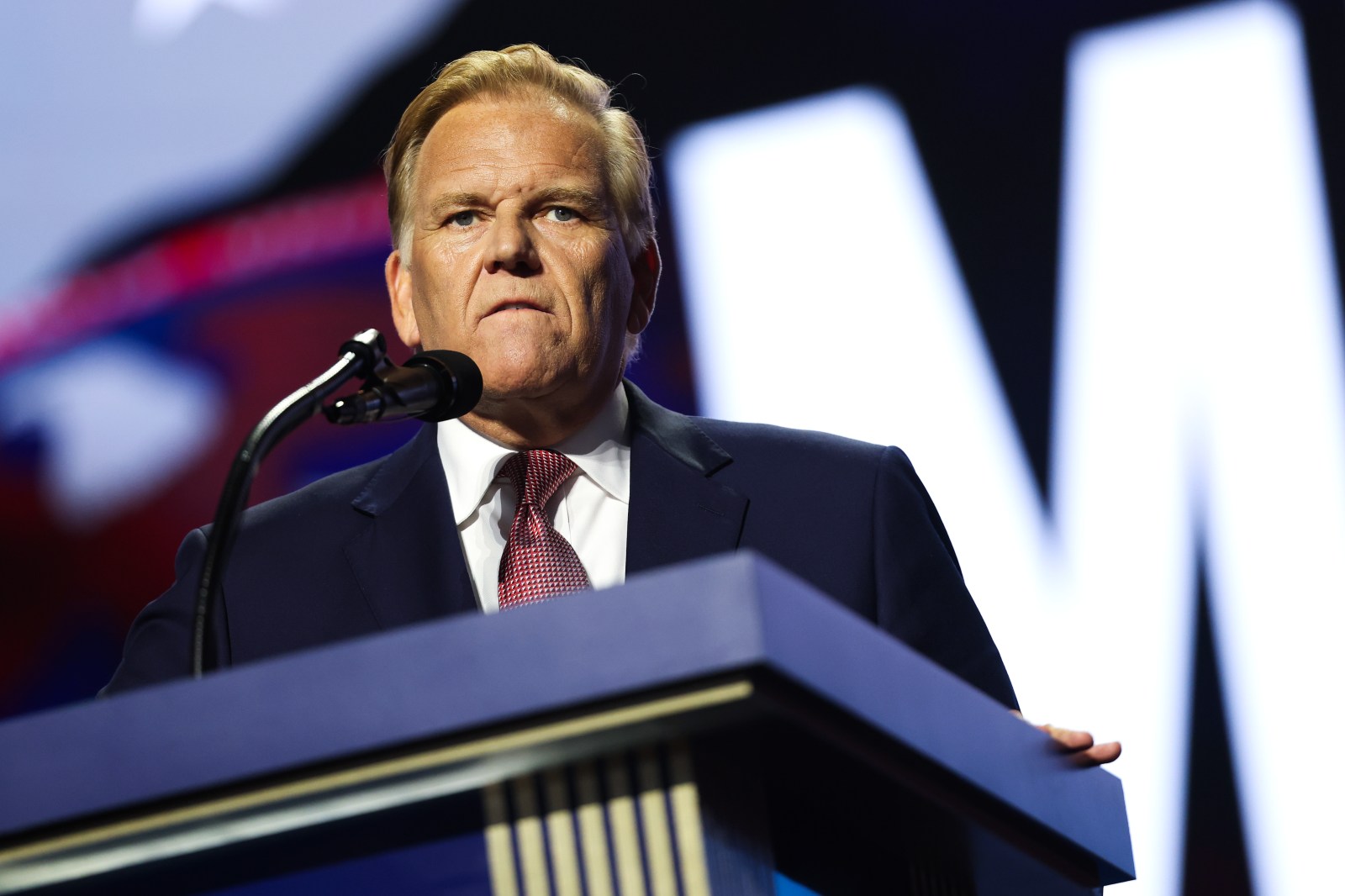
Republican Senate candidate Mike Rogers faced questions over his past expressions of willingness to engage with the Muslim Brotherhood. This scrutiny occurred as he continued to attack Democratic rival Abdul El-Sayed over alleged links to the movement. The confrontation is part of the campaigns leading up to Michigan’s November 3 election.
Rogers Confronted on NBC Appearance
During a broadcast on NBC’s Meet the Press, host Kristen Welker pressed Rogers about President Donald Trump’s allegations against El-Sayed, querying the evidence supporting such claims. She reminded Rogers of his own statements from 2012, endorsing talks with certain members of the Muslim Brotherhood.
Rogers often bypassed direct answers to Welker’s inquiries, focusing instead on El-Sayed’s purported affiliations. He maintained that the Muslim Brotherhood poses a threat to American interests. This dialogue joined a surge of criticisms directed at El-Sayed, including accusations from Trump of supporting the group.
El-Sayed has consistently denied connections with the Muslim Brotherhood, rejecting suggestions that his background or religious beliefs question his loyalty to the United States.
Background on the Muslim Brotherhood
The Muslim Brotherhood, an Islamist movement founded in Egypt in 1928, has been designated differently by various governments. Some countries label the organization as a terrorist group. The U.S. has designated several of its branches as terrorist organizations.
In January 2026, U.S. authorities classified the Egyptian and Jordanian branches as Specially Designated Global Terrorists. The Lebanese branch received both the Foreign Terrorist Organization and Specially Designated Global Terrorist labels. By March 2026, the Sudanese branch was similarly classified.
Newsweek contacted El-Sayed’s campaign for comment but has yet to receive a response.
Rogers Pressed Over Trump’s Remarks
Welker questioned Rogers about Trump’s claims, where the president labeled El-Sayed a “Muslim Brotherhood jihadist” with alleged animosity toward Jews, blacks, and Americans.
“There is no evidence to support any of those claims,” Welker noted, pressing Rogers on whether he agreed with Trump’s assertions. Rogers avoided direct commentary, repeating allegations of El-Sayed receiving funding from groups associated with the Muslim Brotherhood.
Welker countered, recalling El-Sayed’s prior denials and denunciations of the Brotherhood.
Welker also cited a 2012 letter where El-Sayed backed Egyptians opposing then-dictator Hosni Mubarak. She highlighted that support for protesters should not be equated with support for the Muslim Brotherhood.
Rogers’ Previous Comments Reassessed
Welker revisited Rogers’ own past comments on engaging with the Muslim Brotherhood. In 2012, Rogers indicated a willingness to communicate with moderate members of the group.
When questioned, Rogers redirected the discussion and accused Welker of misrepresentation. He justified his prior remarks by mentioning intelligence collaborations between Israel and Egypt that the Muslim Brotherhood allegedly sought to disrupt.
As Intelligence Committee chairman, Rogers stated efforts were needed to maintain these critical international relationships.
Ongoing Campaign Dynamics
Rogers refrained from labeling El-Sayed a terrorist, instead criticizing his political alignments. He specifically noted the Democratic Socialist associations of El-Sayed’s campaign.
Rogers characterized the election as a choice between his national security credentials and El-Sayed’s “radical” political ties, claiming concerns from Jewish Democrats and African Americans over El-Sayed’s positions.
Trump’s accusations have further fueled the dispute, with El-Sayed’s supporters decrying these attacks as biased against his religious faith.
El-Sayed’s Response
El-Sayed retaliated through a campaign ad using satire to address the criticisms from Rogers, depicting him as overly supportive of Trump.
For further inquiries, Newsweek editors Matthew Robinson and Trevor Davies have been assigned to this story.