
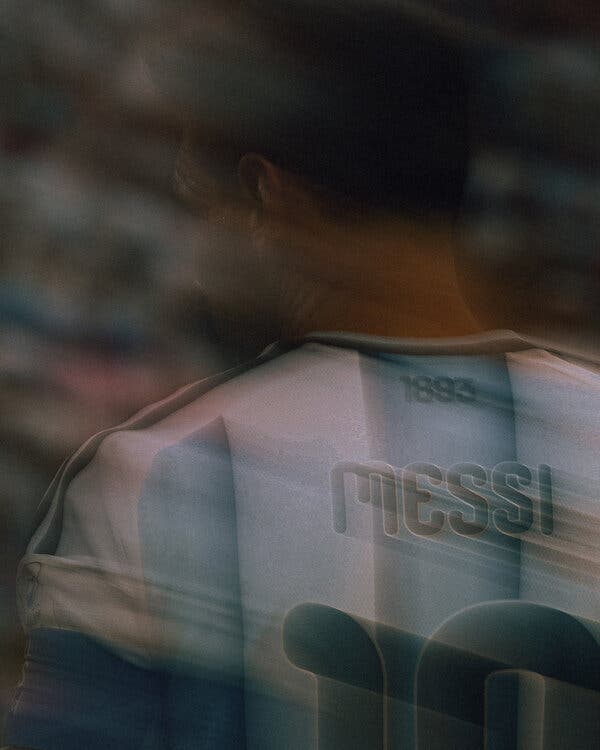
In Barcelona, as Wednesday afternoon gave way to evening, the city’s streets began to empty. An hour away from watching the semifinal clash between Argentina and England, I kept checking the dashboard clock. I was nervous about missing the start and even more anxious that it might mark the beginning of Lionel Messi’s last game.
In Atlanta, on an indoor air-conditioned field designed to shield against the Georgia heat, Messi took his time. The match opened with intensity: legs churning, desperate tugs, tackles lunging furiously, and the ball seemed to vanish under the urgency of each moment. England’s young team pressed relentlessly, colliding and chasing at every opportunity.
Amid all this action, Messi walked.
At 39 years old, Messi stands as one of the tournament’s senior players. His sprints are less frequent, and he covers less ground. Sunday’s game will likely be his last World Cup appearance. In previous tournaments, Argentina often questioned his brilliance and held him accountable for failures. Yet, Messi undeniably revolutionized soccer. He changed not only how players handle the ball but also what they perceive before receiving it. Patience became part of his offensive strategy.
A match follows more than one timer. There’s the glaring official clock. Alongside it runs a subtler time—where defenders tire, midfielders lose their pace, and passing lanes open slightly longer than expected. Messi’s slow movements allow him to watch this hidden clock: observing who marks him, who loses track, and where the next opening will be. The running aligns with the visible game; Messi tunes into the concealed one.
Messi’s walking doesn’t signify his absence from the game. He walks to engage more deeply with it.
Even at 29, he walked similarly. At 19, he did the same.
The legend of young Messi revolved around his speed: a low center of gravity, the ball seemingly attached to his feet less by control than by persuasion, and his sudden passages through improbable spaces. However, his true gift was not merely outpacing others. It was his foresight, seeing the play unfold before anyone else did.