
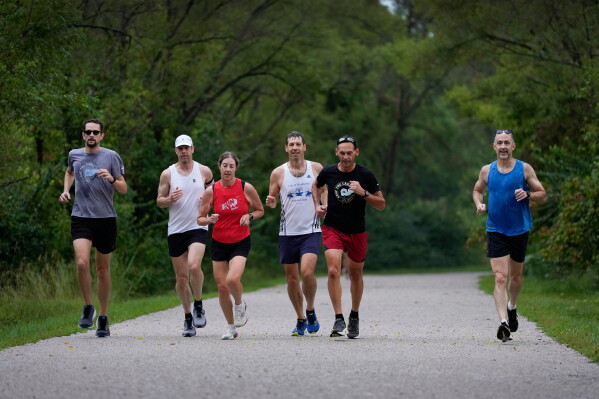
Paul Grinvalds, a dedicated marathoner from West Des Moines, Iowa, has completed 114 marathons across all 50 states. Yet he finds it difficult to run in temperatures above 60 degrees Fahrenheit (15.5 Celsius). Like many runners, his body struggles to cool down when exerting in the heat. Grinvalds, 68, acknowledges the challenge, stating that marathoners can be stubborn about pursuing their goals regardless of weather conditions. This insistence often leads to discomfort, or worse, danger.
Marathon organizers now face the challenge of addressing these health risks as climate change continues to cause rising temperatures. Organizers are changing race dates, starting times, and even offering options for shorter distances to ensure cooler conditions.
Starting in 2027, the Twin Cities Marathon in Minneapolis-St. Paul will be rescheduled from its early October slot to later in the month. This action follows the sunning 2023 cancellation due to extreme heat and high humidity. Similarly, the Sioux Falls, South Dakota marathon was moved from August to September after the heat-related cancellation of the 2024 race. Other races, such as the Air Force Marathon in Dayton, Ohio, Little Rock Marathon in Arkansas, and Long Beach Marathon in Southern California, have adopted earlier start times to combat high temperatures.
In Los Angeles, a marathon in March granted runners the option to stop after 18 miles, while still awarding finishers medals. Although less than 5% opted for this, only a small number of participants needed hospitalization.
Ed Whetham, director of the Twin Cities Marathon, called the 2023 cancellation devastating. Their analysis led to permanently adjusting the race’s timing to maximize the likelihood of lower temperatures. Although late October in the Twin Cities might bring snow, Whetham prefers a 39-degree (4 C) start compared to a 70-degree (21 C) start.
The contiguous U.S experienced its warmest July on record, and 2024 marked the Earth’s hottest year yet. Studies predict the Earth’s average global temperature will surpass pre-industrial levels by more than 1.5 degrees C (2.7 degrees F) between 2025 and 2030. Climate changes are reshaping marathon conditions nationwide. Analysis of 221 races by Climate Central indicated fewer optimal conditions for runners by 2045.
Andy Pershing from Climate Central stresses that climate change might challenge outdoor exercise. Jessica Murfree, researching climate’s impact on sports at the University of North Carolina-Chapel Hill, says event organizers must adapt by changing event schedules and adopting safety measures.
Running in warm, humid conditions is formidable, as the body works hard to prevent overheating. Chris Minson from the University of Oregon researches how bodies adapt to environmental extremes. He explains that warmth causes competition for blood between muscles and skin.
Adapting to heat through regular exercise in warm conditions helps athletes perform better, though it’s still harder than in cooler weather. John Seals of West Des Moines uses heat acclimation for a 135-mile ultramarathon training in California’s Death Valley.
Douglas Casa, leading the Korey Stringer Institute, advocates for the prudent change in marathon scheduling. He believes runners must adjust their pace according to weather, even if it’s difficult to deviate from set goals.
Private foundations fund the Associated Press’ climate and environmental coverage independently. For standards and funding information, visit AP.org.