
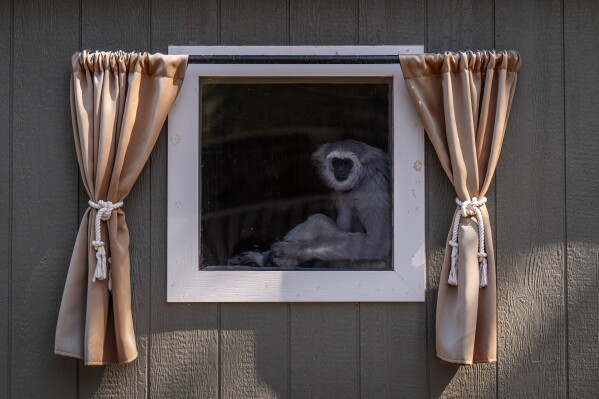
In the hills of the Santa Clarita Valley, north of Los Angeles, the Gibbon Conservation Center resonates with the distinct calls of gibbons. These primates, known for vocalizations similar to emergency sirens and bird calls, inhabit this sanctuary that has become widely recognized for its dedication to gibbon care.
Transformation and Dedication
Founded over 50 years ago, the Center began with just a few animals but now houses around 40 gibbons from five species. These primates are among the rarest and most endangered on the planet, and their calls can be heard up to a mile away. Alan Mootnick, a self-taught primatologist and the founder, advanced gibbon research and care until his passing in 2011.
Current Director Gabi Skollar, who moved from Hungary in 2005 to work with Mootnick, continues his mission. She describes the gibbons as her children, living onsite with another caretaker to ensure their well-being. The Center contributes significantly to global research on these unique primates.
Unique Personalities and Research
Each gibbon at the Center has a distinct personality. Pepper, a young northern white-cheeked gibbon, often initiates their group singing, while Violet, a pileated gibbon, completes the choral performance with her partner Truman. An example of personal quirks includes Pierre, a gibbon not fond of men. Gibbons sing several times daily, aiding in understanding their behavior and conservation needs.
Gibbons face severe threats from habitat destruction and the wildlife trade in Southeast Asia. Mootnick’s first gibbon, Spanky, was obtained as a pet in 1976. Today, the Center holds both born and traded gibbons to maintain diverse breeding programs. The Center achieved the first successful breeding of Javan gibbons, a highly endangered species, and plans to send a pair of northern white-cheeked gibbons to the Pittsburgh Zoo.
Human Interaction and Care
On a typical morning, caretaker Jodi Kleier feeds the gibbons a diet of lettuce, sweet potatoes, and bananas. Kleier, who has worked at the Center for a decade, began as a volunteer and now has a tattoo of Rocky, a gibbon she hand-reared.
Feeding gibbons five to six times daily simulates their natural foraging behavior. Kleier has a particular fondness for Javans, referring to their ethereal songs described in Javanese folklore as forest spirits.
Educational Outreach and Future Goals
The Center opens for guided tours on weekends, drawing interest from schools, tourists, and senior centers. Collaborations with institutions like The Teaching Zoo at Moorpark College provide students hands-on experience. Many students, inspired by visits, continue to work at the Center.
Long-term goals include raising funds for larger enclosures and building an education center to further visitor engagement. Skollar remains committed to honoring Mootnick’s legacy, naming one gibbon after him and believing his presence influences the Center’s ongoing success.