
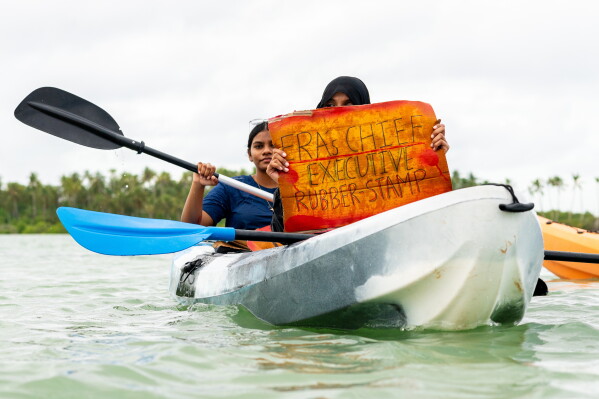
In the Maldives, young activists in Addu City have taken to using kayaks to protest against land reclamation that threatens protected mangroves in a UNESCO biosphere reserve. This group, known as Project ThimaaVeshi, which means “self and surroundings,” highlights issues like coastal erosion, plastic pollution, and the impacts of overdevelopment on local ecosystems.
These activists in Addu City focus on documenting the negative effects of overdevelopment on wetlands and reefs. In the capital, Male, other groups tackle the plastic waste that fills streets and hangouts. In their activism, they raise awareness among youth about the right to a healthy environment, knowing that climate change and environmental damage are immediate concerns. Ecocide in Addu
was painted on a reclaimed site, stressing the urgency of their actions.
The Maldives is recognized for its vulnerabilities to climate change and rising sea levels. However, the government often prioritizes development over environmental protection. Experts predict that within 50 years, 80% of the nation could become uninhabitable due to rising sea levels. Despite the challenges, young activists, like those in Project ThimaaVeshi, are motivated to push against helplessness.
Project ThimaaVeshi collaborates with Veshi Saafu, a group of older women, demonstrating on World Environmental Day against reclamation projects in Addu City. One co-founder, Yameen Maumoon, started the movement with Mishal Mushahid, transitioning from student leaders to registered nonprofit activists after high school graduation.
Another youth group, Ripple, emerged from informal cleanups. Founders Mariyam Maasha Waheed and her friends turned a casual idea into consistent action after their TikTok videos on cleanup efforts went viral. They now run weekly cleanups and collaborate on recycling initiatives.
Yania Hussain Ishan, co-founder of Barnacles, promotes climate education and youth leadership. Despite criticism about their youth and perceived naivety, the activists aim to empower and educate the younger generation about their environmental rights. They embrace the legacy of defending their home and heritage, driven by securing a future where the next generation feels the same connection to their land and sea.
These youth groups continue to participate in initiatives such as early morning beach cleanups, fighting the sense of defeat and fostering community action.