
The French Open has become familiar with seeing a Polish woman in the semifinals, leading to the nickname “Poland Garros” in recent years. Traditionally, this performance was linked to Iga Świątek, a four-time champion who reached the semifinals five times between 2020 and 2025. However, Świątek’s recent exit in the fourth round, defeated by Ukrainian Marta Kostyuk, left Poland seeking a new representative.
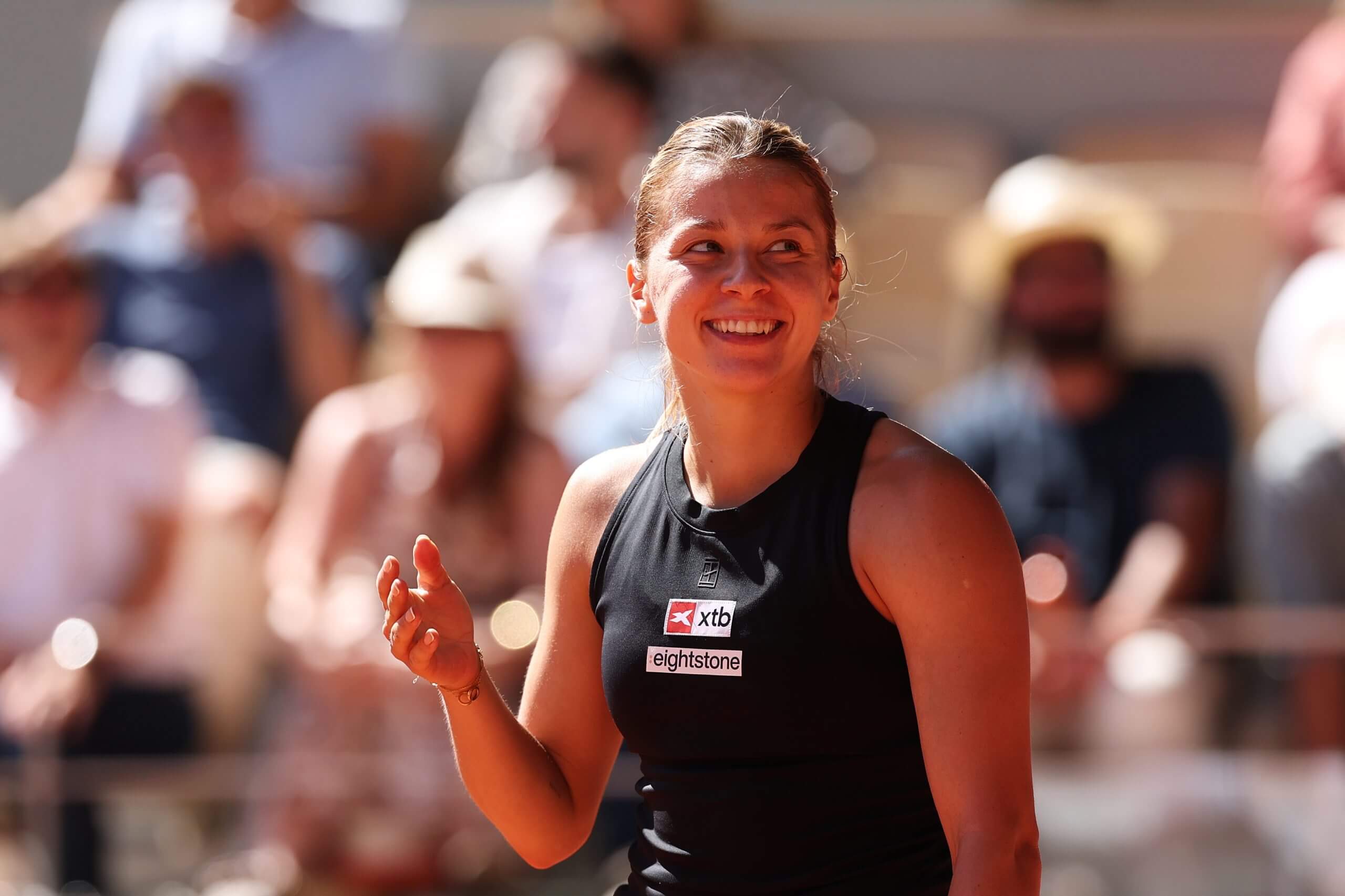
Enter Maja Chwalińska, the world No. 114, who stepped into the spotlight with a stunning performance. In her first appearance in the main draw at Roland Garros, she secured her spot in the semifinals by defeating No. 22 seed Anna Kalinskaya 7-6(3), 6-3. This victory made her the second Polish woman to reach the French Open semifinals in the Open Era, joining Świątek.
Chwalińska continued to impress by defeating Russian Diana Shnaider 7-6(4), 6-4, securing her place in the final. Notably, she holds the distinction of being the lowest-ranked French Open finalist in the Open Era. This achievement has transformed her career, both on and off the court. Before this tournament, her career prize money amounted to $864,030. Her success at Roland Garros has earned her $1,624,000 so far.
“I’m just very proud that I stayed composed, and managed to win this set,” Chwalińska expressed during her press conference after beating Kalinskaya. Her calm on the court is noteworthy, especially given her journey to this point.
As a promising junior in Poland, Chwalińska once reached the Australian Open girls’ doubles final with Świątek as her partner in 2017. However, their paths diverged due to Chwalińska’s knee surgery in 2022 and her battle with depression. She competes primarily in WTA 125 tournaments, a level below the WTA Tour. Her sole Grand Slam victory prior to this was at Wimbledon four years ago. A hiatus for mental health management preceded her return to tennis.
“I was struggling a lot,” Chwalińska revealed about her break from tennis. “I thought I needed to stay strong and keep practicing, but I reached a point where I couldn’t get out of bed anymore. I needed to figure things out mentally, and I’m happy I returned.”
The bigger challenges and high stakes in Paris have not intimidated the 24-year-old. Before the tournament, she hadn’t defeated a player ranked within the top 50. Her successful qualifying rounds reinforced her confidence. She triumphed over top players like Olympic gold medalist Zheng Qinwen, No. 23 seed Elise Mertens, 2021 semifinalist Maria Sakkari, and French player Diane Parry to reach the quarterfinals.
Chwalińska also drew support from Oshee, the Polish company sponsoring Świątek, which helped cover her expenses in Paris. Her growth as a player is evident in her belief that the qualifying levels closely match the main draw’s competitiveness.
Despite her unexpected success, Chwalińska remains level-headed by limiting her phone usage to one celebratory post per victory. Her underdog status has played to her advantage against opponents unfamiliar with her play style. Chwalińska’s game, rich with slice, spin, and drop shots, poses a unique challenge for her competitors.
Off the court, she enjoys playing chess, a pastime that perhaps mirrors her tactical approach to tennis. Her strategic gameplay was evident against both Kalinskaya and Shnaider, as she executed precise drop shots and maintained a varied tempo.
In reaching the final, Chwalińska has secured the most significant victories of her career consecutively, showcasing her resilience and skill on the grand stage of Roland Garros.