
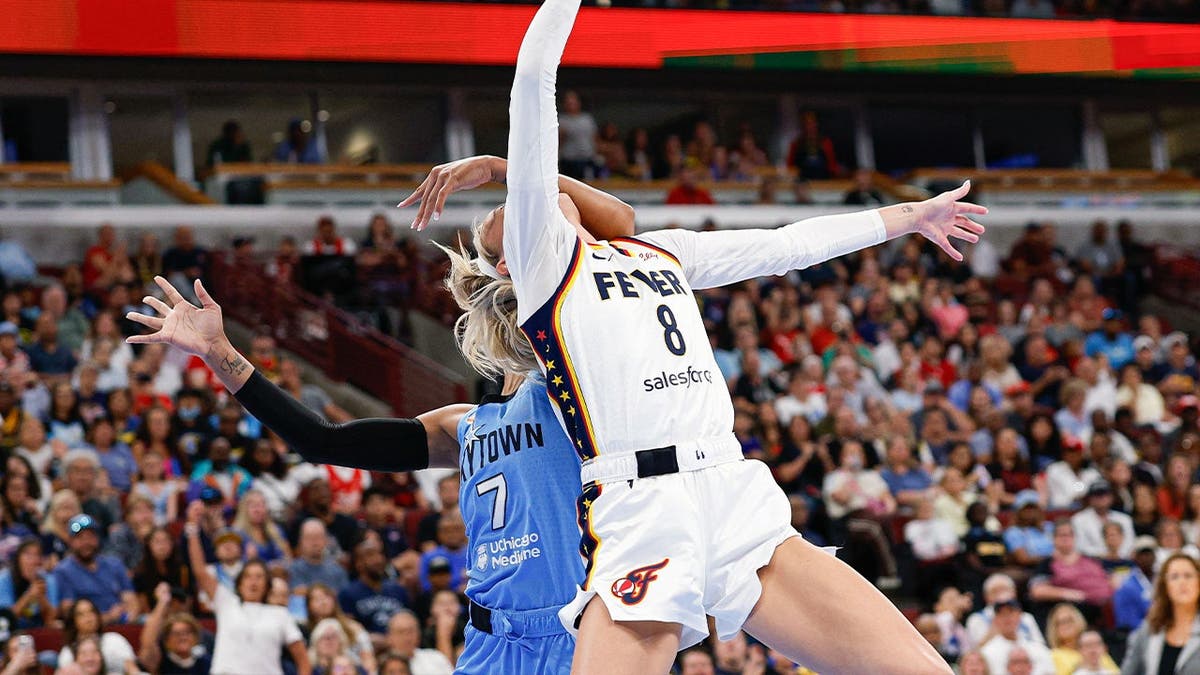
On Saturday, a heated moment occurred during the WNBA game between the Chicago Sky and Indiana Fever. DiJonai Carrington of the Sky received an ejection after a hard foul on Sophie Cunningham from the Fever. The foul involved Carrington striking Cunningham around the neck.
Following her ejection, Carrington attributed the decision to “white privilege” in a social media post made from the locker room. This incident, viewed widely online, raised significant attention, although the game’s ESPN broadcast may not have informed all viewers of the full story.
Background of Player Controversies
Sophie Cunningham recently faced criticism for her statements against biological males competing against female athletes. Her remarks sparked discussions that extended beyond sporting contexts, becoming a topic on various news platforms.
DiJonai Carrington, not a stranger to controversy, had previously engaged in another contentious on-court act. Carrington infamously poked Caitlin Clark’s eye in a past encounter while accusing Clark of “white privilege” on social media. These incidents demonstrate a pattern of Carrington’s aggressive plays and public accusations.
Media Coverage and Reactions
Despite the significance of Carrington’s actions and her subsequent claims, ESPN briefly replayed the foul but focused primarily on the game’s general action during broadcasts. The halftime discussions omitted any detailed analysis of the off-court developments.
This coverage approach starkly contrasts what would presumably happen in a similar situation during an NFL game. The resulting lack of discussion prompted curiosity among audiences, given the broader narrative implications within sports media dynamics.
“ESPN has not elaborated on why off-court claims received limited airtime,” stated a source familiar with the broadcast.
Analysts have highlighted an ongoing narrative within the WNBA discussing racial issues. Some claim that media narratives unfavorably target Black athletes within the league, suggesting a bias in coverage towards figures like Cunningham.
Conclusion
While tensions persist on and off the court, the incident undeniably underscores Carrington’s need for accountability. Calls for suspensions following her aggressive behavior point to underlying tensions and perceived biases within WNBA media narratives.
Overall, these developments invite broader conversations about race, privilege, and fairness in sports coverage. Questions remain about future approaches within sports media and league responses to such contentious incidents.